Start with what you do know
Choosing a gift for someone you barely know can feel like a test of how observant you are. It does not need to be. A good gift in this situation acknowledges the occasion and makes the recipient feel considered, without pretending you have an intimate understanding of their tastes. Instead of asking, “What would they love most?” ask, “What would be pleasant to receive and easy to use?”
Begin with the reason you are giving the gift. A thank-you for a neighbor might call for a small, warm gesture; a retirement celebration may invite something the person can keep. Think about your actual connection, too. A gift from a new coworker will usually feel more comfortable if it is modest than if it is unusually expensive or personal. These simple boundaries can narrow your choices before you need to guess anyone’s favorite scent, hobby or style.
Look for gentle clues, not a complete profile
You may know more than you think, provided you stick to things the person has shared naturally. Perhaps they bring a notebook to meetings, mention enjoying puzzles, or often host friends. A small gift connected to an observed interest can feel attentive. The key is to keep the connection broad: a handsome notebook is less of a gamble than equipment for a hobby you do not understand.
If asking is appropriate, keep it simple. A mutual friend or event organizer may know whether there are dietary restrictions, a group gift plan or a preference for no gifts at all. You can also ask the recipient a light question, such as whether they prefer tea or coffee. There is no need to investigate their personal life. A little reliable information is more useful than a long list of guesses.
Choose something easy to accept
The safest gifts tend to fit into daily life without creating work. A set of blank cards, a small puzzle, a useful desk item or a book chosen for a broadly shared interest can be easier to receive than something that demands display space or a new routine. Consumable gifts can also be considerate when you know they are suitable, but food and fragranced products are worth approaching carefully if you are unsure about allergies or preferences.
Consider the effort required of the recipient. A plant needs care. An experience tied to a specific date needs scheduling. An object with a strong decorative style needs a place to live. None of these is automatically a bad gift, but each asks for something beyond a simple thank-you. When you know little about someone, a lower-commitment option often shows more respect for their time and space.
If you are still uncertain, a contribution to a group gift may be better than choosing a separate object. It can help you take part in a celebration without adding another item the recipient must find room for.
Set a comfortable scale
Thoughtfulness is not measured by price. Pick a budget that suits the occasion and your relationship, then work within it. An unexpectedly lavish gift can make an acquaintance feel obliged to respond in kind. A modest gift, chosen with care, leaves more room for them to enjoy the gesture on its own terms.
It helps to avoid gifts that imply closeness you have not established. Clothing, perfume and highly personal keepsakes depend on knowing someone’s preferences or boundaries. Humorous gifts can be risky for the same reason: a joke that works among close friends may puzzle someone you have only met a few times. If you have a clever idea but cannot explain why this particular person would welcome it, a simpler choice may be kinder.
Let the note do the personal work
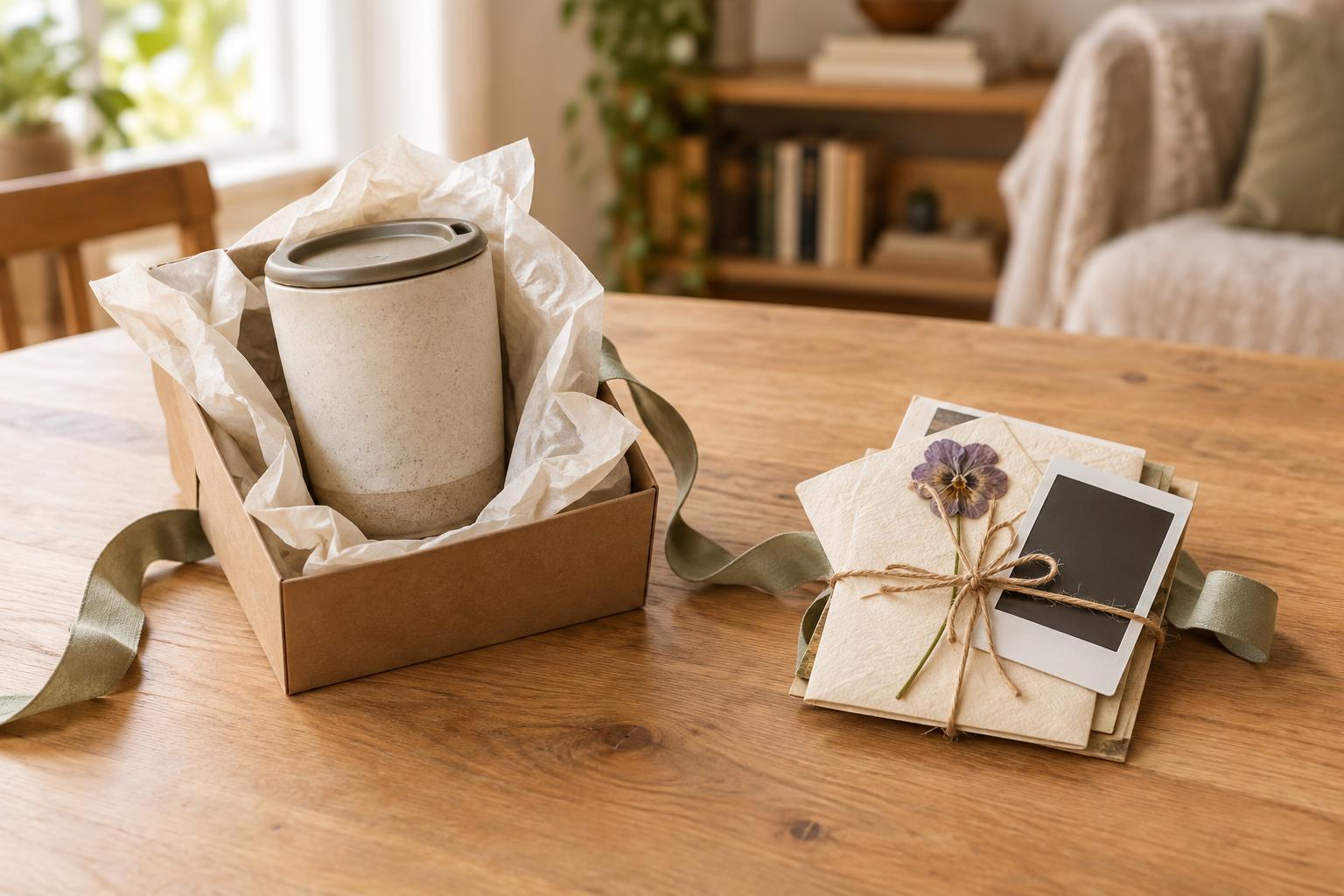
Presentation can make a straightforward gift feel intentional. Neat wrapping, a reusable bag or a simple ribbon shows care without changing the gift’s scale. Include a card with one or two sincere sentences tied to the occasion: “Thank you for making me feel welcome on the team,” or “I hope you enjoy a little time to yourself after the move.” You do not need to invent a deep connection to write something meaningful.
Before giving the gift, make one final check: Is it appropriate for the setting? Is it easy for this person to accept? Does the note say why you wanted to acknowledge them? If the answers are yes, you have done enough. The most thoughtful choice is often not the most original one; it is the one that offers a moment of warmth without asking for anything in return.