Agree on the gift before assigning the work
A shared gift often starts with someone saying, “We should all chip in.” That sounds simple until one person becomes responsible for choosing the gift, collecting money, placing an order, wrapping it and making sure everyone’s name is on the card. Before anyone volunteers, give the group a small decision to make: Who is the gift for, what occasion are you marking, and what kind of gift would suit them?
Set a comfortable contribution range rather than assuming everyone can spend the same amount. Give people a straightforward way to opt out or contribute in another way, such as writing a note or helping with the presentation. A group gift should not require anyone to explain their finances. Once the group has agreed on a direction, choose a practical deadline for decisions so the planning does not continue indefinitely.
Split the job into visible, manageable roles
“Can someone help?” is easy to overlook because nobody knows what help means. List the actual tasks instead: gather ideas, confirm the budget, collect contributions, buy or make the gift, write the card, wrap it and arrange the handoff. Then ask people to take a specific piece. The person suggesting the gift does not automatically have to do every follow-up task.
It is fine to have one coordinator who keeps track of the plan, but coordinating is a role in its own right. If that person is sending reminders and resolving questions, someone else can handle the purchase or presentation. Keep a short shared checklist in a group message so everyone can see what has been claimed and what still needs doing. If the group is large, a few clear roles are usually easier to manage than asking everyone to weigh in on every detail.
Make decisions easy to close
Endless suggestions can create more work than a lack of ideas. Ask the person gathering options to offer two or three choices that fit the agreed budget and the recipient’s interests. The group can pick one by a stated deadline. Decide in advance what happens if someone does not reply: for example, the coordinator may go with the option supported by those who responded.
Treat the budget as a ceiling, not an invitation to keep adding extras. Remember that wrapping, a card and any transport costs are part of the plan. Before one person pays upfront, confirm how contributions will be collected and when they are due. If collecting money becomes difficult, scale the gift down instead of quietly expecting the buyer to cover the difference. A modest gift that is ready on time is better than an elaborate idea that depends on last-minute rescues.
Share the personal touches, too
The most meaningful part of a shared gift may be what each person adds to it. Rather than leaving one person to compose a message on everyone’s behalf, invite each contributor to send a sentence, memory or good wish by a clear deadline. One volunteer can put the notes into a card, a small booklet or a set of envelopes. People who cannot contribute money may still want to take part in this way.
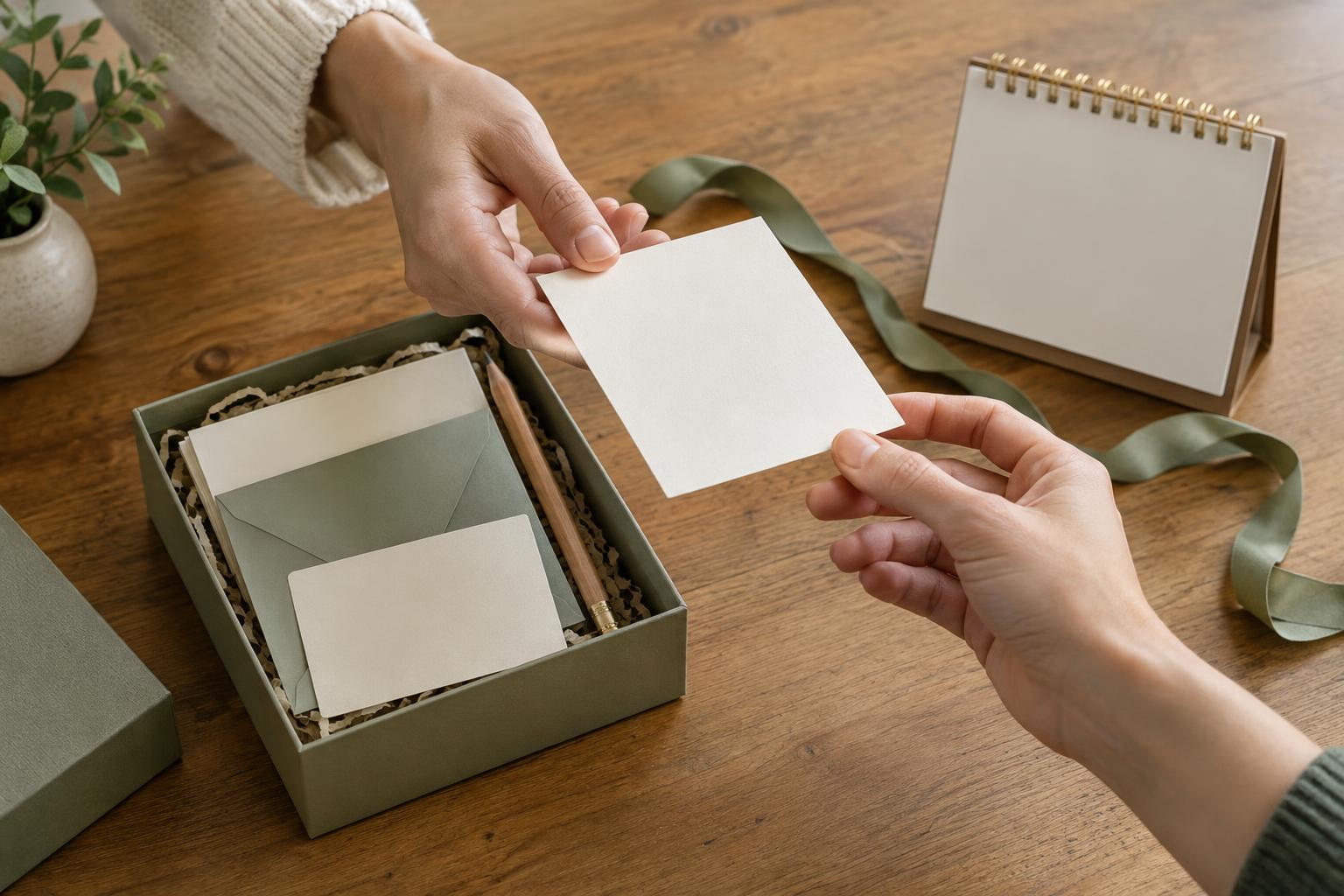
Presentation is another useful task to share. One person might supply wrapping materials, another might write the recipient’s name neatly, and a third might bring the gift to the celebration. If the gift itself needs no wrapping, a handwritten card can still make the handoff feel intentional. Keep the recipient in mind: a private, low-key exchange may suit them better than a public reveal.
Finish with a clear handoff and a thank-you
Before the occasion, confirm who has the gift, who will bring it and who will give it to the recipient. Check the card for names rather than assuming everyone who contributed has been included. If plans change, tell the group promptly and reassign the task instead of letting it fall back to the coordinator by default.
Afterward, a brief message to the group can confirm that the gift was given and thank everyone for their part. Give particular thanks to the people who handled the less visible work, such as collecting notes or making the trip to buy supplies. The goal is not to divide every minute of effort perfectly. It is to make the work visible, give people real ways to help and let everyone enjoy the gesture—including the person who first had the idea.