Decide what you want the collection to do
A box of letters does not need to become a formal archive. You might want to find a particular note, remember the order of a long correspondence, or keep a few messages where you can read them again. Knowing which of those matters most will help you choose a system you can maintain.
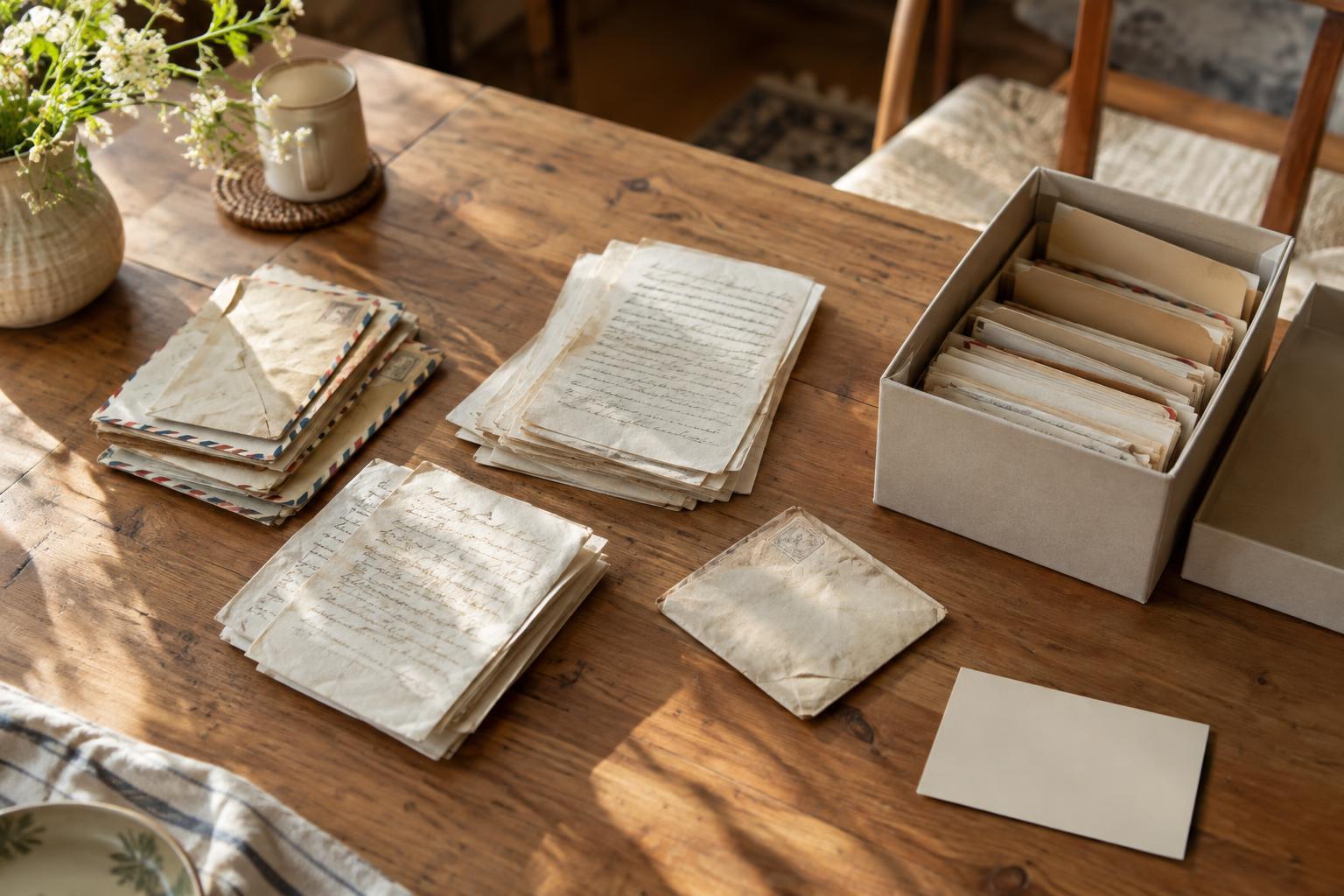
Begin by gathering the letters you want to consider in one place. Include cards and short notes if they feel like part of the same collection. Then make a few broad piles: keep, decide later, and let go. You do not have to make every decision at once. A small “decide later” group lets you finish organizing the letters you already know you value.
Choose a sorting method you can remember
For many people, sorting by sender is the easiest starting point. Place each person’s letters together, then put them in date order if the dates are known. If a particular period or occasion matters more than the sender, group by event instead: a move, a celebration, or a stretch of frequent correspondence. Pick one main method rather than trying to make every letter fit several categories.
Keep envelopes with their letters when they add useful context, such as a date, a return address, or a message written on the back. If an envelope contains more than one item, check that they belong together before putting them away. For undated letters, a rough position in the sequence is enough; there is no need to guess an exact date.
Use simple labels on folders, dividers or the outside of small bundles. A name and a broad date range may be all you need. If you want more detail, make a short list of what is in each folder and keep the list with the collection. That gives you a way to find things without writing on the letters themselves.
Give the letters a suitable home
Choose a box, drawer or folder that allows letters to lie reasonably flat without being packed tightly. The aim is to make them easy to lift out and return without bending corners or losing loose pages. If you use folders, check that no pages are caught under a flap when you close them.
A dry place away from direct sunlight is generally more suitable than a damp cupboard or a sunny windowsill. Avoid storing letters alongside drinks, craft supplies that might spill, or items you move around often. For letters you especially want to protect, paper folders or sleeves sold for document storage can provide an extra layer of separation. You do not need special supplies to begin; a clean, sturdy container in a sensible location is a useful first step.
Keep the collection somewhere that matches how you plan to use it. If you hope to read the letters now and then, a box you can reach is more practical than one buried behind seasonal belongings. If some messages are too personal to leave in a shared space, choose a more private spot.
Leave room for the collection to grow
Set aside an empty folder or a small space in the box for new letters. When one arrives, read it without treating filing as an immediate chore. Later, slip it into the right group and check whether its envelope belongs with it. A quick routine is easier to keep up than an elaborate one.
Every so often, look through a folder and ask whether its arrangement still helps you find what you want. You may discover that one person’s letters deserve a folder of their own, or that a group of occasion-based notes makes more sense together. Change the system when it stops serving you.
Organization is not meant to remove the feeling from a collection. A handwritten letter can be both an object you care for and a message you return to. The best system is one that makes room for both: enough order to find a letter, and enough ease that you will want to open it again.