Start with the person, not the box
The simplest way to reduce waste is to send fewer things that miss the mark. Before choosing a theme or buying supplies, think about the recipient’s routines. Do they enjoy making tea, writing lists, cooking quick meals, or spending a quiet evening with a book? A package built around one familiar pleasure can feel more personal than an assortment of unrelated surprises.
If you are unsure what they need, it is fine to ask a small question: “Would you use snacks or something for your desk?” That need not spoil the gesture. It can prevent a well-meant item from becoming clutter. Check for dietary needs, allergies, fragrance preferences, and limited storage space before including anything that could be difficult to use.
Choose contents with a clear purpose
A useful care package might combine one everyday item, one consumable treat, and one personal note. For someone facing a busy week, that could mean their preferred shelf-stable snack, a few blank cards they would actually write on, and a letter. For someone who likes to make things, consider a small amount of a material they already use rather than a complete new hobby kit.
Consumables can be welcome because they do not require permanent storage, but they still need to suit the recipient. Avoid sending a large quantity simply to make the box look abundant. Likewise, a reusable object is only a lower-waste choice if it is wanted and likely to be used. A durable mug for someone whose cupboard is full may be less thoughtful than a single favorite tea and a handwritten message.
Let the occasion guide the amount. A small package that says “I’m thinking of you” can be enough. Leaving a little empty space is not a failure of presentation; it can be a sign that you chose deliberately.
Give packaging a second job
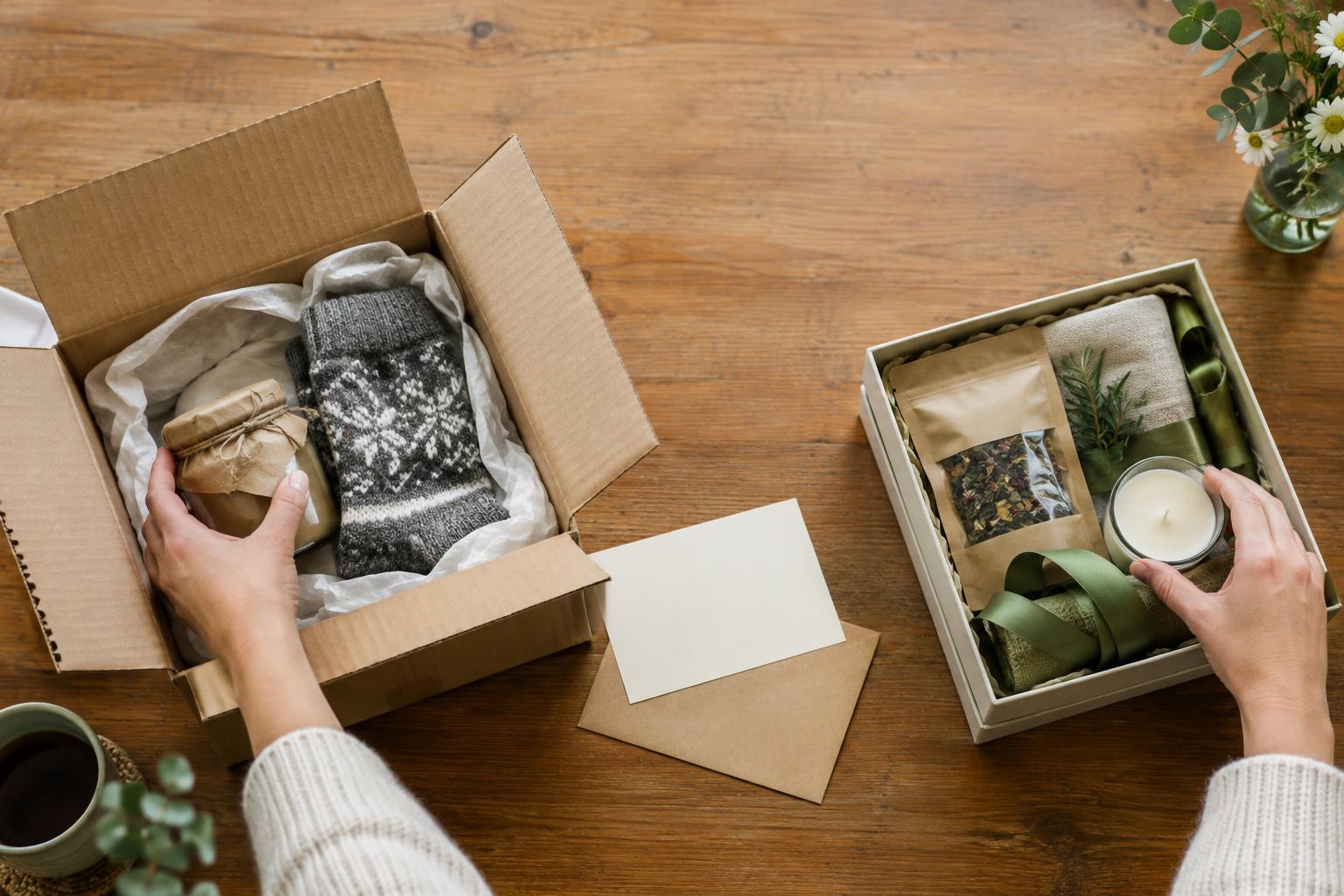
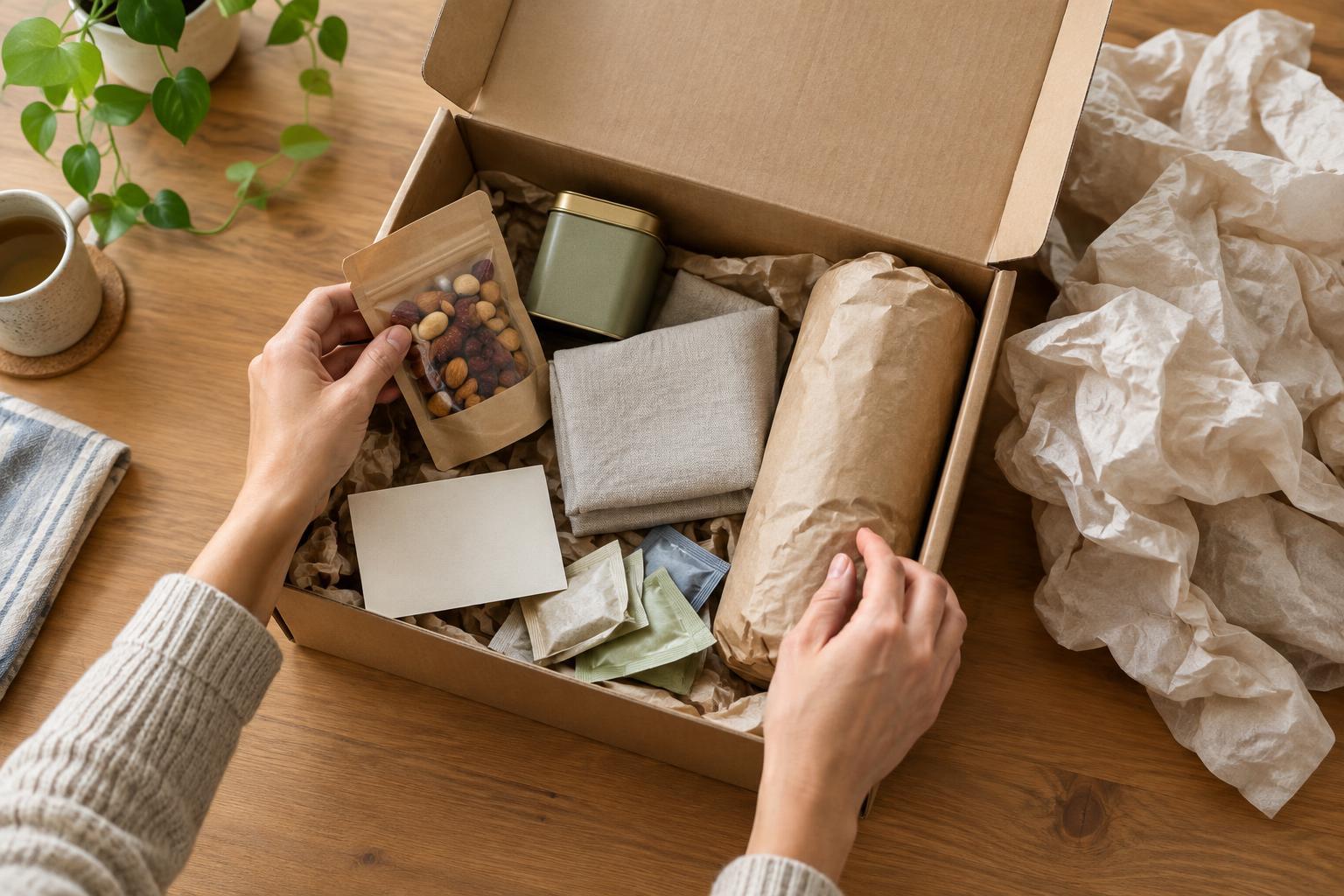
Look at what you already have before buying a new box or filling. A clean, sturdy shipping box, a paper bag, or a reusable tin may be suitable, depending on what is inside and how the package will travel. Remove or cover old labels so delivery information is clear. For cushioning, save clean packing paper, use folded newspaper, or wrap an item in a tea towel the recipient can use later.
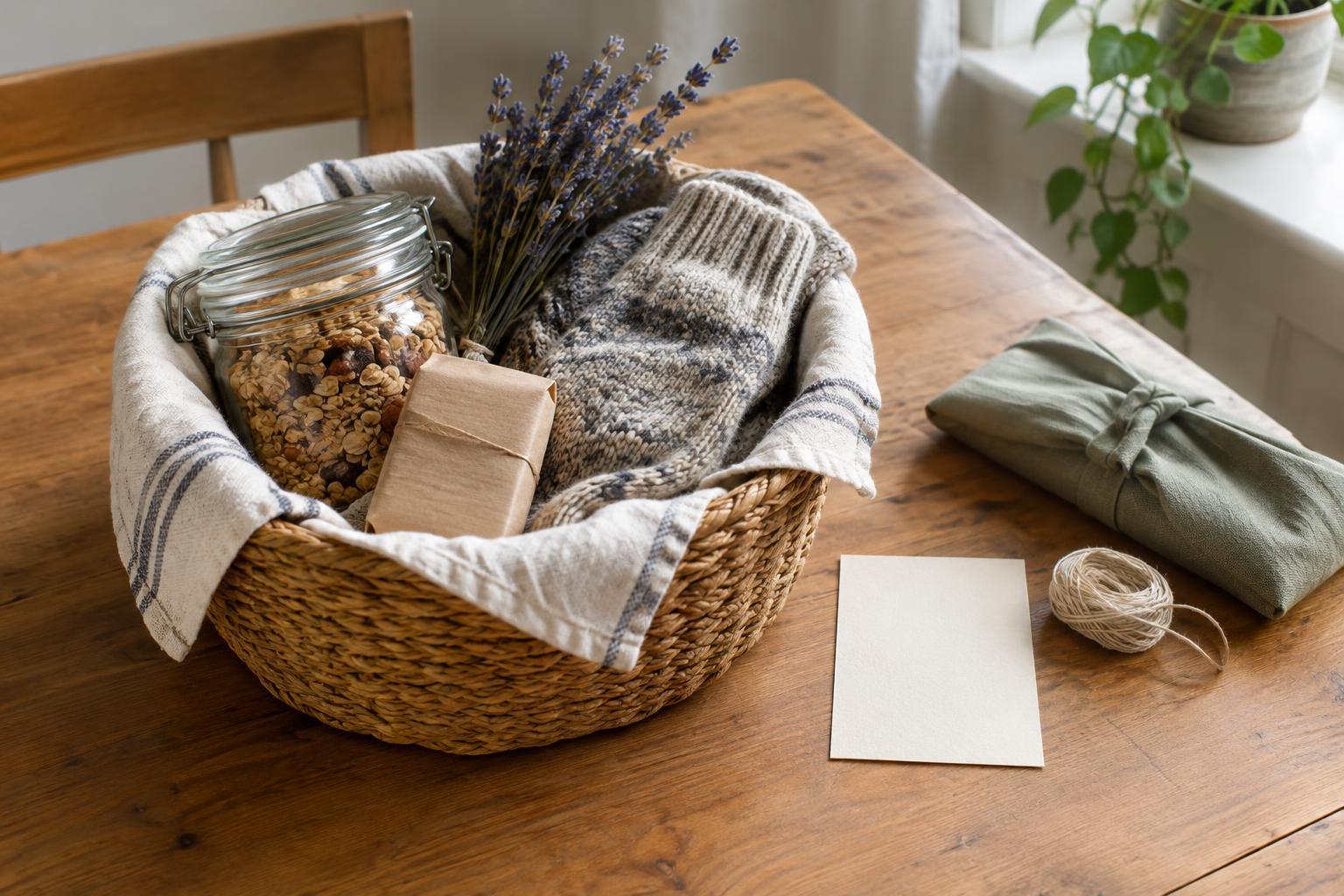
Reusable wrapping works best when it has a practical purpose. A scarf might protect a small gift if it suits the recipient’s style; a cotton pouch could hold stationery after the package is opened. Do not add a reusable bag merely to replace disposable wrapping if the recipient is unlikely to need another bag.
If the package will be mailed, protect its contents first. Fragile items may need more cushioning than reused paper alone can provide, and liquids should be securely closed and contained in case of leaks. Check the requirements of your chosen postal or delivery service before sealing the box. Low waste is a worthwhile aim, but damaged contents and a second shipment would defeat much of the effort.
Keep the presentation simple and personal
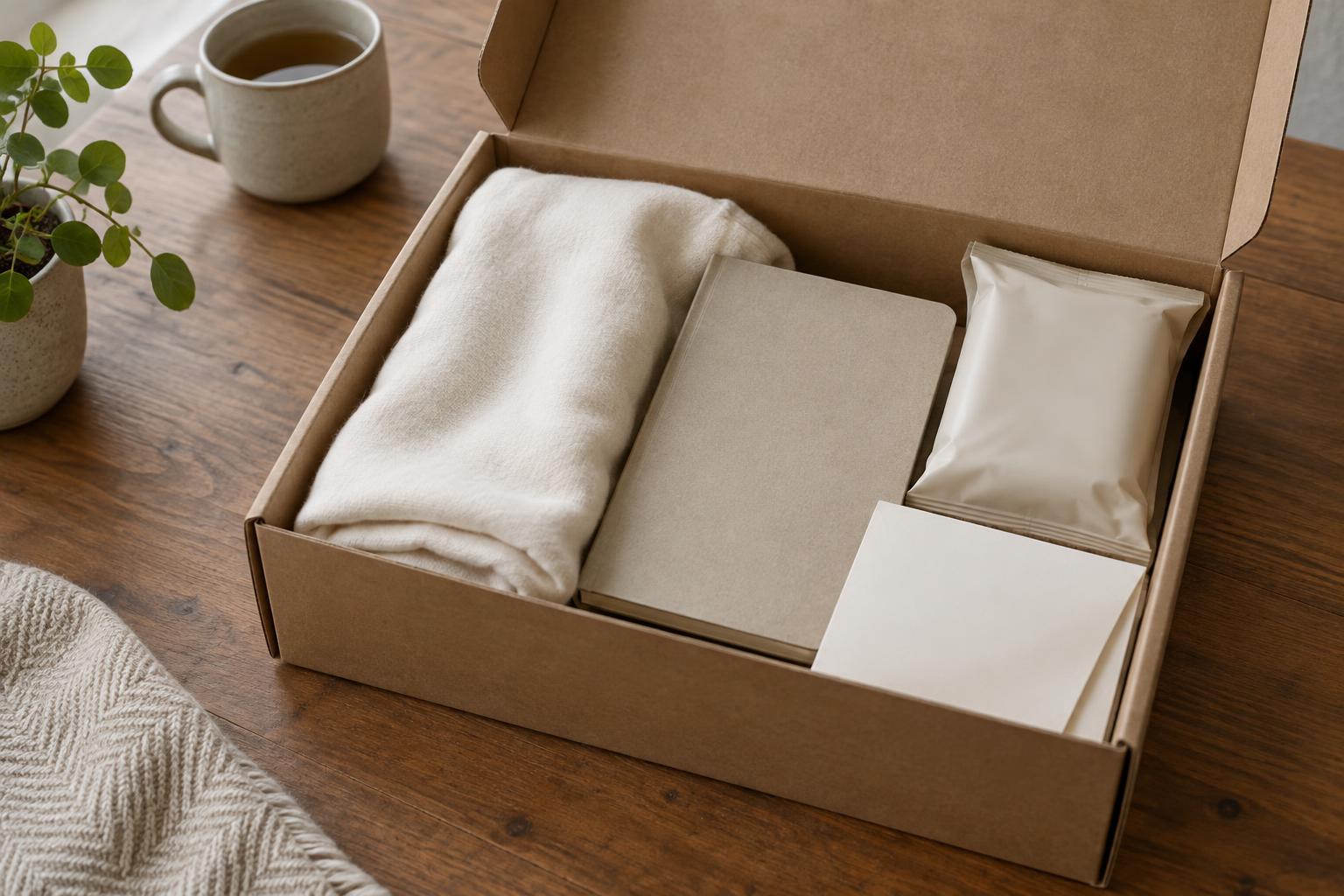
Presentation can come from arrangement rather than extra layers. Place heavier items at the bottom, group smaller ones in a reused envelope or pouch, and put the note where it will be found first. A handwritten label on plain paper can explain why you chose an item: “For your afternoon break” says more than an elaborate decoration with no connection to the person.
A letter is often the most distinctive part of a care package. You might share a specific memory, mention something you admire about the recipient, or suggest a modest plan to catch up. Keep it natural rather than trying to make every line profound. If they are going through a hard time, a gentle note that does not demand a reply may be especially considerate.
Do one last usefulness check
Before closing the package, take out each item and ask three questions: Will this person want it? Can they use it within a reasonable time? Is it packed well enough to arrive in good condition? This quick check may reveal duplicates, short-lived food that could spoil in transit, or decorative extras that add little to the experience.
You do not need to make a care package perfectly waste-free. Materials, distance, and the recipient’s circumstances all affect what makes sense. Aim instead for a package that is easy to open, easy to enjoy, and easy to deal with afterward. Thoughtful contents and a few well-chosen words will do more than a box filled for appearance alone.