Start with the paper, not the pen
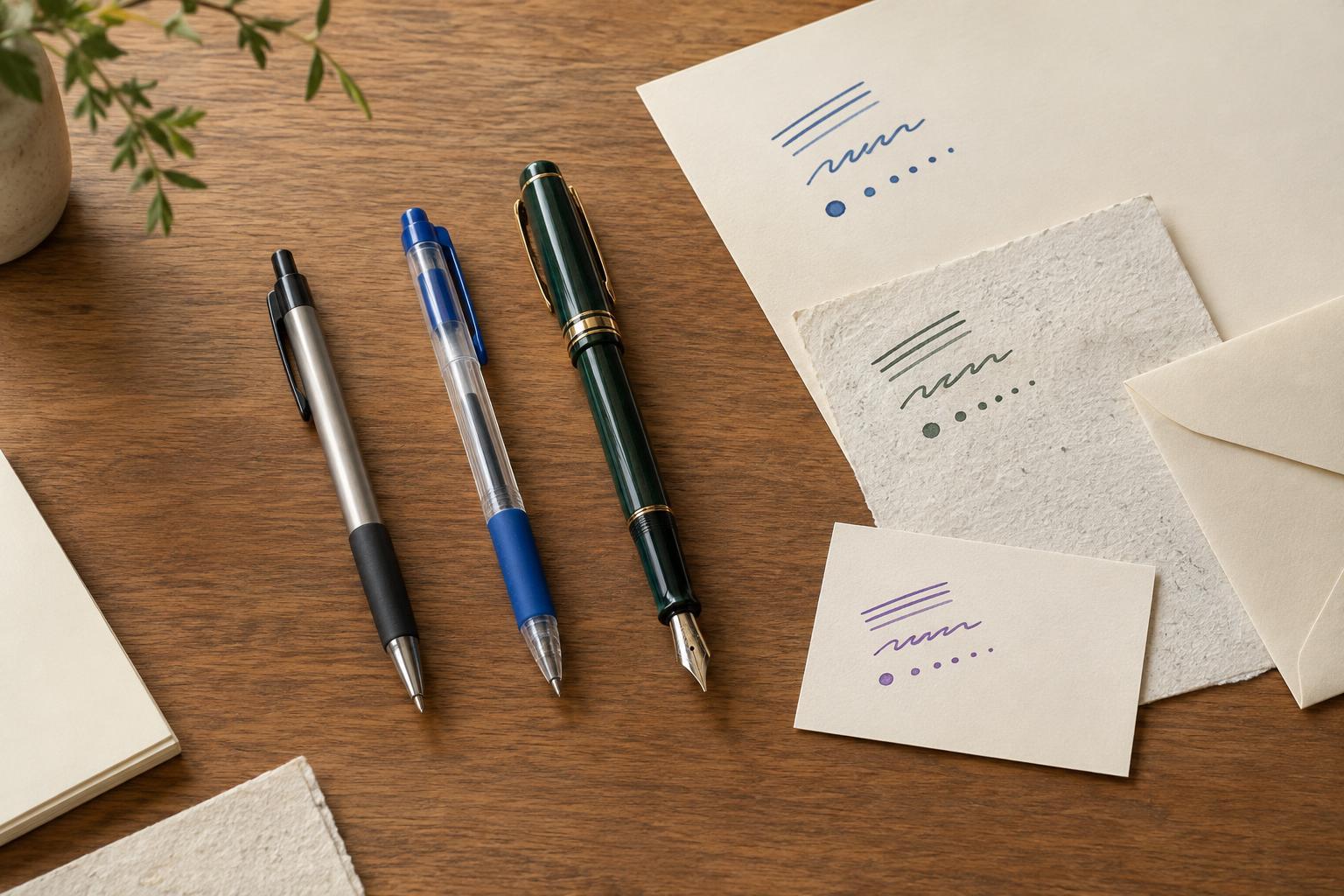
A beautiful pen can be frustrating on the wrong stationery. Before choosing between ballpoint, gel and fountain pen, look at the paper you plan to use. A smooth note card, a thin letter sheet and a textured envelope may each take ink differently. The best match is the one that lets you write comfortably and leaves the recipient with an easy-to-read message.
Try a few lines on a spare sheet or an inconspicuous corner. Check whether the ink spreads into soft-looking edges, shows through the back, or bleeds onto the page beneath it. Then run a clean fingertip over the writing after a short pause. If you write with your hand resting on fresh lines, this small smudge test matters as much as the appearance of the ink.
Ballpoint: dependable for everyday notes
A ballpoint is often the simplest choice for mixed stationery. Its ink tends to write reliably on many ordinary papers, and it usually needs little drying time. That makes it useful for quick thank-you cards, notes written at a busy table, or envelopes whose surface you have not tested. It is also easy to keep one handy for an unexpected message.
The trade-off is feel. Some ballpoints ask for more pressure than other pens, which can make a long letter tiring or leave an impression on thin paper. The line may also look less fluid than a gel or fountain-pen line. If a ballpoint skips on a heavily textured card, try a smoother surface or write slowly rather than pressing harder. For a long letter, comfort is a good reason to choose something else.
Gel: bold color with a little patience
Gel pens are appealing when you want a saturated line or a color that feels personal without changing your handwriting. They can make headings, names and short notes stand out. Many also feel smooth on the page, which can be pleasant when you are filling more than one card. A dark, clear color is generally easier to read than a pale decorative one.
Allow for drying time, especially on smooth or coated stationery. A gel line that looks dry may still smear if you close a card immediately or stack pages while writing. Some gel inks also behave differently on textured or absorbent paper, so test the exact pen and sheet together. If you love a colorful pen but it smudges on an envelope, use it inside the card and choose a more dependable pen for the address.
Fountain pen: expressive, but paper-sensitive
A fountain pen can make letter-writing feel unhurried. It writes with a light touch, and the combination of nib, ink and paper can give even a familiar handwriting style a distinctive look. For someone who enjoys the act of writing as much as the finished note, that experience may be worth the extra care.
That same flowing ink can be demanding. On absorbent paper, letters may feather at the edges, bleed through, or take longer to dry than expected. Ink behavior varies, so neither an expensive sheet nor a particular nib guarantees a neat result. Test your pen on the actual letter paper, including the reverse side if you plan to write on both. Keep a spare sheet under your hand if you find that contact with fresh writing causes smears.
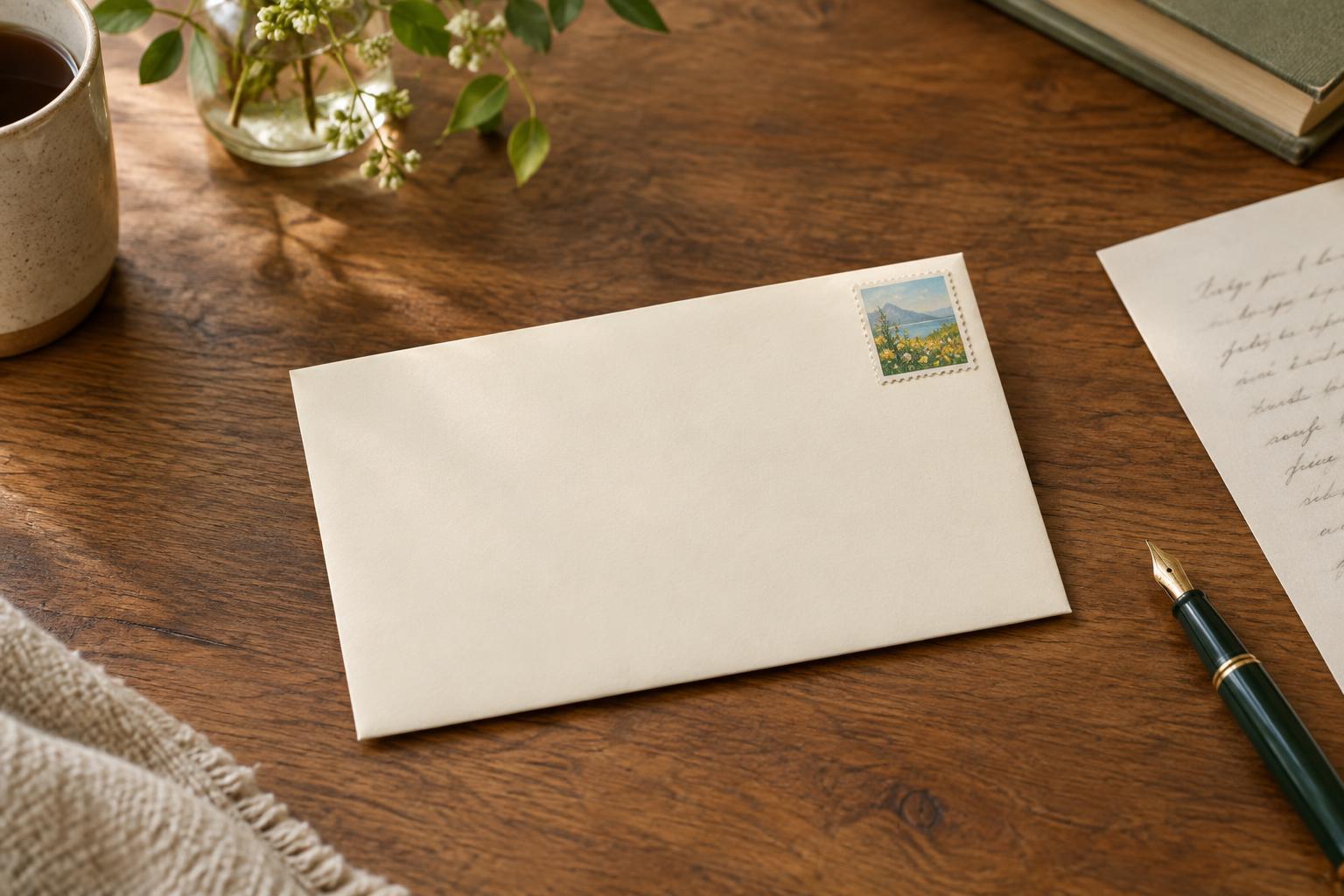
Fountain pens may be less convenient for addressing an envelope, especially one with a slick finish. There is no rule that the outside and inside must match: writing the letter with a fountain pen and the address with a ballpoint is a practical combination.
Choose for the message you are sending
For a quick note on unfamiliar paper, begin with a ballpoint. For a bright greeting or a short card on tested stationery, consider gel. For a longer letter on paper that handles its ink well, a fountain pen can make the writing itself part of the pleasure. These are starting points, not strict rules; your grip, writing speed and preferred line matter too.
Before writing the final version, make a small sample with the words and marks you actually use. Include a few tight letters, a long line and your signature, then check it after the page has had time to dry. If you are pairing a letter with a keepsake or tucking it into a gift, make sure the ink will not transfer when the pages are folded together. The right pen is ultimately the one that lets you concentrate on the person receiving your words.