Begin with the truth, not the perfect phrase
A blank page can feel especially intimidating when someone is grieving. You may worry that your words will be too small for what has happened. A sympathy letter is not meant to explain a loss or make it better, though. Its purpose is to let the person know you are thinking of them and that they do not have to answer in order to be cared for.
Start plainly: “I was so sorry to hear about your dad’s death,” or “I’m thinking of you as you grieve Maya.” If you knew the person who died, using their name can make the letter feel personal. If you are unsure what the recipient is comfortable sharing, you can simply write, “I’m sorry for your loss.” You do not need an elegant opening to make your care clear.
Say something specific when you can
Familiar phrases such as “everything happens for a reason” or “they’re in a better place” may be intended as comfort, but they can assume beliefs or feelings the recipient does not share. A small, honest detail often says more. You might recall how the person welcomed you at a gathering, made a particular joke or showed up for someone when it mattered.
Keep the memory brief and let it belong to the person who is grieving, too: “I still remember how Lena made room for everyone at her table. I felt welcome from the moment I met her.” If you did not know the person who died, you can acknowledge what you do know: “The way you spoke about your brother made it clear how much you loved him.” Avoid inventing closeness or turning the letter into a long account of your own feelings.
Make room for grief without trying to direct it
A letter can offer warmth without telling someone how to feel. Instead of “Be strong” or “At least you had so many years together,” try language that leaves room for whatever the day brings: “I can imagine this may feel different from one moment to the next,” or “There is no need to write back.” The first acknowledges uncertainty; the second removes a small social obligation.
It is also all right to admit that you do not know what to say. “I wish I had words that could ease this. I care about you, and I’m here” is more direct than a borrowed expression that does not sound like you. Keep any mention of your own grief in proportion. If you are grieving as well, you can say so without asking the recipient to comfort you.
Offer support you can follow through on
“Let me know if you need anything” is kind, but making a request may feel like another task for someone who is grieving. If you are close enough to help, name a modest, concrete offer you can keep: “I can bring dinner next Thursday,” “I can walk the dog this weekend,” or “I’d be glad to sit with you and listen.” Leave them an easy way to decline.
Not every letter needs an offer of practical help. If you live far away or do not know the recipient well, a sincere note is enough. You might say, “I’ll be thinking of you in the weeks ahead.” If you do promise to check in, put a reminder on your calendar and do it. A quiet message later can matter, even when there is no reply.
Close simply, and let the letter be enough
A closing need not resolve the sadness raised in the letter. “With love,” “With heartfelt sympathy,” or “Thinking of you” can all work, depending on your relationship. Read your note once before sending it. Check the spelling of names, remove anything that assumes how the recipient feels and ask whether the words sound like something you would say.
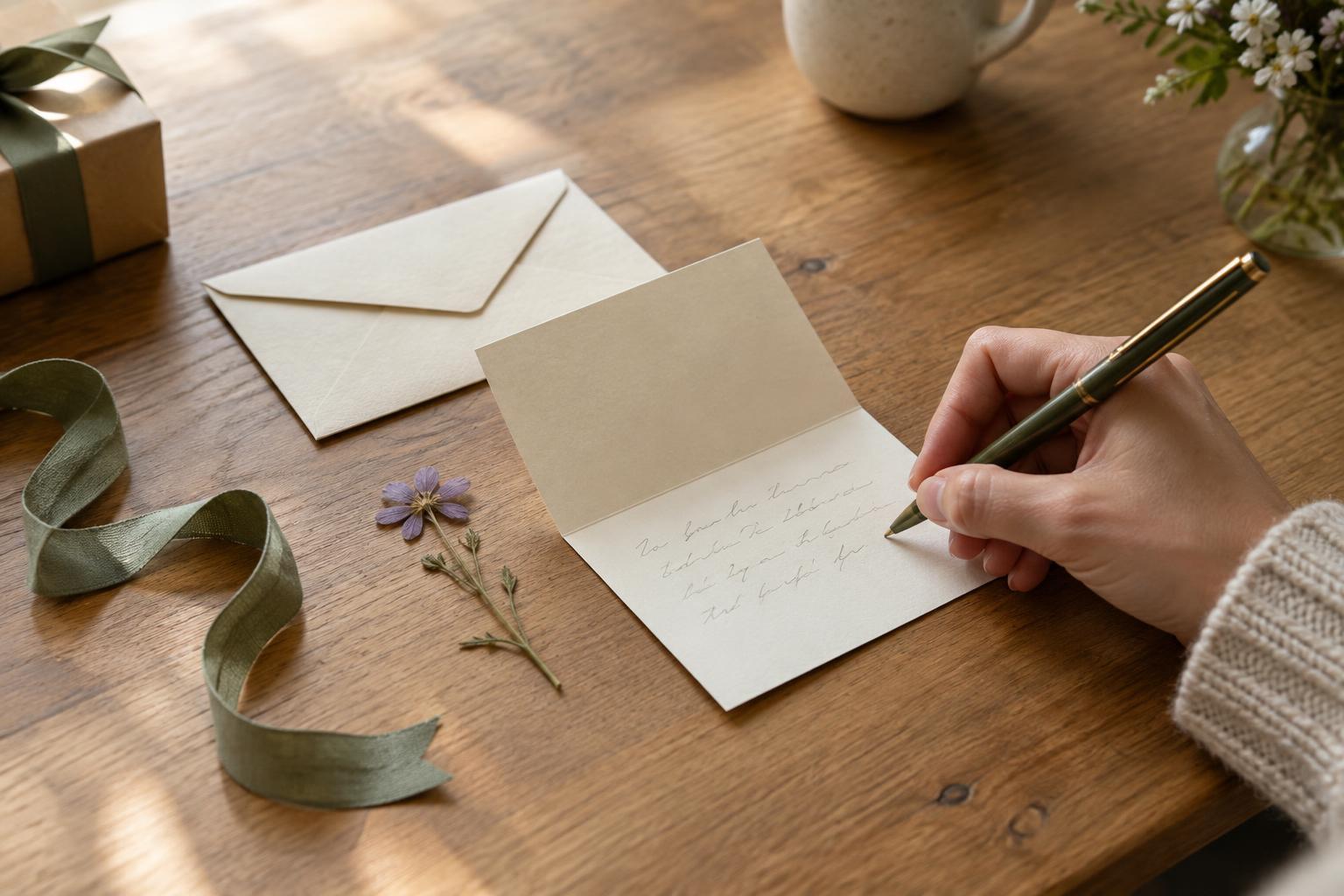
Handwriting a letter can make it feel personal, but neat stationery and beautiful phrasing are not requirements. A short note written with care is preferable to an elaborate one delayed by the search for perfect words. Acknowledging the loss, remembering the person when you can and making space for the recipient’s grief are enough.