Start with the moment you want to remember
A thank-you note can be brief and still feel deeply personal. The difference is often a detail: not just “Thank you for the gift,” but “Thank you for choosing a book you thought I’d enjoy on the train.” The second version shows that you noticed the thought behind the gesture. Before you pick up a pen, pause and ask yourself what you would tell the person if they were sitting across from you.
That detail might be something they gave, something they did, or the way they did it. Perhaps a friend checked in before a difficult appointment, a neighbor brought dinner when your week was crowded, or a relative remembered your favorite color. You do not need to make the occasion sound bigger than it was. Naming one true, specific thing gives the note its center.
Build the note around three simple parts
If a blank card feels intimidating, use a loose structure: thank the person, name what mattered, and say what their gesture meant to you. For example: “Thank you for the soup you brought over. I appreciated that you left it in a container I wouldn’t need to return right away. It made a busy evening feel easier.” The detail does the work; elaborate wording is unnecessary.
You can adapt that structure to almost any situation. For a birthday gift, mention how the person chose it or how you plan to use it. For help with a task, describe the part that made a difference. For someone who showed up, acknowledge their time or attention. Write in the voice you would use with them. A warm, ordinary sentence is usually better than a formal phrase you would never say aloud.
Describe the effect without overstating it
“It meant a lot” is sincere, but it can become more vivid when you add what changed for you. Did their message make you feel remembered? Did their practical help give you room to rest? Did their presence make a celebration more relaxed? You are not obliged to reveal private feelings. A small, honest effect—“I smiled when I opened it” or “I felt less alone that afternoon”—is enough.
Try to keep the focus on appreciation rather than on repaying a debt. You need not promise a return favor or apologize for not having written sooner. If the note is late, a simple “I’ve been meaning to tell you how much I appreciated it” moves naturally into the thanks. The purpose is to let someone know their action was seen, not to account for every day since it happened.
Make room for different kinds of thanks
Some notes are easy to write because the gesture is tangible. Others thank someone for listening, including you, or remembering a small preference. In those cases, name the action as plainly as you can: “Thank you for calling after our conversation,” or “Thank you for making space for me at the table.” Specificity does not require a long story; it requires choosing the part you most want them to know you noticed.
Consider your relationship, too. A close friend may appreciate a shared memory or a little humor. A colleague or acquaintance may be better served by a clear, considerate note without intimate details. If several people contributed to an event or gift, you can thank each person for something you genuinely know they did. When you are unsure who handled which part, thank them for the shared gesture rather than guessing.
Close warmly, then let the note be done
A closing line can look forward without creating an obligation. “I’m looking forward to seeing you soon,” “I hope we can catch up,” or simply “With appreciation” may fit, depending on the relationship. You can also end with one last concrete thought: “I’m going to think of you whenever I use the mug.” Choose a line that feels comfortable coming from you.
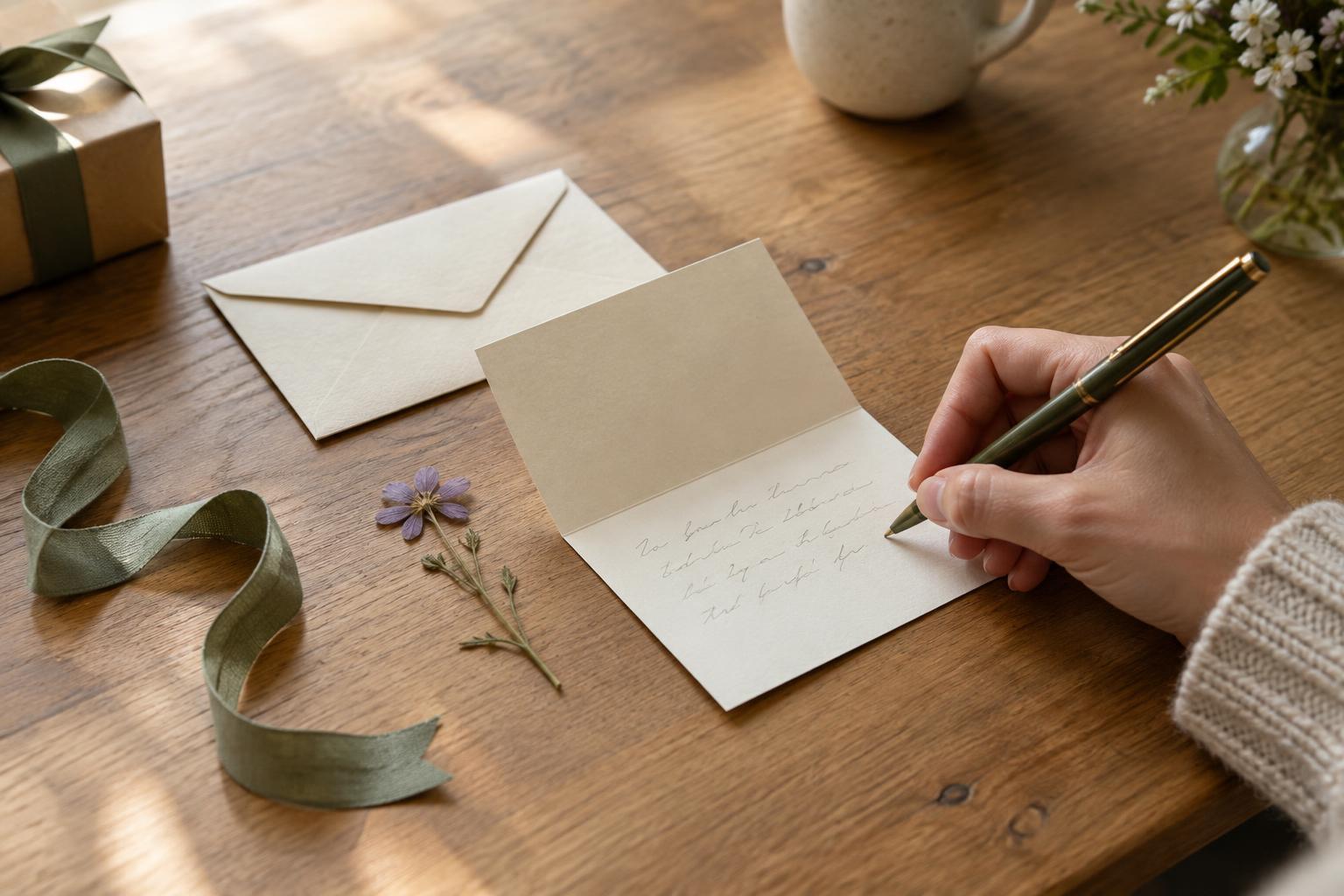
Handwritten stationery can make the act of writing feel deliberate, but you do not need special paper or perfect handwriting. A small card, a sheet from a notebook, or a message sent in another format can all carry thoughtful thanks. Read your note once to make sure it says what you mean, then send it. The most valuable part is not its polish; it is the chance for someone to hear exactly what they did that mattered.