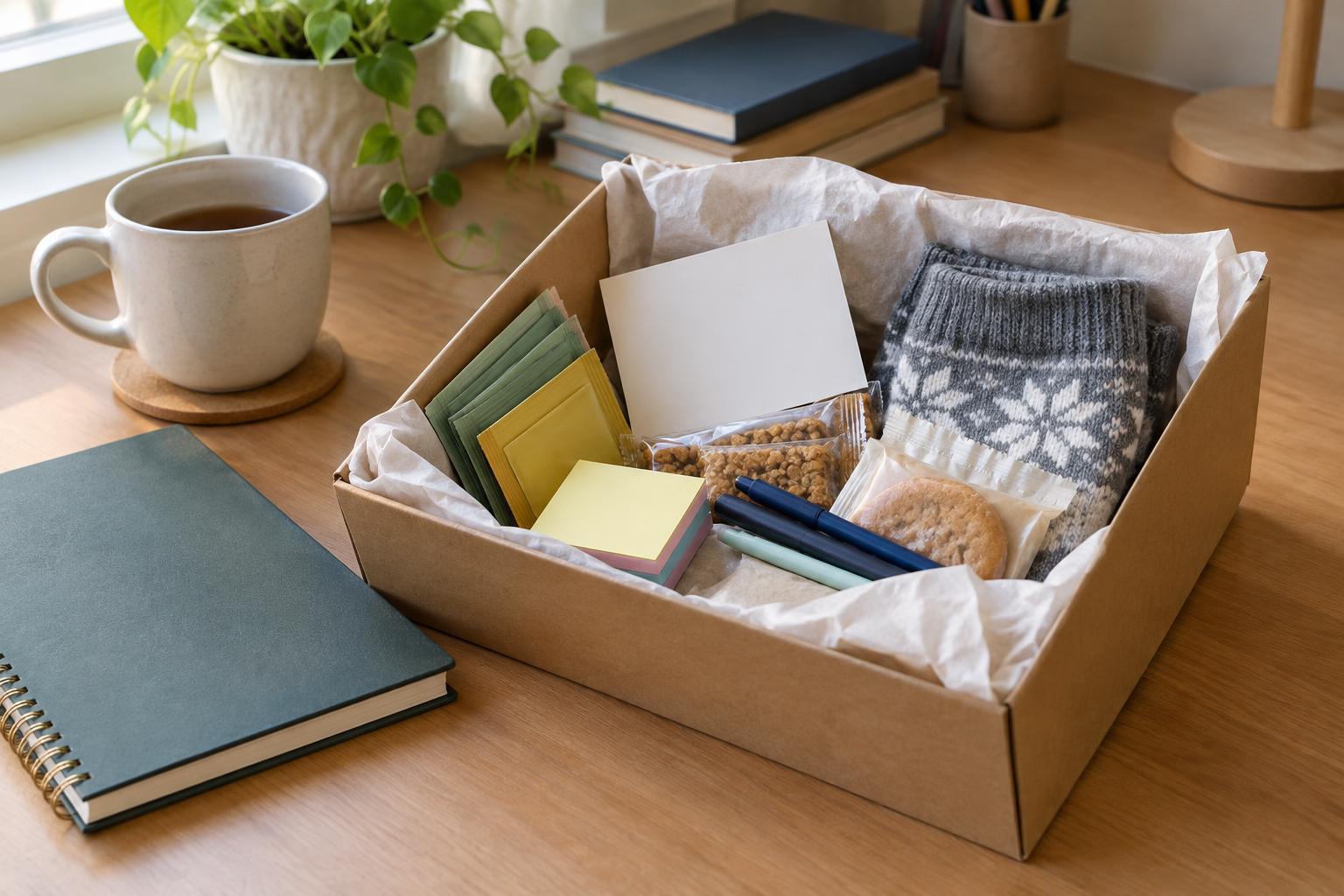
Start with the student’s new routine
Moving into a dorm can mean learning a new schedule, sharing space and figuring out which everyday items are worth keeping close. Before filling a box, ask the student what they already have and whether anything small would make the first few weeks easier. A package built around one or two real needs will usually feel more personal than a box of assorted supplies.
Consider the practical limits of dorm life, too. Storage may be scarce, and residence rules can vary. Check before sending anything that plugs in, has a strong scent or might be restricted. If the package is a surprise, choose compact items that are easy to use up, tuck away or share. Confirm the mailing address and any delivery instructions so the student knows where to collect it.
Choose comforts that earn their space
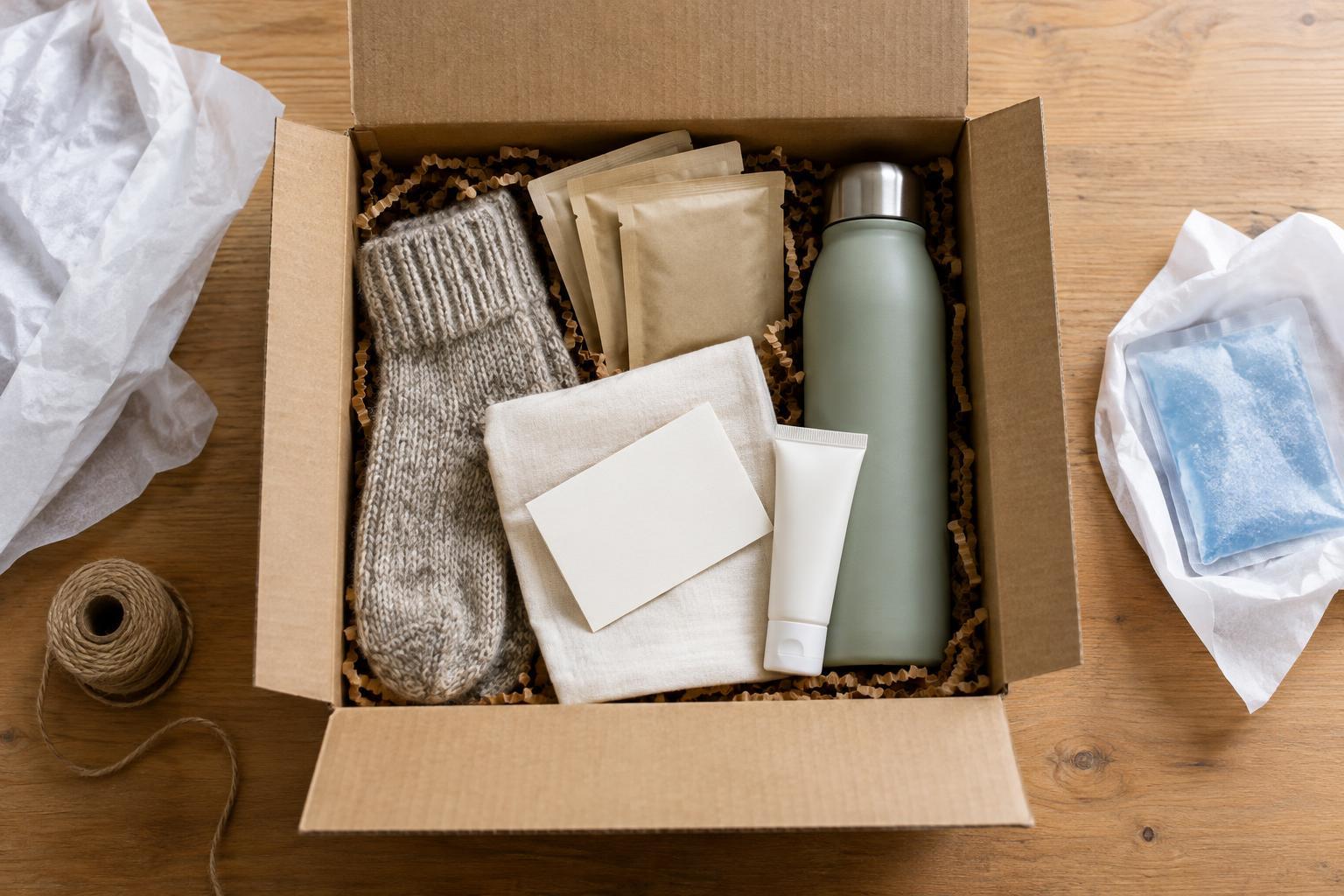
Small comforts can make an unfamiliar room feel more welcoming without adding clutter. Soft socks, a sleep mask or a favorite tea can suit a quiet evening. A few photos, a lightweight postcard or a small piece of artwork can make a desk feel familiar. If you know their preferences, add a travel-size version of a toiletry they regularly use rather than guessing at a new fragrance.
Think about the parts of the day that might need a little support. A sturdy bookmark and a favorite paperback offer a screen-free break; a compact pouch can keep chargers or pens from getting lost. None of these needs to be expensive. The aim is to send something the student can reach for often, not something they have to find room to display.
Add snacks with sharing and storage in mind
Shelf-stable snacks are often easier to manage than foods that need refrigeration. Individually wrapped crackers, granola bars or a familiar treat can be handy between classes and simple to offer to a roommate. If the student has allergies or dietary preferences, ask rather than assume. Check packaging for ingredients and choose items that can withstand the trip without leaking, melting or crumbling.
A small snack selection can have a theme without becoming elaborate. Try a movie-night pairing, such as popcorn and a favorite sweet, or a study-break mix of savory and sweet options. Leave room in the box for everything to be packed securely. A few things the student genuinely likes are more useful than a large assortment they may not finish.
Make staying in touch feel easy
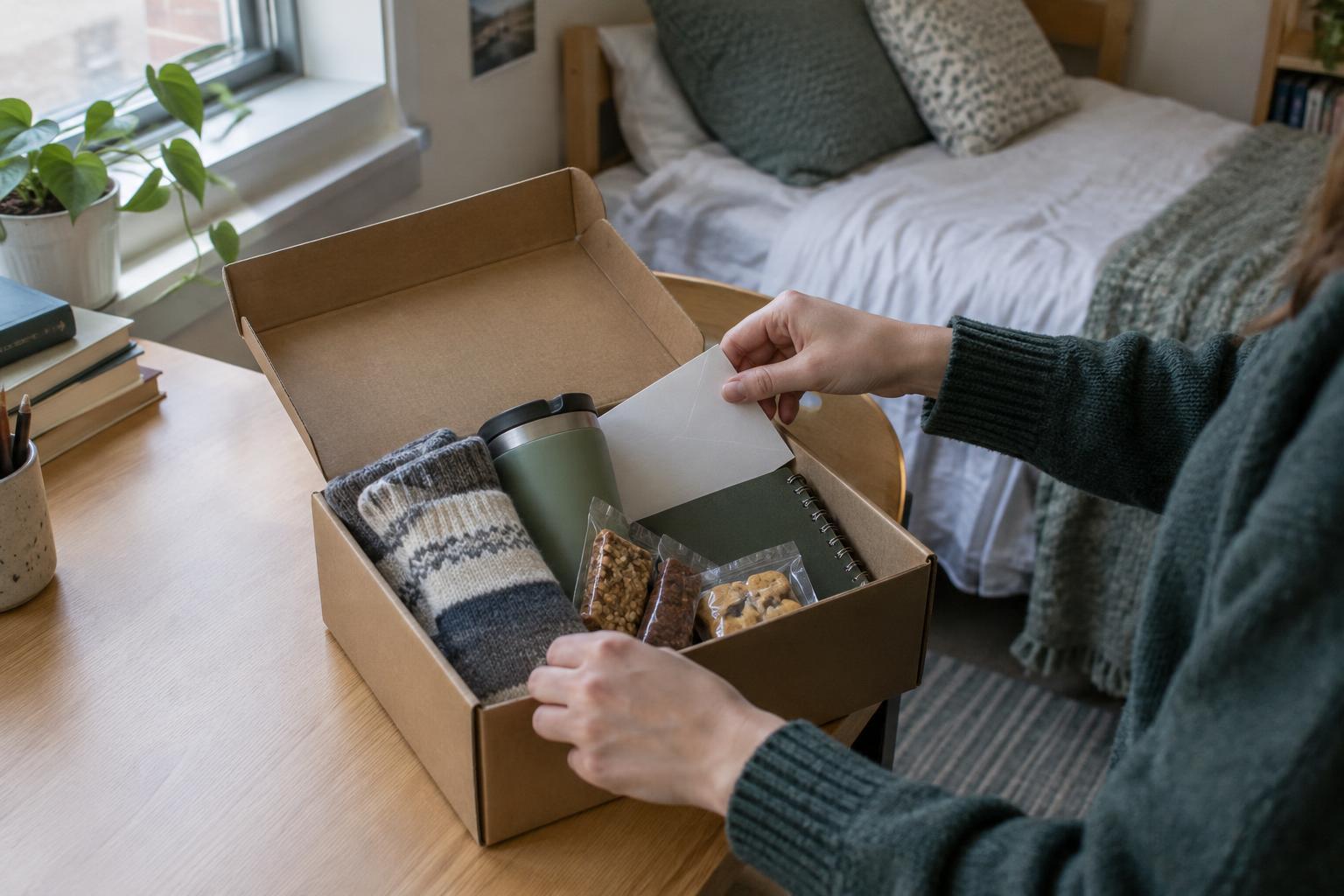
A handwritten note is often the most distinctive part of a care package. Share a specific memory, tell them what you admire about the way they are approaching this change, or describe an ordinary moment from home. Keep the tone encouraging without asking for a quick reply. Settling in takes attention, and a note can offer connection without adding another task.
If they enjoy writing, include a few blank cards, envelopes and stamps where appropriate. You could also slip in a short list of low-pressure ways to keep in touch: a photo of something funny, a voice message on a walk or an occasional postcard. These ideas work best as invitations, not expectations. The student can choose what fits their new routine.
Pack with care, then leave room for independence
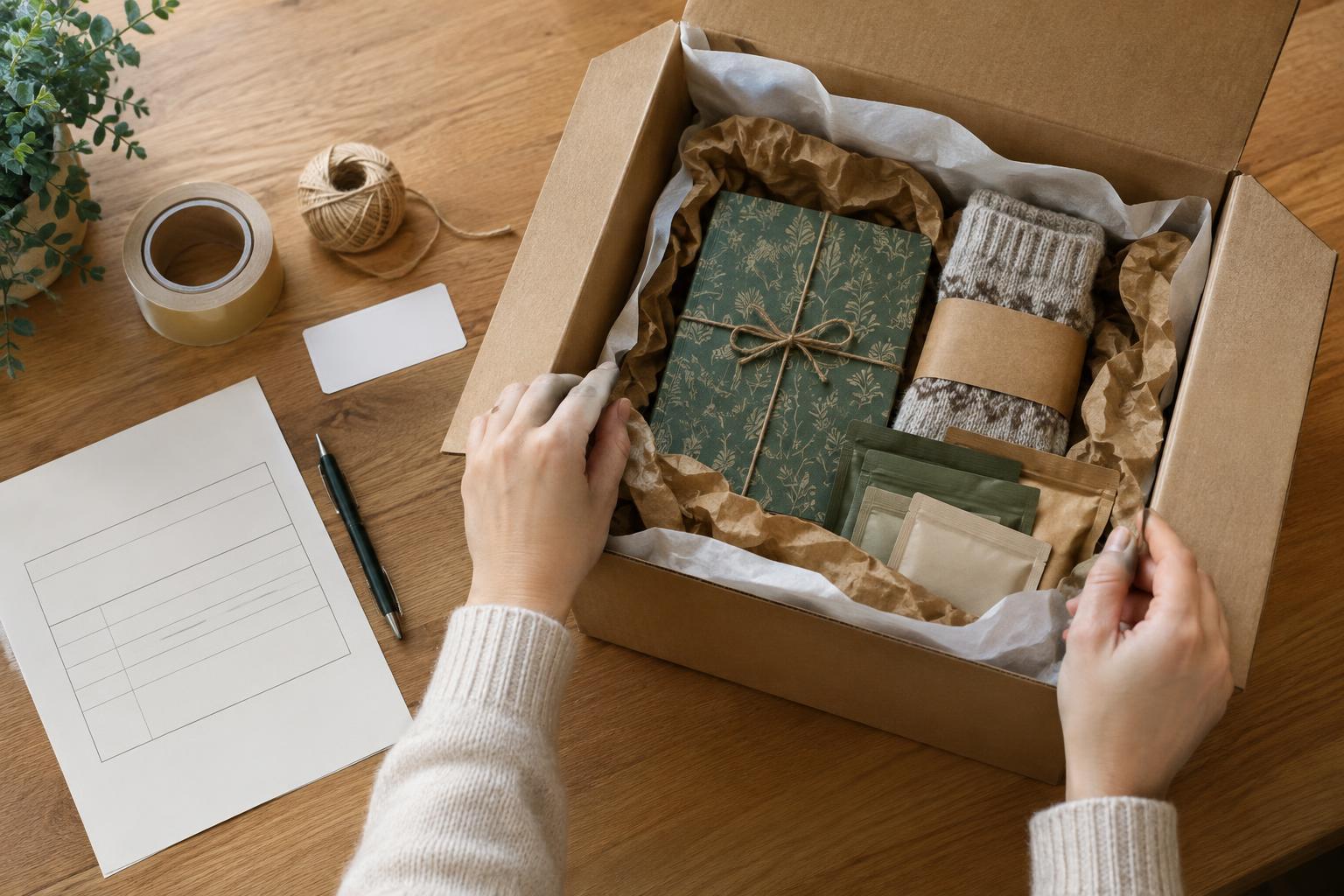
Arrange heavier items at the bottom and cushion anything fragile so it cannot shift. Keep liquids in sealed bags, and avoid sending valuables or anything difficult to replace. A brief note on top can explain why you chose a particular item and let the student know there is no need to save the wrapping. Reusable paper or a simple cloth pouch can make the presentation warm without creating much waste.
A settling-in package is a gesture, not a solution to every homesick or hectic day. It can say, “I’m thinking of you,” while respecting the student’s chance to build a life in a new place. Start small, pay attention to what they mention afterward and let future packages reflect what they have discovered they need.