Start with the story you want someone to feel
A stack of photographs contains more than a record of what happened. It might show how a friendship grew, what made a family gathering feel like itself, or the small routines that made a home familiar. Before arranging the pictures, ask what you hope someone will notice when they turn the last page. That answer matters more than following a perfect system.
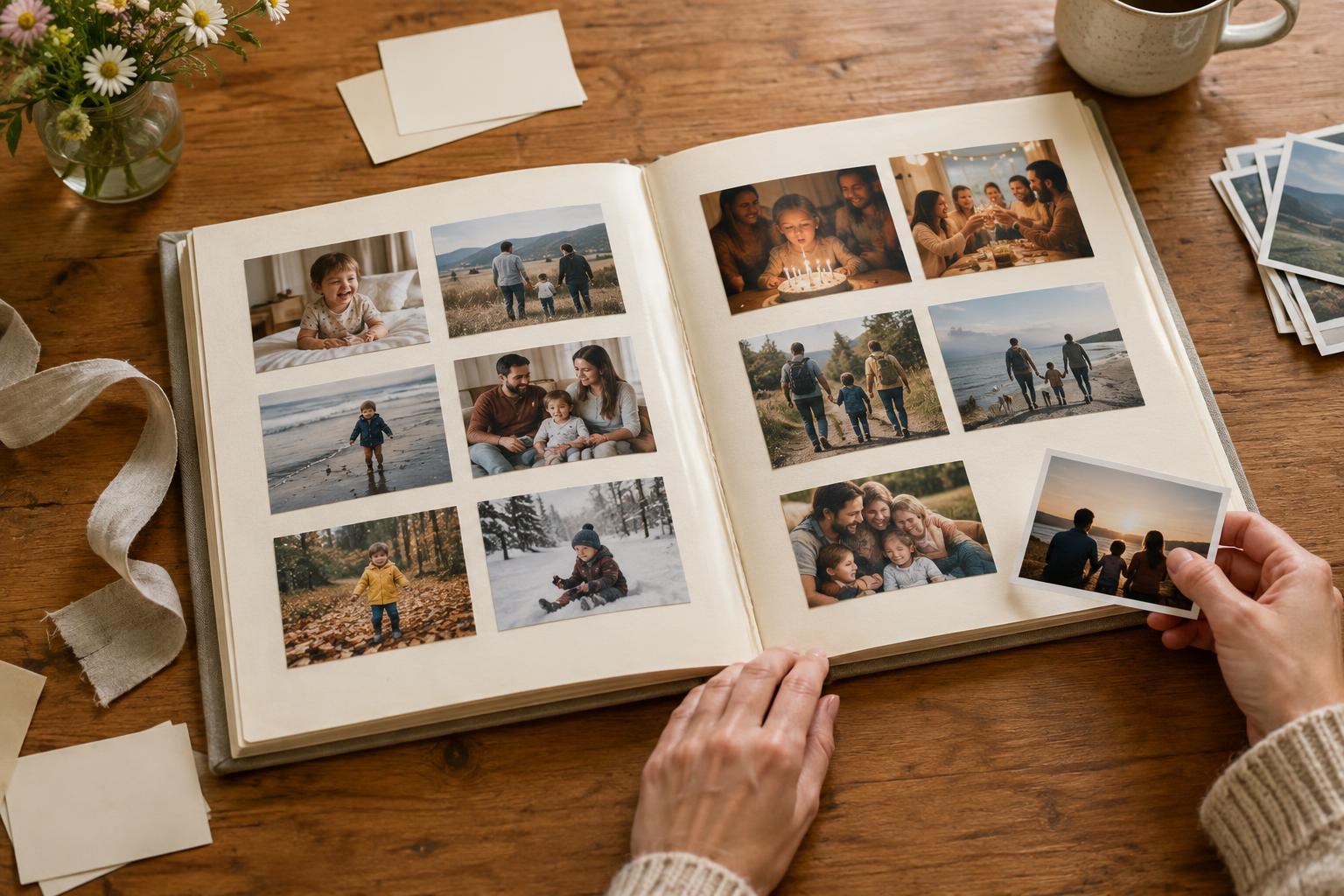
A chronological album moves from earlier moments to later ones. A themed album groups pictures by a shared subject, such as favorite meals, annual celebrations, places visited together or everyday acts of kindness. Neither is inherently more personal. The better choice is the one that helps your intended reader make sense of the memories without needing you beside them to explain every photograph.
Choose chronology when change is part of the story
An album arranged by time is especially helpful when the passage of time gives the pictures meaning. It can trace a child learning a skill, a garden taking shape, a couple settling into a new home or a group of friends returning to the same place over many years. Even quiet photographs become interesting when readers can see what stayed the same and what changed.
You do not need an exact date for every image. Broad labels such as “our first apartment” or “the summer of long walks” can provide enough orientation. If you are unsure where a photograph belongs, avoid guessing a date simply to fill a gap. Place it near related memories and use a caption that describes what you do know.
Chronology can feel less natural if the pictures come from widely separated sources or if one period has far more photographs than another. You can keep the timeline readable by selecting a few images that carry each chapter, rather than giving every event equal space. A short handwritten note at a turning point can explain why the next set of pictures matters.
Choose themes when connections matter more than dates
A themed album invites readers to notice recurring details. One section might collect all the birthday cakes made at home; another could show the people who gathered around the table. A friendship album could have pages for shared jokes, ambitious plans, ordinary afternoons and places you always seem to revisit. Pictures taken years apart can sit side by side and reveal a connection a timeline might hide.
Themes also make room for photographs whose dates are forgotten. Instead of treating them as a problem to solve, you can group them by what they show or the feeling they recall. Give each section a clear, simple heading so the album has a path through it. Too many narrow categories can make browsing feel like sorting through a filing cabinet.
This approach works particularly well for a celebration or gift centered on a person rather than a single event. It can show someone the many ways they appear in other people’s lives. When including contributions from friends or family, invite each person to add a brief memory in their own words; those varied voices can be part of the keepsake.
Try a hybrid if one structure feels too restrictive
You can build a chronological backbone and add themed spreads along the way. An album about several years together might move from one year to the next, with occasional pages devoted to favorite recipes, pets or handwritten notes. Conversely, a themed album can arrange photographs within each section from earliest to latest. Both approaches give readers a way to find their bearings without forcing every memory into one rule.
A simple test is to lay out a small selection of photographs in both arrangements before fixing anything in place. Which version makes you want to tell a story? Where do you find yourself pausing to explain a connection? If a picture could belong in several places, choose the spot where it adds the most meaning, not where it satisfies a system.
Let captions and care finish the album
Whichever order you choose, a few specific captions can make the album more generous to its reader. Names, places and approximate time periods help preserve context. Small observations give it warmth: what was being prepared just outside the frame, why everyone was laughing, or who insisted on taking the picture. Leave room for silence, too; not every page needs an explanation.
If the album includes personal or sensitive moments, think about who may see it and whether everyone pictured would feel comfortable with that audience. For an album meant to be handled often, use materials intended for photographs and keep irreplaceable originals stored safely elsewhere. Then allow the finished book to be imperfect. Its purpose is not to account for every day, but to offer a thoughtful way back to the moments you want to remember.