Begin with a reason, not a pile
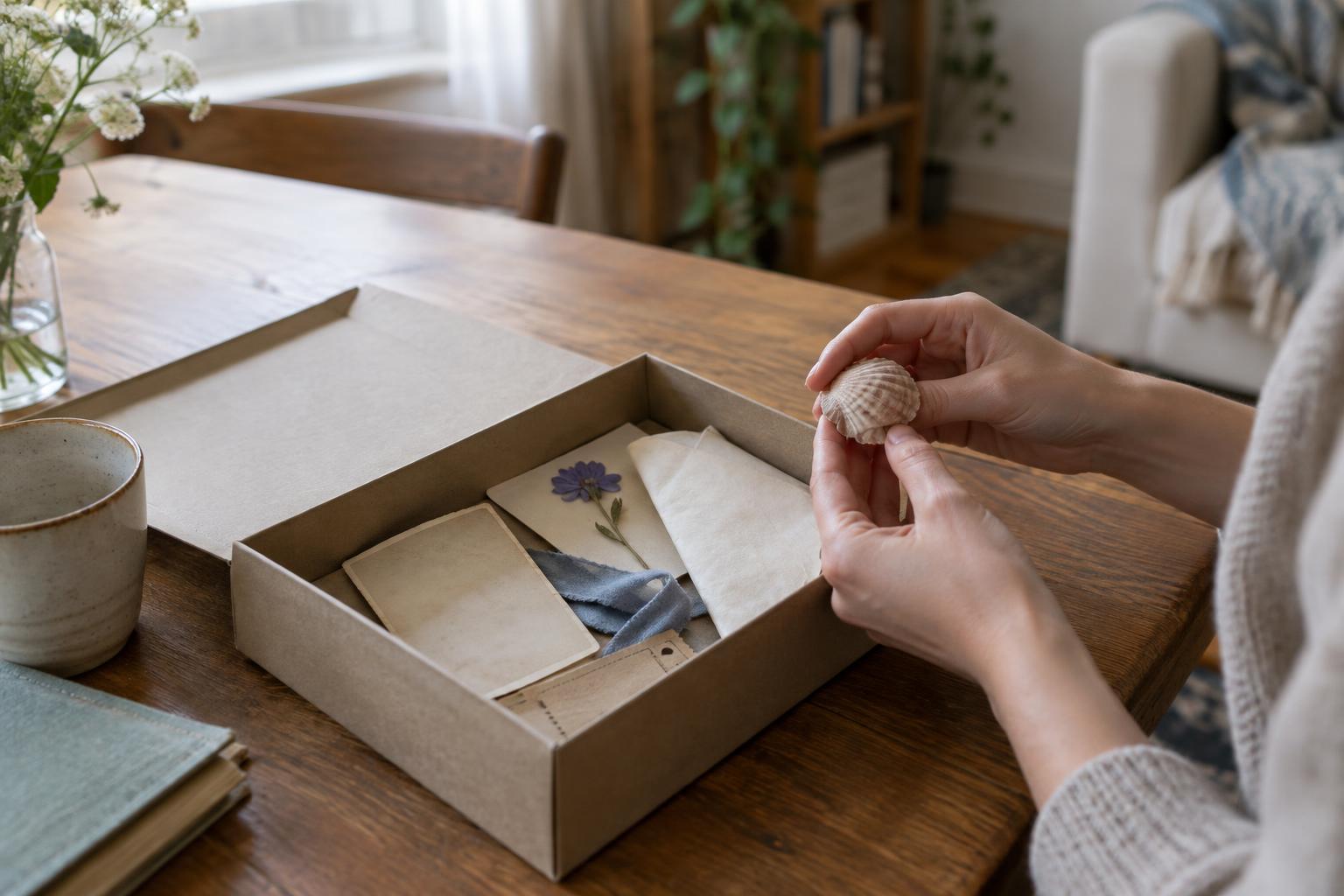
A memory box is a home for objects that help you recall a person, place or period of life. It might mark a child’s early years, a friendship, a move or a collection of family celebrations. You do not need a special container to begin. A sturdy box you already own is enough, provided it fits the space where you plan to keep it.
Before filling it, give the box a loose purpose. “Our first year in this home” is easier to curate than “everything important.” A purpose helps you decide what belongs when a drawer yields twenty greeting cards or a bag of event souvenirs. If one box starts covering several unrelated stories, a few smaller boxes or labeled envelopes may make those memories easier to find.
Keep things that bring a story back
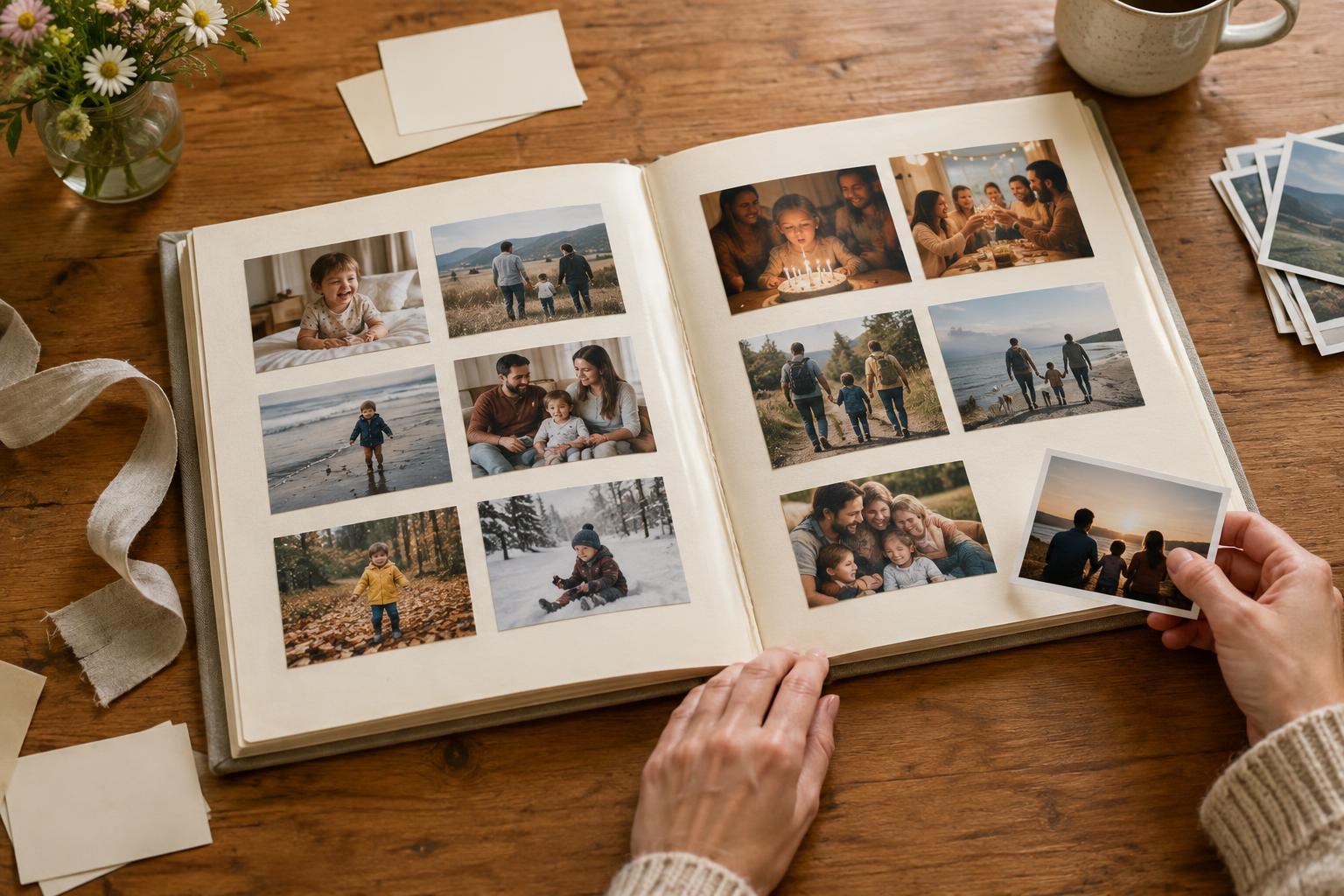
Choose items for the memories they prompt, not just for how impressive they look. A handwritten note, a recipe with someone’s annotations or a program from a shared celebration may bring back more than a polished souvenir. Photographs can be especially meaningful when you add a name, place or brief note about what was happening. A few words written now can help you recognize a moment later.
Look for variety as you choose: something written, something pictured and perhaps one small object you can hold. A ribbon from a gift, a child’s drawing or a postcard from a trip can represent a larger occasion without requiring you to keep every decoration or piece of packaging. Ordinary moments deserve room too. A note left on the kitchen table may say as much about a relationship as an invitation to a major event.
When several items tell the same story, pick the one that feels most specific. You might keep a single card with a personal message rather than a stack of cards signed only with names. There is no required number of keepsakes; the aim is to make the box rewarding to open, not difficult to close.
Leave out what weighs the box down
Not every reminder needs to become a keepsake. Leave out duplicates, objects you cannot connect to a memory and items you are saving only because throwing them away feels wrong. You can appreciate a gift or an experience without keeping every physical trace of it. If you hesitate over something bulky, consider whether a photograph and a short description would preserve what matters to you.
Think about the other people represented in the box. A private letter, sensitive photograph or document may deserve a separate, more secure place, particularly if others might open the box. Before including something another person might reasonably consider private, consider asking them. It is also fine to leave out objects that bring back memories you do not want to revisit. A memory box should reflect your choices, not an obligation to document everything.
Make the contents easy to understand
A little context is often more useful than elaborate decoration. Label an envelope with an occasion or write a few lines on a separate slip of paper: who was there, why an object mattered and what you hope to remember. Notes are especially helpful for small things such as ticket stubs or pressed flowers, whose meaning may not be obvious at a glance.
Group related items in envelopes or folders so they do not get lost beneath larger objects. Keep delicate papers flat where you can, and avoid placing damp or dirty objects beside them. A clean, dry storage spot away from direct sunlight is a sensible choice for most everyday keepsakes. If an item is fragile or valuable, consider whether it needs a different kind of storage rather than assuming the box will protect it.
Let the box change with you
A memory box does not have to be finished. Revisit it when a new keepsake arrives or when the box becomes crowded. You may find that an object that once felt essential no longer tells you much, while a modest note has gained meaning. Making space is part of caring for the collection.
If the box is intended for someone else, such as a child or a future family member, include a short note explaining its theme and a few favorite pieces. You can also invite them to add their own memories when the time is right. The most useful memory box is not the fullest one. It is the one whose contents help someone open it and say, “I remember.”