Cutting the Paper Before Checking the Fit
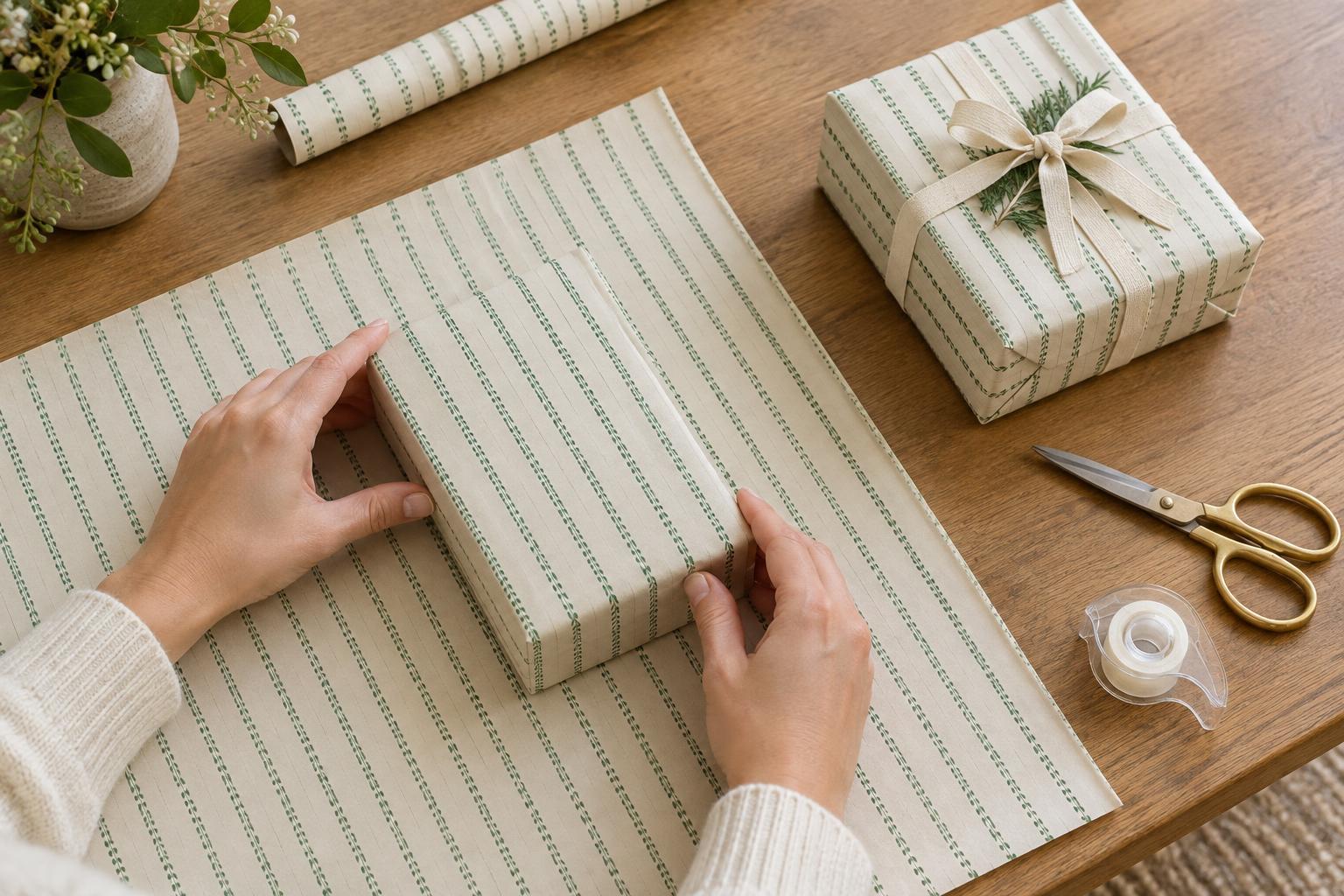
One of the most frustrating wrapping mistakes is discovering that a sheet of paper falls just short of covering the gift. Using far too much paper creates a different problem: thick folds that bunch up at the ends. Before cutting, place the box face down on the paper and bring the long edges up around it. They should overlap slightly on the underside. Then check that the paper extending past each end is deep enough to fold over the side of the box without leaving a gap.
If the paper is already too short, avoid stretching it until it tears. A narrow strip of contrasting paper can cover a gap and look intentional, especially when placed like a band around the box. If there is too much paper, trim it before taping the first seam. Keeping offcuts nearby is useful for making small tags or covering a tiny exposed patch.
Leaving Loose Seams and Bulky Corners
Loose wrapping often starts with the first seam. If the paper slides while you tape, the finished box can look rumpled even when the corners are folded carefully. Set the gift face down, pull one long edge of paper snugly over it and hold that edge in place. Bring the other edge across, making a narrow fold along its cut edge for a cleaner seam, then secure it. The paper should sit smoothly against the box without being pulled so tightly that it creases or tears.
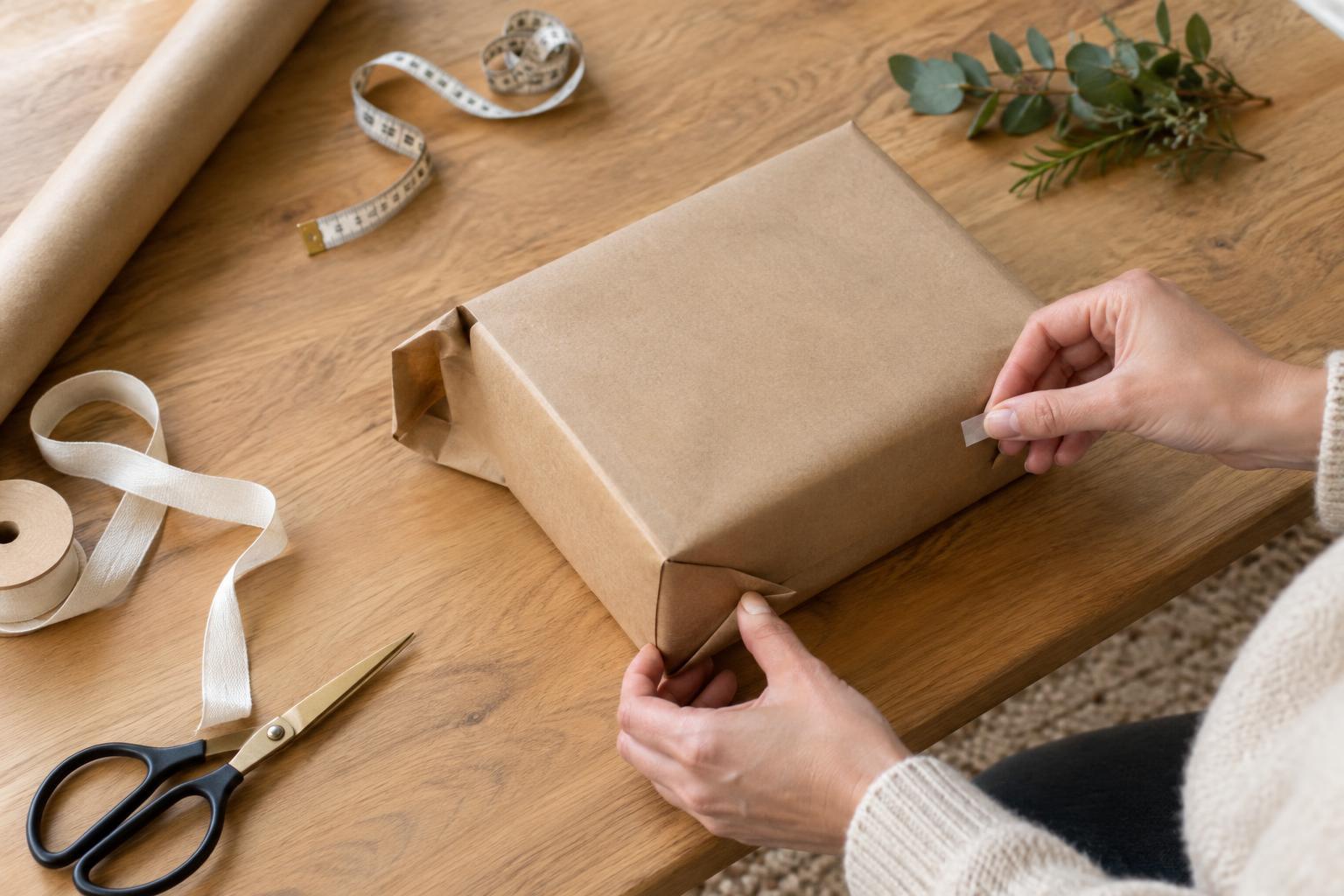
At the ends, press the paper down against the top edge of the box before folding the two side flaps inward. Crease each flap where it meets the box, then fold up the remaining flap and tape it. If the corners feel bulky, there may be too much paper extending beyond the end; unfold them, trim a little and try again. Working one crease at a time is usually easier than trying to flatten all the extra paper at once.
Using Tape to Solve Every Problem
Extra tape can hold a package together, but it rarely fixes paper that is poorly sized or folded. Several visible pieces may also distract from an otherwise simple design. Before adding tape, smooth the paper, check that the edges meet where you want them and make the fold. Small pieces placed at the main seam and at each folded end are often easier to manage than long strips.
If tape will not stick well to textured paper, try fastening the paper to itself rather than relying on a loose fold. You can also use a length of string or ribbon to keep a wrap closed, provided it is tied securely. Whatever you choose, lift the gift gently after wrapping to check that the paper stays in place. A neat package still needs to survive being picked up.
Forcing Awkward Shapes Into a Box-Style Wrap
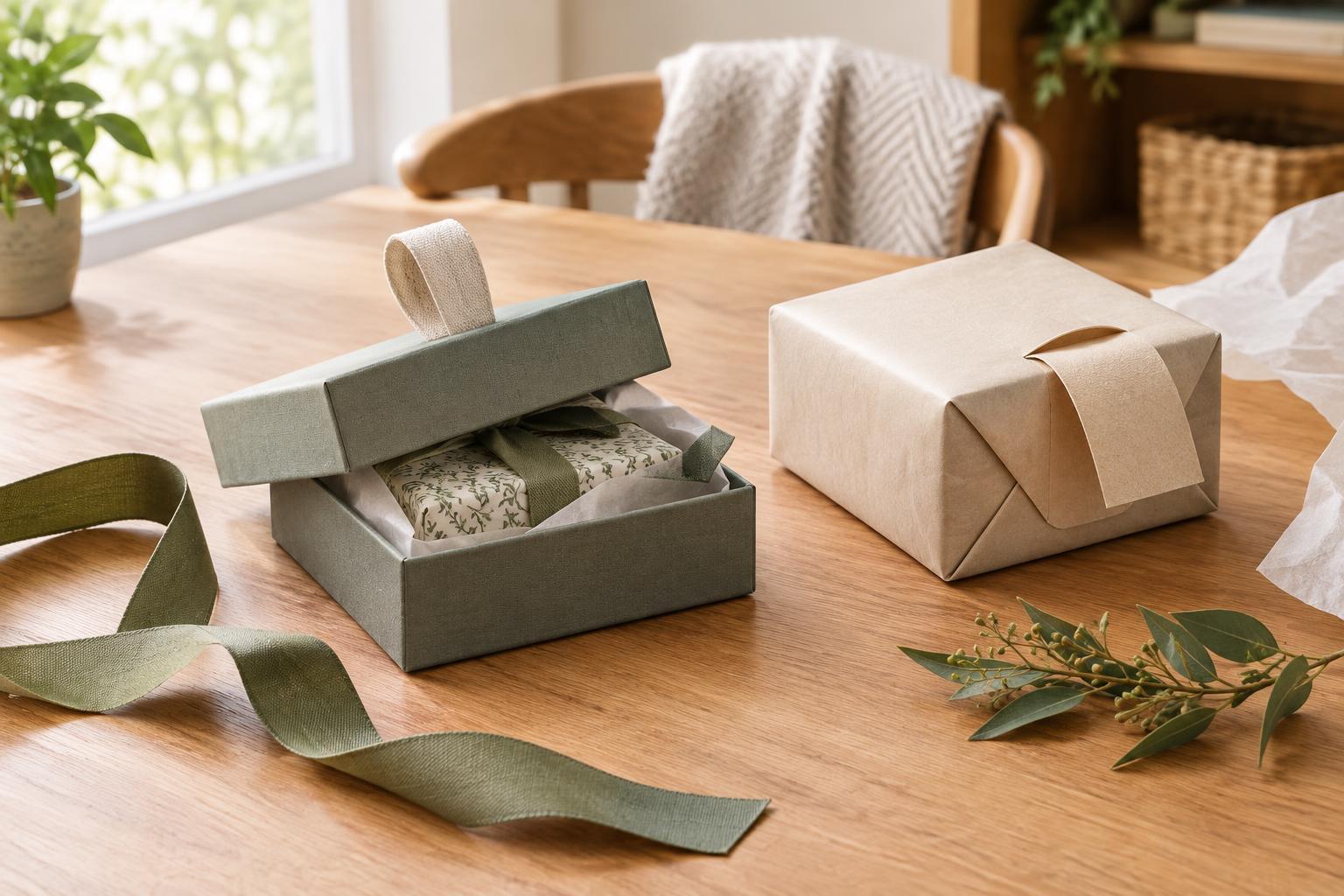
Mugs, soft toys and other irregular gifts do not offer the straight edges that make ordinary wrapping easy. Trying to imitate a box wrap can lead to torn paper and a tangle of folds. If you have a suitable box, placing the item inside can simplify the job. Otherwise, consider a reusable cloth, a paper bag or a simple paper bundle that suits the shape rather than concealing every curve.
For a bundle, place the item near the center of the material, gather the edges above it and tie them without pulling too hard. Check that the item is supported at the bottom and that any fragile parts are protected before you add a decorative finish. The aim is not a perfectly geometric parcel; it is a gift that is easy to carry and pleasant to open.
Adding Finishing Touches That Get in the Way
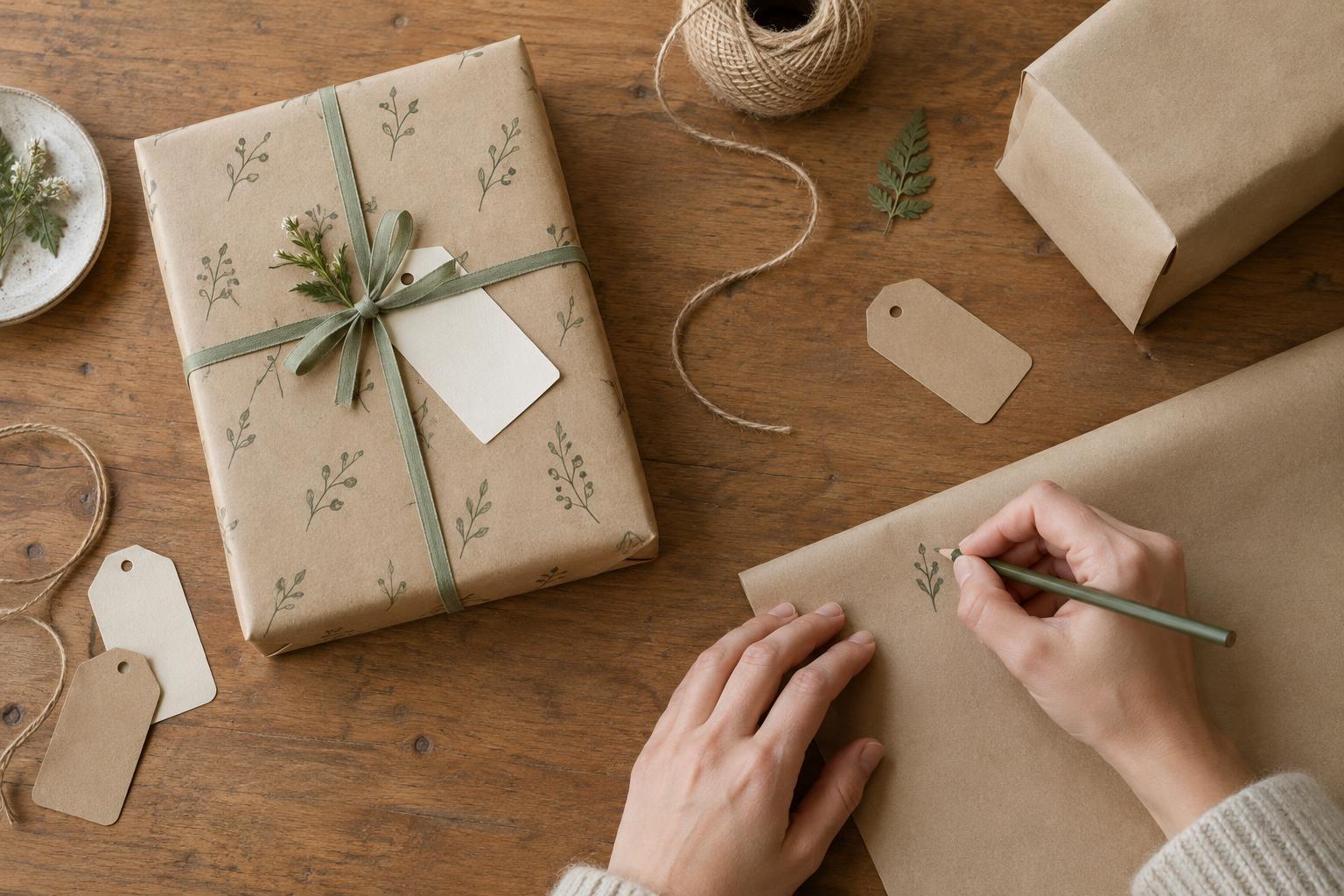
Ribbon, tags and small decorations can make a gift feel personal, but too many layers may hide the wrapping or make it difficult to open. Start with one finishing detail that suits the recipient: a handwritten tag, a simple bow or a small paper ornament. If you use ribbon, tie it firmly enough to stay put without bending the box or crushing a soft package.
Before calling it done, turn the gift over and look at every side. Tuck in a lifting corner, remove a stray piece of tape and make sure the tag is attached. A quick final check catches the small mistakes that are easiest to fix. Thoughtful wrapping does not have to be flawless; it needs to protect the gift, stay together and feel considered.