Start with the person, not the decorations
Plain paper gives you room to make a gift feel specific to its recipient. Before reaching for pens or ribbon, think of one detail that belongs to the person or your relationship: a favorite color, a shared hobby, a phrase you often say to each other or a memory connected to the occasion. One detail is usually enough to guide the wrapping. You do not need to cover every inch of the paper.
Choose a paper that works with your idea. Kraft paper suits earthy colors and casual handwriting, while white paper offers a clear background for bright marks or a small illustration. If you already have plain paper at home, use that rather than looking for a perfect match. A little contrast between the paper and your additions will help the personal touches stand out.
Make handwriting part of the design
A handwritten line can do more than a printed gift tag. Write the recipient’s name across one corner, repeat a short greeting along an edge or add a sentence about why you chose the gift. For a birthday, you might write a favorite memory; for a thank-you gift, you could name the kindness you appreciated. Leave enough open space that the message is easy to find and read.
You can also use handwriting as a pattern without sharing anything private on the outside of the package. Try repeating a simple word, writing a few relevant place names or drawing small symbols between lines of text. Test your pen on a scrap first: some inks spread on absorbent paper or show through thin sheets. Let the writing dry before folding the paper around the gift.
Build a simple pattern by hand
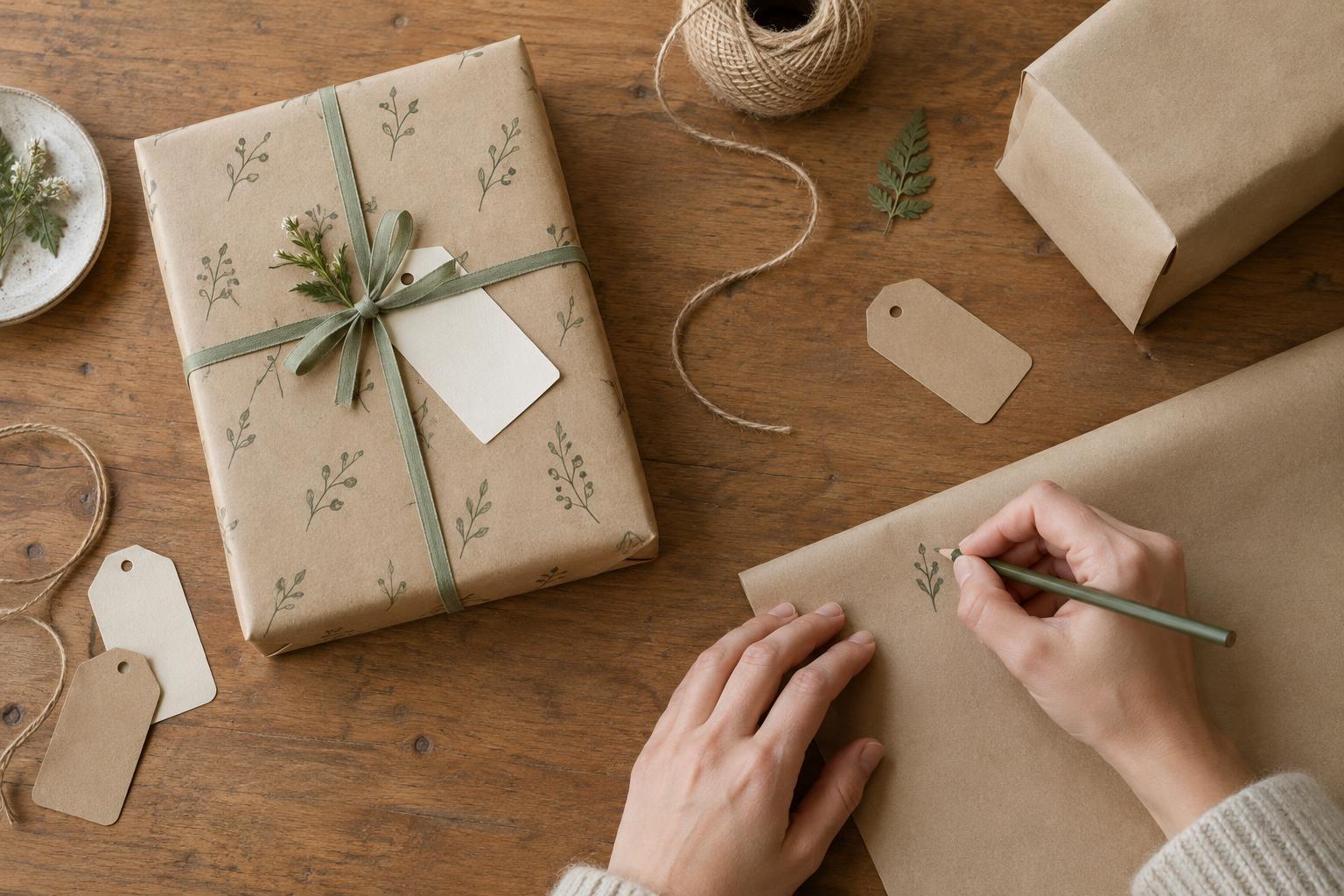
You do not need drawing skills to make plain paper distinctive. Dots, short dashes, stars, leaves or small circles can become a pattern when repeated with a little space between them. Work on a flat sheet before wrapping, and begin with a small area rather than committing to the whole surface. A pattern around the edges can frame the gift while leaving the center clear for a tag or ribbon.
Let the occasion suggest the marks without making the design too literal. A few scattered flowers might suit a spring celebration; tiny envelopes could accompany a gift for someone who loves letters. If you use stamps, make one test impression to check how much ink they need. Slight variations in handmade marks are part of their character, so there is no need to make every repeat identical.
Add a layer with a story
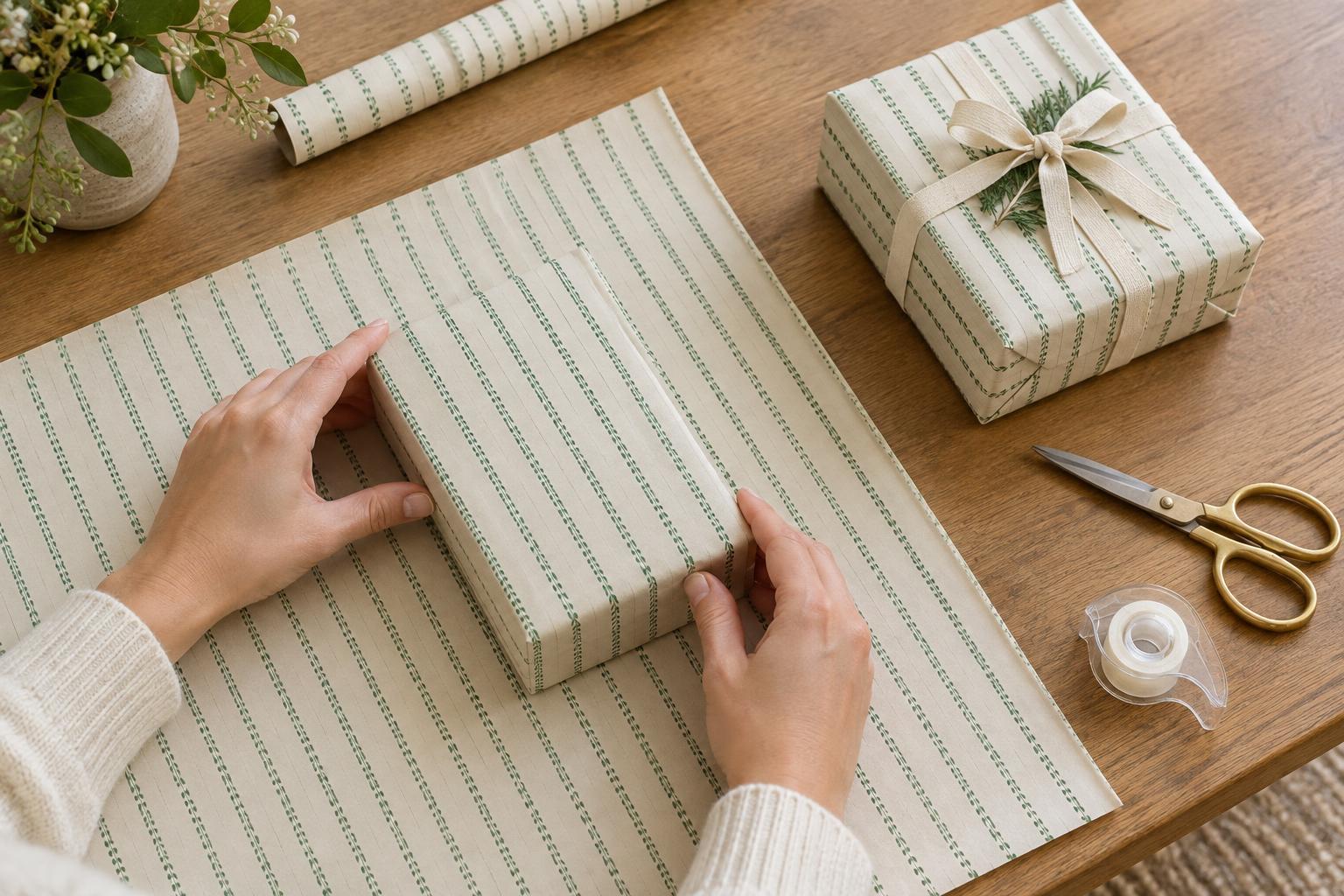
A narrow band of contrasting paper is an easy way to add interest to a wrapped box. Cut a strip from a spare sheet, an old map you own or a page of your own artwork, then wrap it around the middle of the parcel. A paper band can also hold a small note in place. If the printed material has a personal connection, such as a map of a place you visited together, that connection can become part of the gift.
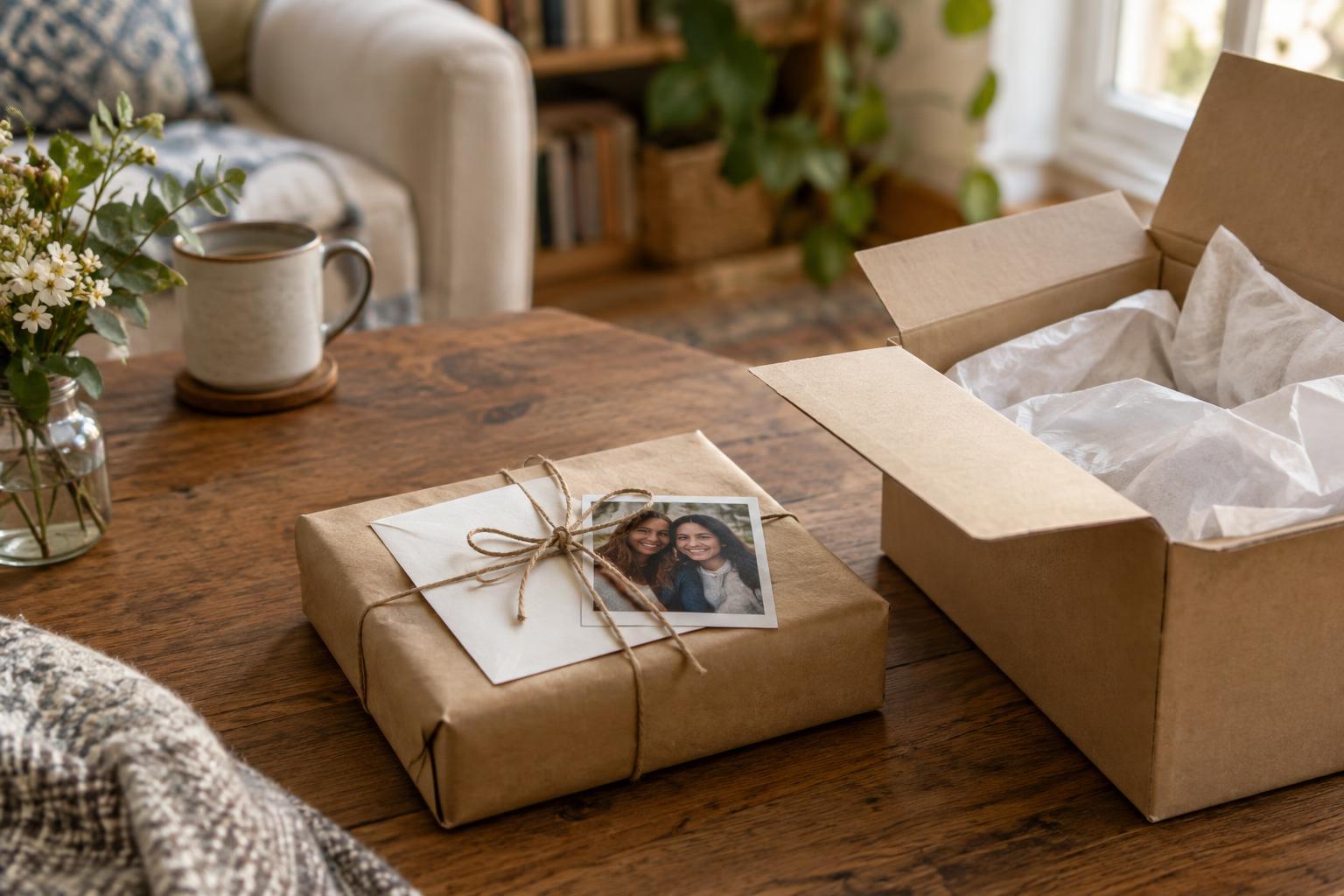
Other small additions can work well when they are easy to attach and remove. Tuck a photograph copy, a pressed-paper shape or a handwritten recipe card beneath a length of string. Choose flat items for parcels that need to be carried or packed closely, and avoid delicate pieces that may be crushed. If you are reusing paper, smooth out the most prominent creases, but do not worry about hiding every sign of its previous life.
Finish with a note they can keep
The final detail can be practical as well as decorative. Tie on a small card with the recipient’s name on one side and a personal message on the other. You could mention what made you think of them, suggest a time to enjoy the gift or simply say you are glad to celebrate with them. A note that can be slipped into a book or drawer gives the wrapping a life beyond the moment it is opened.
Before calling it finished, look at the package from a little distance. If the handwriting, pattern and ribbon compete for attention, remove one element or move the tag to a quieter spot. Personal wrapping is not about adding as much as possible. It is about giving the recipient one or two details they will recognize as chosen for them.