Saving the object but not its story
A ticket, pressed flower or place card may bring back a whole afternoon when you first save it. Years later, its meaning can be harder to place. The mistake is assuming that the object will always explain itself. Before you put it away, add a short note with the people, occasion and place you remember. An approximate time, such as “the summer we moved,” is more useful than leaving the detail blank.
Keep the note with the object in a labeled envelope or sleeve, rather than writing on a delicate original. For a greeting card, note who sent it if the signature is difficult to read. You do not need a polished account of the day. One honest sentence about why you kept something often preserves more meaning than a long description written much later.
Putting everything into one unsorted box
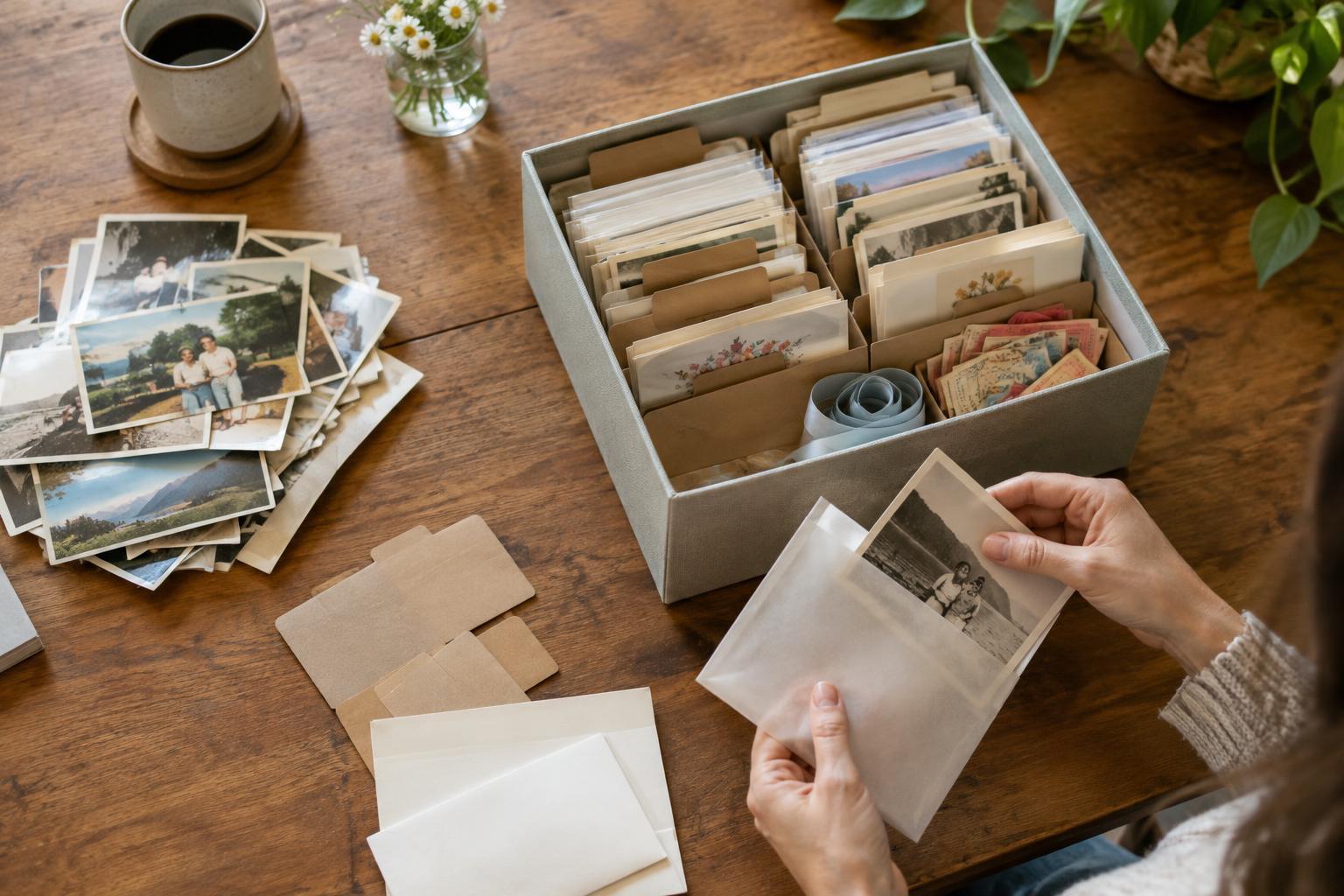
A single keepsake box is easy to start and frustrating to search. Holiday cards, school programs and birthday photographs can end up in layers that must be emptied each time you want one item. Give the box a simple structure: folders or envelopes for broad groups such as people, occasions or years. Choose the grouping you would naturally think of when looking for something.
Label both the containers inside and the outside of the box. A label such as “Family celebrations: cards and photos” is more helpful than “Memories.” If you have several boxes, give each one a distinct name and keep a brief list of what it holds. The system does not need to be perfect; it needs to make the next search easier than the last.
Keeping duplicates while overlooking the favorites
It can feel safest to save every version of a photo, every piece of party packaging and every card from an event. Over time, the volume can hide the items you most want to revisit. Set aside a manageable group of favorites for each occasion, then decide whether the remaining items add a different detail or repeat what you already have.
This is not a rule to discard things with personal value. A handwritten envelope might matter as much as the letter inside it. The aim is to make deliberate choices instead of letting a pile make them for you. If you are unsure about an item, put it in a clearly marked “decide later” folder and return to it on a specific occasion, such as your next seasonal tidy-up.
Letting digital memories lose their labels
Digital keepsakes can become just as hard to find as physical ones. A photo named with a string of numbers, a scanned letter saved among unrelated files or an audio message left only in a chat may be difficult to recognize later. Create a clearly named folder for each occasion or person, and use descriptive file names when practical. “Maya birthday card front” tells you more than “scan 04.”
If a digital file relates to a physical keepsake, connect the two with a note. You might write “scanned copy in Family celebrations folder” on the envelope that holds the card, and include the card’s date or description in the file name. Keep an additional copy of important digital files somewhere separate from your everyday device. No storage method removes every risk, but clear names and an extra copy make retrieval less dependent on memory or one device.
Making a system only you can understand
An elaborate code may seem tidy until you forget what its abbreviations mean. Use ordinary words on labels, and keep categories broad enough to apply consistently. If several people share the keepsakes, ask what they would look for first. Someone searching for a grandparent’s letters may not think to open a folder labeled with the year they were written.
Think, too, about which memories are yours to share. A private letter or an unflattering photo may deserve careful storage without being displayed or copied for everyone. Mark sensitive folders clearly and consider the other people involved before turning a personal item into a gift or celebration display. The most useful keepsake system does more than protect objects: it helps the right people find and understand them while respecting the stories they hold.