Starting without knowing what you want to say
A letter can do many things: celebrate, thank, apologize, offer comfort or simply keep a friendship going. When you try to do all of them at once, the reader may struggle to find the point. Before you choose paper or pick up a pen, finish this sentence for yourself: “I’m writing because…” You do not have to put those exact words in the letter, but knowing the answer gives the note a direction.
One common mistake is hiding the purpose behind a long account of unrelated news. A little conversation makes a letter feel human; too much can bury the message that prompted it. If you are writing to thank someone, say what you are grateful for near the beginning. If you are checking in after a difficult time, lead with care rather than saving it for the final line. You can then add the stories and details that make the letter yours.
Using a tone that asks the reader to guess
Without facial expressions or an immediate reply, playful exaggeration and dry humor can land differently on paper. A teasing remark that feels harmless when spoken may sound sharp when read alone. This does not mean a letter must be solemn. It means that, when the relationship or subject calls for care, warmth should be clear enough to survive without your voice explaining it.
Vague phrases can cause similar trouble. “You know what happened” may leave the recipient unsure which event you mean. “Sorry about everything” may sound less sincere than naming the particular thing you regret. Write as though the reader is opening the letter on an ordinary day, not continuing the conversation you have been rehearsing in your head. If you are unsure about a sentence, read it aloud and ask whether its meaning depends on a tone the page cannot carry.
Leaving out the details that make a message personal
Generic praise and good wishes are kind, but they can make a personal letter feel interchangeable. “I appreciate you” becomes more vivid when you mention the patient phone call, the shared walk or the way someone remembered a small preference. You do not need a dramatic story. One accurate detail often says more than a string of grand adjectives.
The opposite mistake is including so many details that the reader cannot tell which ones matter. Choose a moment that supports your purpose, then let it breathe. In a birthday letter, you might recall a favorite memory and explain why it still makes you smile. In a note of encouragement, you might mention a strength you have actually seen the person use. Specificity helps the reader recognize themselves in your words; it should not feel like an inventory of every interaction you have had.
Making the letter difficult to follow or read
A letter can be informal and still have a simple path. Move from your reason for writing to the detail or story behind it, then close with a thought about what comes next. When a practical question is tucked into the middle of several pages, it is easy to miss. Give requests their own short sentence, especially if you hope for a reply. “Would you like to meet next month?” is clearer than hinting repeatedly that it has been too long.
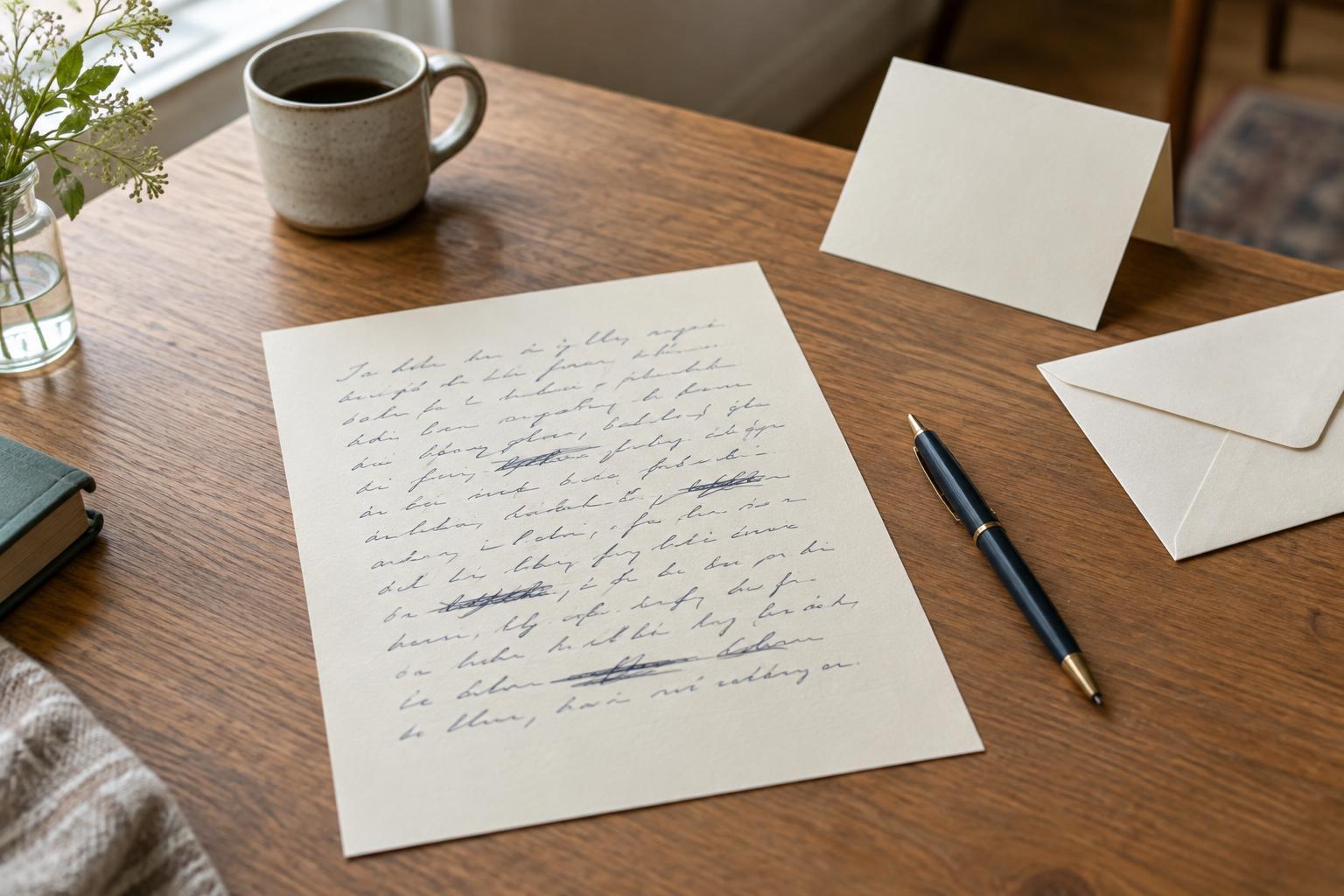
Presentation matters because the recipient has to read the words before they can enjoy them. Crowded lines, ink that is faint against the paper and writing that runs into the margins can all slow someone down. If your handwriting becomes hard to decipher when you rush, leave a little more space between lines or draft the letter first. Neatness is not a measure of affection; making the page comfortable to read is simply another way to be considerate.
Editing away your voice—or skipping a final check
It is tempting to revise a heartfelt letter until every sentence sounds polished. Too much editing, though, can remove the familiar turns of phrase that make it sound like you. Aim for clarity rather than perfection. A small tangent, a gentle joke or an honest admission may be the part the recipient remembers. If a sentence feels true and is easy to understand, it does not need to sound formal.
A brief final read can catch problems that matter more than style: a missing name, an unclear reference, a question you forgot to ask or a sentence that says the opposite of what you intended. Check the envelope details before sealing it, too. Then let the letter go. The goal is not to produce flawless writing, but to give someone a message they can receive without having to puzzle out what you meant.