Start with the child, not a perfect opening
The best starting point is something the child will recognize. Mention the game you played together, the pet they told you about or the drawing they showed you. “I keep thinking about the enormous castle you built” gives them something more engaging than a formal greeting followed by a list of news. It also shows that you paid attention to something that mattered to them.
Keep their age and interests in mind, but don’t worry about finding a special “childlike” voice. Write as yourself, using clear words and short sentences where helpful. A younger child may enjoy a letter read aloud, while an older child may prefer one addressed directly to them without sounding like a lesson. If you haven’t seen them recently, begin with a simple thought: “I saw a bright yellow bus today and remembered how much you like spotting them.”
Share one small story
A letter feels more like a visit when it contains a story rather than only questions. Choose one small moment from your day: a squirrel trying to carry a leaf twice its size, a cake that leaned to one side or an unexpectedly good view from a walk. Tell them what happened, including a detail they can picture. Everyday moments are enough; they don’t need an exciting ending.
You can make the story interactive by letting the child guess what happened next or what you did. For example: “The wind blew my hat across the path. Where do you think it landed?” Give the answer later in the letter. This adds a little play without asking the child to do homework. A brief story also leaves room for their imagination, which may be more enjoyable than a long account of everything you’ve been doing.
Ask questions that are easy to answer
Questions can open a conversation, but too many may make a letter feel like a worksheet. Pick one or two that connect to the child’s interests or to the story you’ve shared. “What would you name a dragon?” may be easier to answer than “How is school going?” If you want to ask about their life, try something specific and low-pressure, such as “Have you made anything lately that you’re pleased with?”
Make it clear that a reply is welcome, not required. They might write a sentence, draw a picture, dictate a message to an adult or simply tell you their answer when you next meet. You can say, “If you feel like writing back, I’d love to hear your dragon’s name.” That leaves the door open without turning your letter into another task.
Make the page inviting
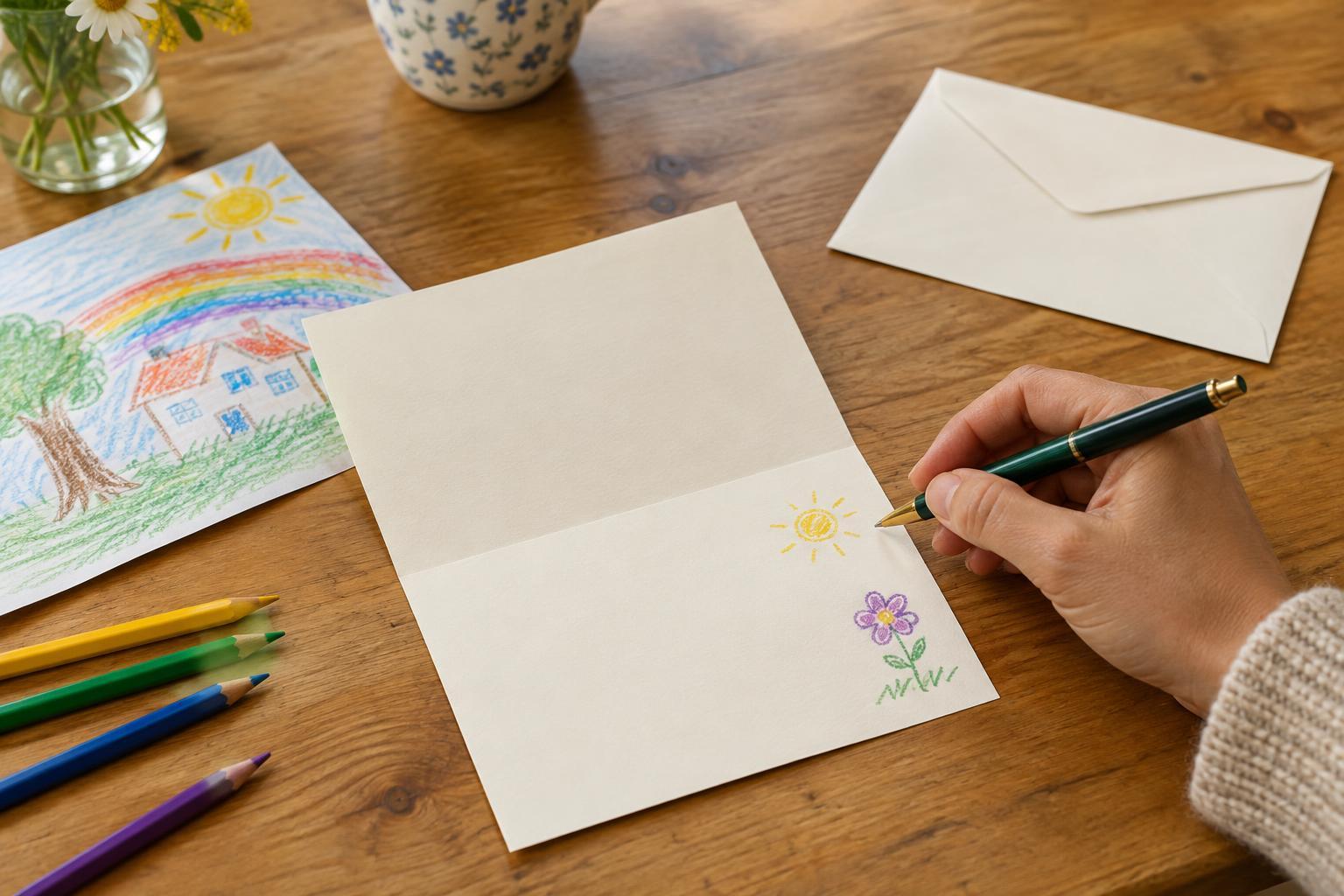
Presentation can help a child feel that the letter was made for them. Leave some space between ideas and write clearly enough that they or a reading partner can follow along. For a child learning to read, a few short paragraphs may be more inviting than a full page of small handwriting. You could add a little sketch in the margin, a colorful heading or a simple word puzzle tied to your story.
Small additions work best when they support the letter rather than distract from it. A child who loves animals might enjoy a drawing of the squirrel in your story. An older child might appreciate a photo you’re happy to share or a question on a separate note they can keep. If you enclose anything, choose items that are suitable for their age and check with a parent or caregiver when you’re unsure.
End with warmth and leave room for next time
Close with something genuine and uncomplicated: “I loved hearing about your garden,” or “I’m looking forward to seeing what you build next.” If you’re writing from a distance, a letter can offer a familiar point of contact without suggesting that the child has to feel a certain way about being apart. Let them know you’re thinking of them, then sign your name in the way they know you best.
You don’t need to fit everything into one envelope. A letter that takes only a few minutes to read can still give a child a story to remember and a reason to smile. Keep a note of what you asked or shared, so a later letter can pick up the thread. Over time, those little exchanges can become their own record of the things you’ve noticed together.