Decide what the letter needs to do
A letter can give you time to choose your words, and it can give someone else time to take them in. That makes it useful for a difficult subject, but it does not mean every hard conversation belongs on paper. Before you begin, ask what you hope the letter will accomplish. Are you sharing news, acknowledging hurt, making a request or opening a conversation? Choose one main purpose. A letter that tries to settle every disagreement at once can be hard to read and harder to answer.
Consider whether the recipient should hear this from you directly instead. A letter may be a thoughtful way to begin, especially if either of you needs space to reflect. It is less suited to a matter that needs an immediate answer or practical action. If you decide to write, think of the letter as one part of a conversation rather than your only chance to be understood.
Start plainly and set a gentle pace
You do not need an elaborate opening. A simple sentence such as “I’ve been wanting to tell you something important, and I wanted to put it in writing so I could be clear” gives the reader a sense of what is coming. If the subject may be upsetting, name that without predicting how they will feel. You might add that they can read the letter when they have time and privacy.
Then get to the point. A long lead-in can leave the reader wondering what you are trying to say. State the central message in direct, ordinary language, and add only the background needed to understand it. Imagine the person rereading your first few lines later: would they know why you wrote? Clarity is a form of care, even when the message itself is uncomfortable.
Be honest without assigning motives
Difficult letters often involve different memories or interpretations of the same event. Write about what you observed, what you felt and what you need, rather than claiming to know what the other person intended. “I felt left out when I heard about the gathering afterward” is more precise than “You never want me there.” Specific examples help; sweeping words such as “always” and “never” can pull attention away from the issue you want to discuss.
If you owe an apology, say what you are apologizing for without making the other person responsible for reassuring you. If you need to set a boundary, make it understandable without turning it into a threat. You can be warm and firm in the same paragraph. Avoid including private details about other people unless they are necessary to explain your message, and consider how the letter would feel to read more than once.
Leave room for a response, including silence
A letter is an invitation to receive your words, not a way to control the reply. You can say what kind of conversation you would welcome: a call, a note in return or a chance to talk in person. If you are asking a specific question, make it easy to find. At the same time, avoid demanding an immediate response. The recipient may need time, and they may understand the situation differently.
An ending does not have to tie everything up. “I care about our relationship, and I’m willing to listen when you’re ready” may be enough if it is true. If you are not ready for a wider discussion, it is also fair to say so. Try to close with the same honesty you used at the start, rather than adding a promise or reassurance you cannot keep.
Review the letter before you send it
Set the draft aside, even briefly, and read it as though you were receiving it. Check for sentences written in the heat of the moment that do not serve your purpose. Notice whether a question sounds like an accusation, or whether a long explanation obscures your main point. Reading the letter aloud can reveal where the wording feels tangled or sharper than you intended. Keep the details that matter; cut the ones included only to win an argument.
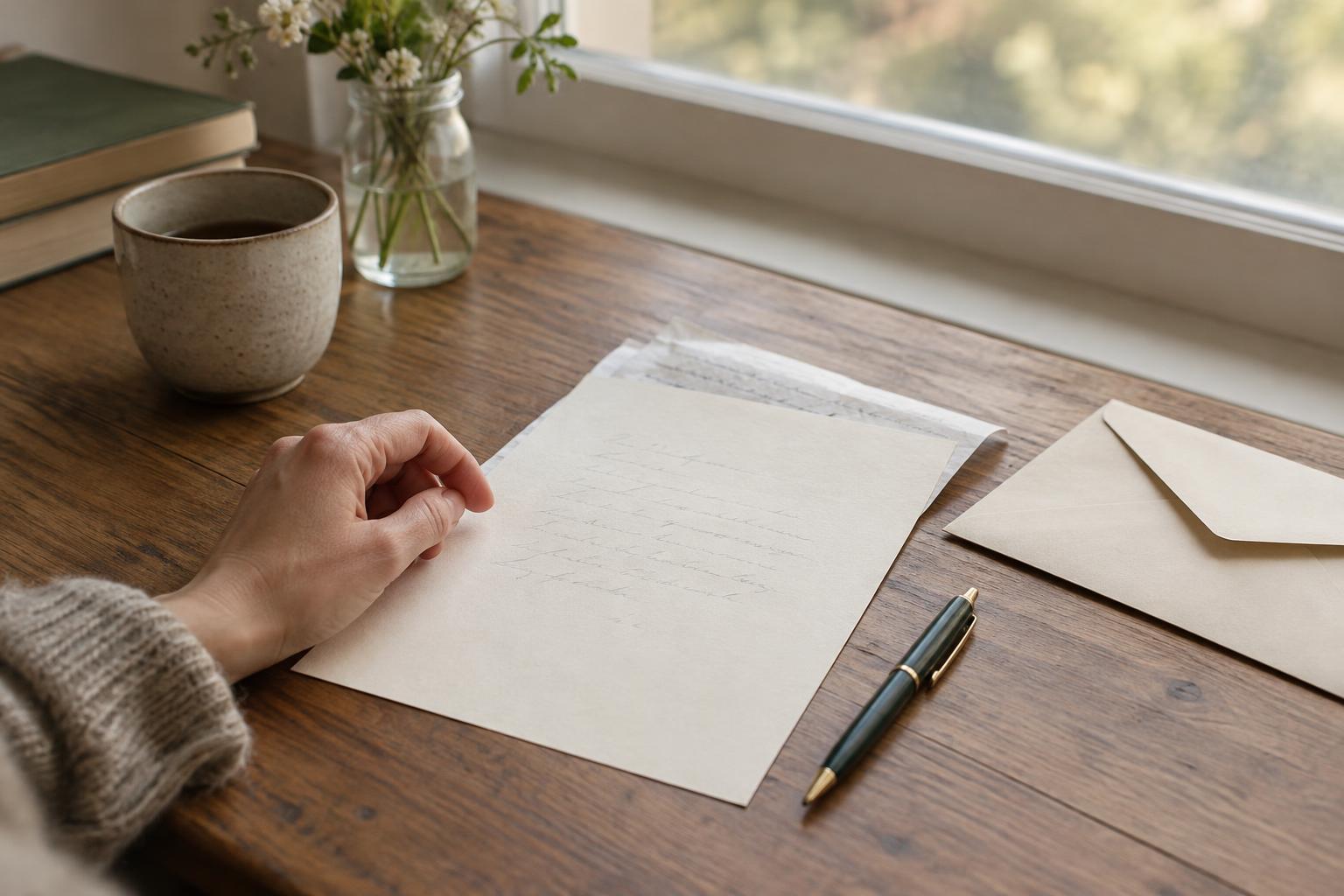
Finally, consider the practical side of delivery. A handwritten letter can feel personal, but the format matters less than whether the recipient can read it comfortably and privately. Make a copy for yourself if you may want to remember what you said, then send it only when you are prepared to let the other person take their time with it. Careful writing cannot guarantee an easy outcome. It can, however, help you say something difficult with respect.