Decide what belongs on paper
A letter may pass through several hands before its intended reader opens it. It can also sit on a shared hall table or be picked up by someone helping with the mail. Before writing, consider whether you would be comfortable with another person seeing the details by accident. That question need not make your letter impersonal; it can help you choose which thoughts are best suited to paper.
Avoid including passwords, account numbers, copies of identification or other information that could cause harm if misplaced. If you want to discuss something especially sensitive, you might use the letter to say you would like to talk, then arrange a conversation through a channel you and the recipient both trust. A sealed envelope offers discretion, but it cannot guarantee confidentiality.
Think about the reader’s household
Privacy depends partly on where the letter arrives. A friend who lives alone may have a different experience from someone in a shared home, residence or workplace. If you are unsure, ask whether receiving a personal letter at a particular address would be welcome. You do not need to explain your planned message to ask a useful question: “Is this still a good address for a note?” may be enough.
Take similar care with the outside of the envelope. A playful message on the back, a revealing return-address label or a distinctive decoration could draw attention you did not intend. For a sensitive letter, a plain envelope and a simple, accurate address may be the kinder choice. Address it to the person by name rather than relying on a household nickname.
Prepare the letter for its journey
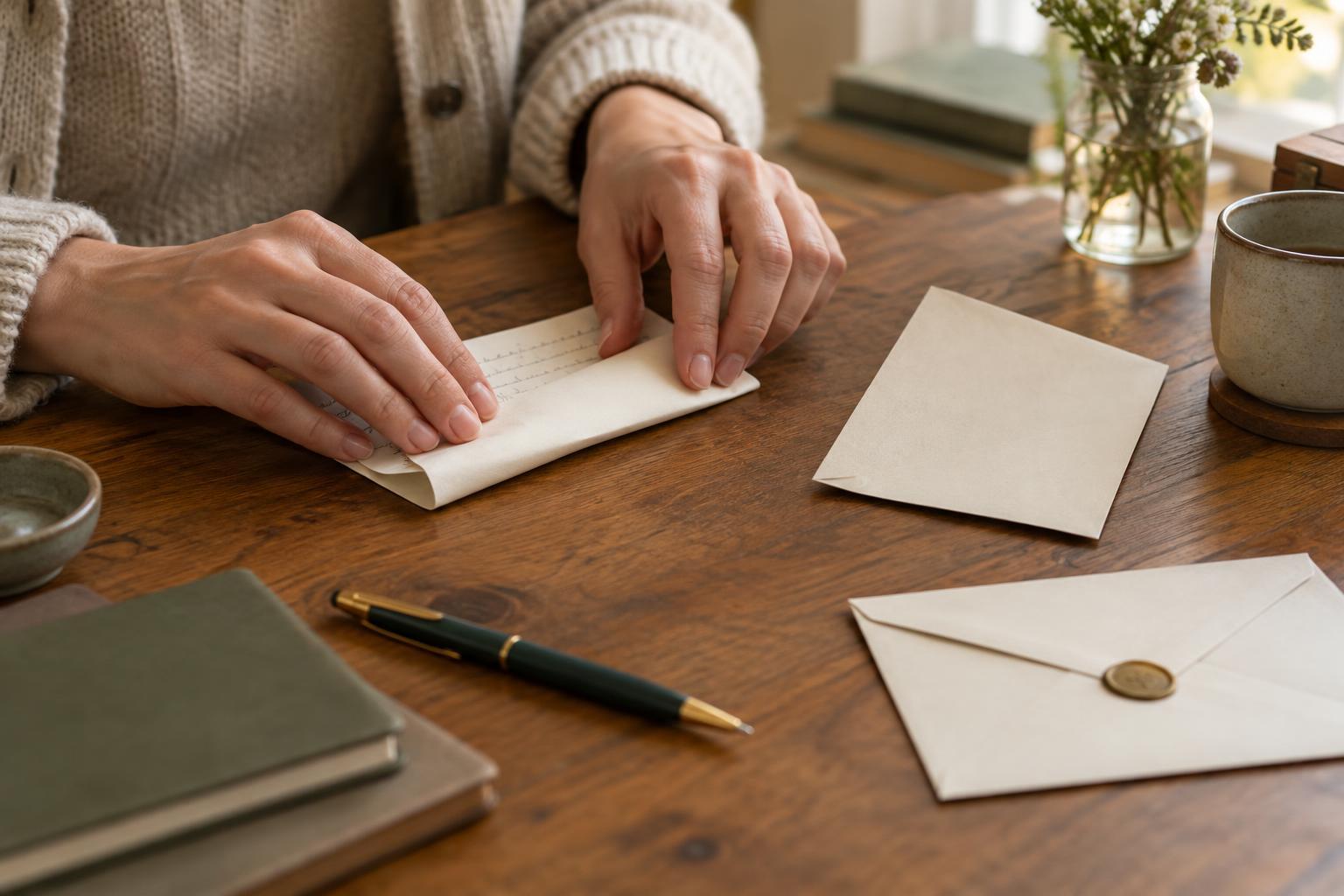
Use an envelope that does not show writing through the paper, and check it under a bright light before sealing it. If the pages are thin or the ink is dark, an extra sheet of plain paper around the letter can help keep words from showing through. Fold the written pages inward so their contents are less visible while you insert them.
Check the recipient’s name, address and any apartment or unit details before sending. A small addressing mistake can send a letter somewhere unexpected or delay its arrival. Seal the envelope fully, and make sure any label is firmly attached and easy to read. These steps reduce ordinary mishaps, though none can make a mailed letter completely private.
Be careful with drafts and extra copies
The letter you post may not be the only version of your message. A draft left in a notebook, a photograph taken before mailing or a file on a shared device can reveal the same details. If you are writing about a private matter, keep track of those copies and decide whether you need them. Dispose of unwanted drafts in a way that suits the sensitivity of what you wrote.
Think twice before enclosing original photographs, irreplaceable notes or documents that contain personal information about someone else. If a keepsake cannot easily be replaced, you could describe it in your letter or ask the recipient whether they would prefer to receive a copy. Sharing another person’s private news is also worth pausing over, even when your intentions are affectionate.
Let privacy support the connection
Thoughtful precautions should make it easier to write warmly, not make every note feel formal. A memory, a question or a few words of encouragement can mean a great deal without revealing more than either person wants shared. If the subject is delicate, give the recipient room to choose how and when to respond.
The most useful habit is to consider the whole path of the letter: what you put on the page, what appears on the envelope, where it arrives and what copies remain with you. A little care at each step helps a personal message stay as personal as the circumstances allow.