Start with their everyday life, not the distance
When you cannot hand someone a gift in person, it is tempting to make the object do all the work of showing how much you care. A bigger or more elaborate gift is not necessarily a better one. Start with what you know about the recipient’s routines. Would they enjoy something they can use on an ordinary day, something to display, or a small reminder of a shared experience? A gift that fits their life can feel close even when you are far apart.
Think about what might have changed since you last saw them. They may have moved, taken up a new interest, or made their home less cluttered. If you are unsure, a light question can help: “Is there anything you’ve been enjoying lately?” You do not have to reveal your plan, but you also do not need to protect the surprise at the expense of giving them something difficult to use.
Make the practical details part of the thoughtfulness
Before settling on a physical gift, consider its size, weight, fragility and storage needs. An oversized item may be awkward for someone with little space; a delicate one may need more protection than you can comfortably arrange. Items that are simple to pack and easy to keep are often better long-distance choices. If you are sending food or another consumable, check preferences and restrictions rather than guessing.
It is worth confirming where the recipient can reliably receive a parcel, especially if they have recently moved or are away from home often. Ask for their preferred address instead of relying on an old one. You can keep the question casual without promising a particular arrival day. A gift should not require them to rearrange their schedule or make a special trip merely to receive it.
Choose a format that suits the person
A mailed object is only one way to give across a distance. For someone who has limited space, a letter, a small print, or a gift they can choose for themselves may be more welcome. For someone who loves rituals, consider an item they can use during a familiar activity, such as reading, cooking or taking a break. The best format depends less on how impressive it looks and more on whether they will enjoy receiving and using it.
Be careful with gifts that come with hidden tasks. A kit can be delightful for someone who likes making things, but feel like an assignment to someone short on time. An experience can be exciting, but may require planning or travel. If the gift needs a decision from the recipient, give them room to make it. Avoid treating their response time as a measure of their appreciation.
Add a connection they could not buy
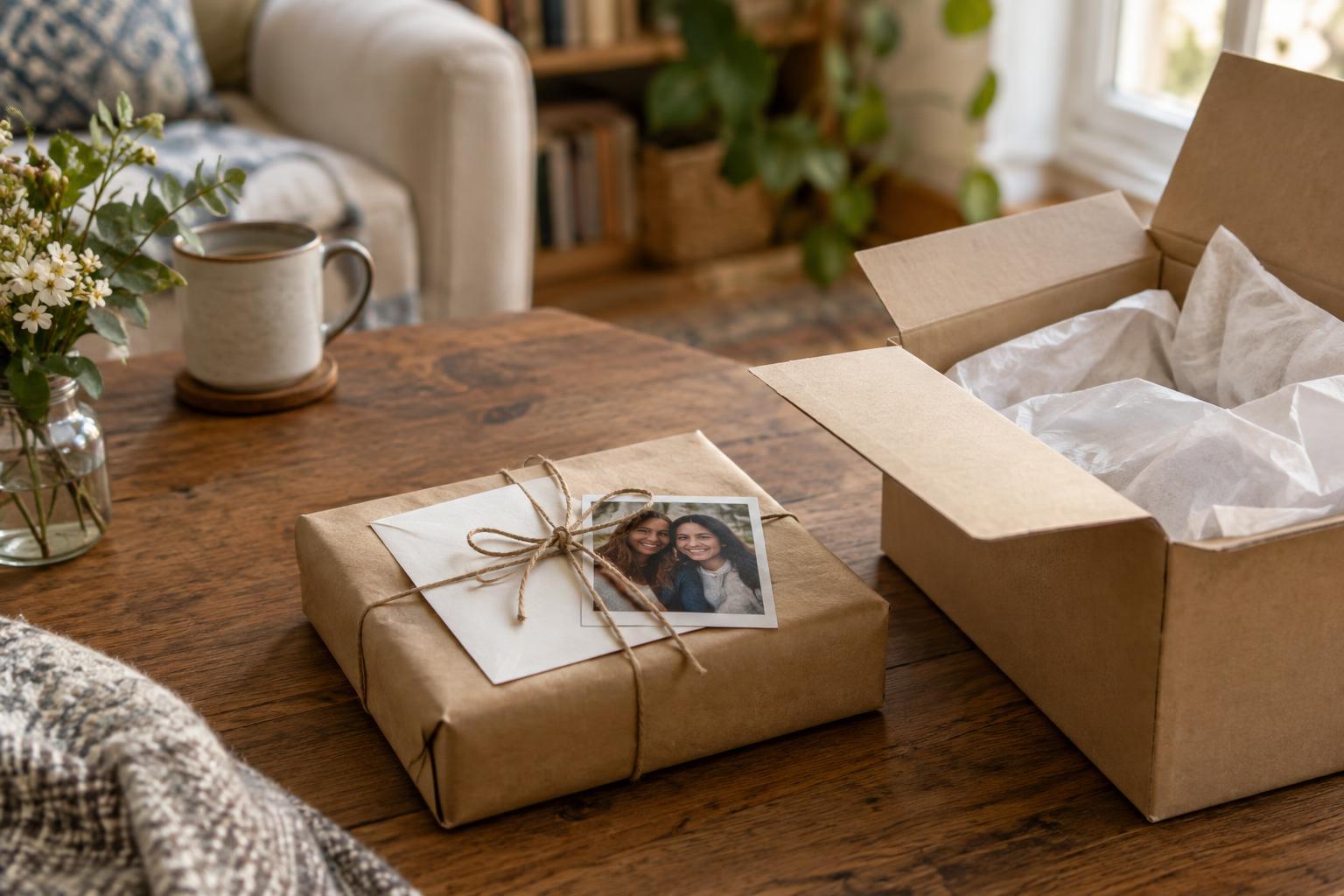
A short note can make a modest gift feel unmistakably theirs. Instead of writing only “I thought you’d like this,” say what brought them to mind. Perhaps the color recalls a place you visited together, or the item suits a habit you admire in them. One specific detail is enough. It tells the recipient that you chose the gift for a reason without asking them to respond with an equally elaborate gesture.
You can also use the note to bridge the distance without pretending it is not there. Share a small memory, mention something you hope to do together next time, or simply say you miss your everyday conversations. Keep the focus on connection rather than apology. The message should stand on its own, so it still feels meaningful if the gift arrives later than expected.
Leave room for a warm, low-pressure ending
Once the gift is on its way, let the recipient know what is useful to know, such as whether to expect a parcel, without asking them to watch for it constantly. If timing matters to a celebration, plan ahead where you can, but do not make the arrival date the point of the gift. A message on the day itself can carry your good wishes even if the physical gift comes separately.
Afterward, resist turning the gift into a test of whether they call, post a photo, or use it right away. A simple “I hope it reached you safely” is enough if you need to check. Long-distance gifts work best when they offer a moment of recognition: you noticed what matters to this person, made it easy for them to receive your thought, and left them free to enjoy it in their own way.