Ask before you shop
Food can feel like a natural addition to a care package: a favorite snack, something to share or an ingredient for a quiet evening in. But a surprise treat is only thoughtful if the recipient can use it. Before buying anything edible, ask whether they have allergies, intolerances, dietary preferences or ingredients they avoid for personal or religious reasons. You do not need to ask why. A simple message such as “I’m putting together a little package and might include a snack. Is there anything you avoid?” leaves room for them to answer as much or as little as they like.
If the package is for a child, check with a parent or caregiver rather than relying on the child’s answer. If it is going to a shared home, classroom or workplace, ask whether anyone else is likely to eat the food. Make clear that you can leave food out entirely. That can be more welcoming than asking someone to find a treat you are able to send.
Get specific without making it complicated
A broad answer such as “no dairy” may not tell you everything you need to know. The recipient may avoid an ingredient, foods made with it, or products that could have come into contact with it during preparation. If they mention an allergy, ask what kinds of packaged foods, if any, they feel comfortable receiving. Let them set the boundary; do not guess how strict it needs to be.
Dietary preferences can also be more specific than a label suggests. Someone who eats vegetarian food may still dislike certain ingredients, while a person avoiding gluten may have particular brands they trust. Asking for a favorite packaged snack or a short list of suitable options is often easier for both of you than trying to interpret a long list of rules. If the recipient would rather not discuss food, move on to another kind of gift.
Check the exact item, not just the idea
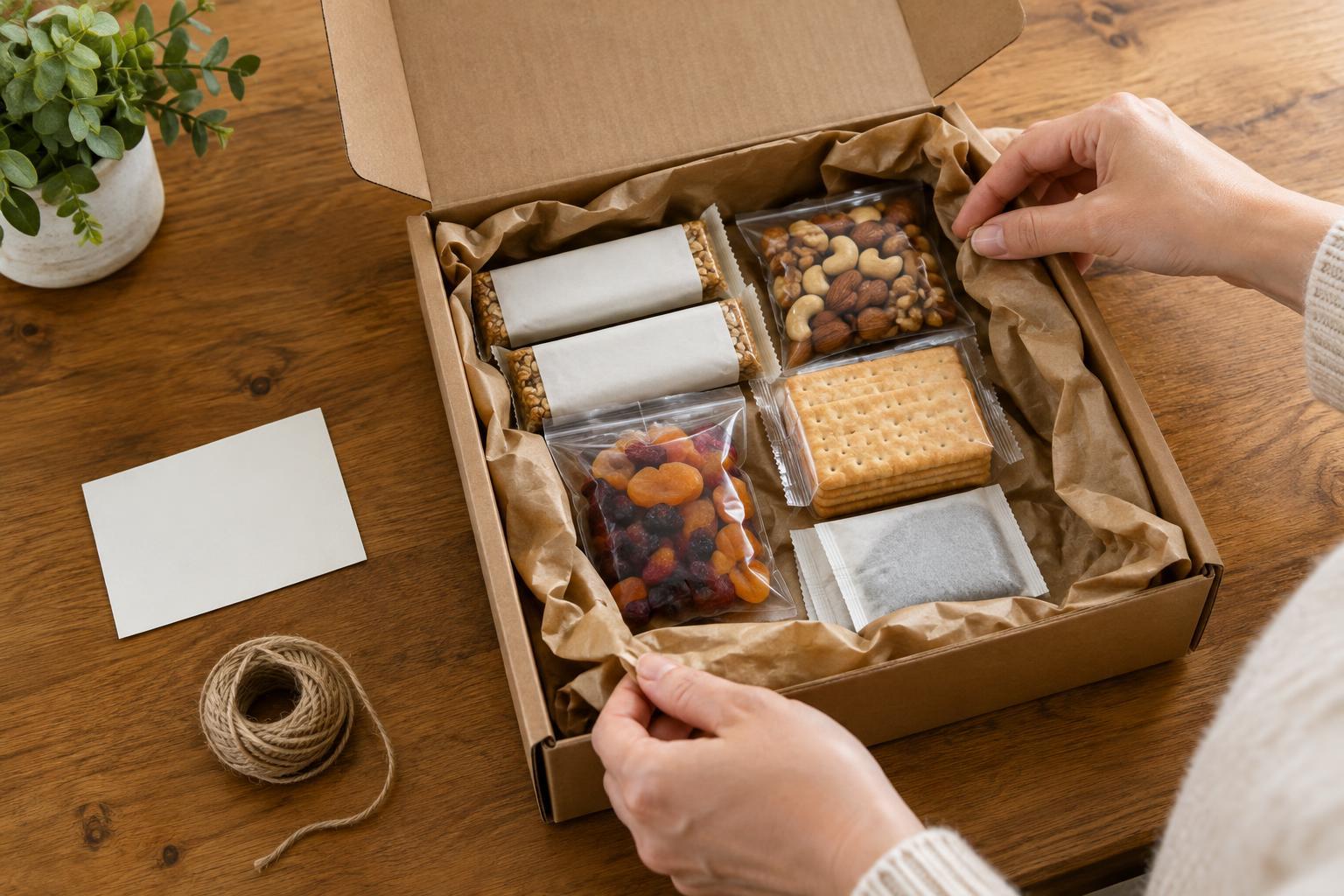
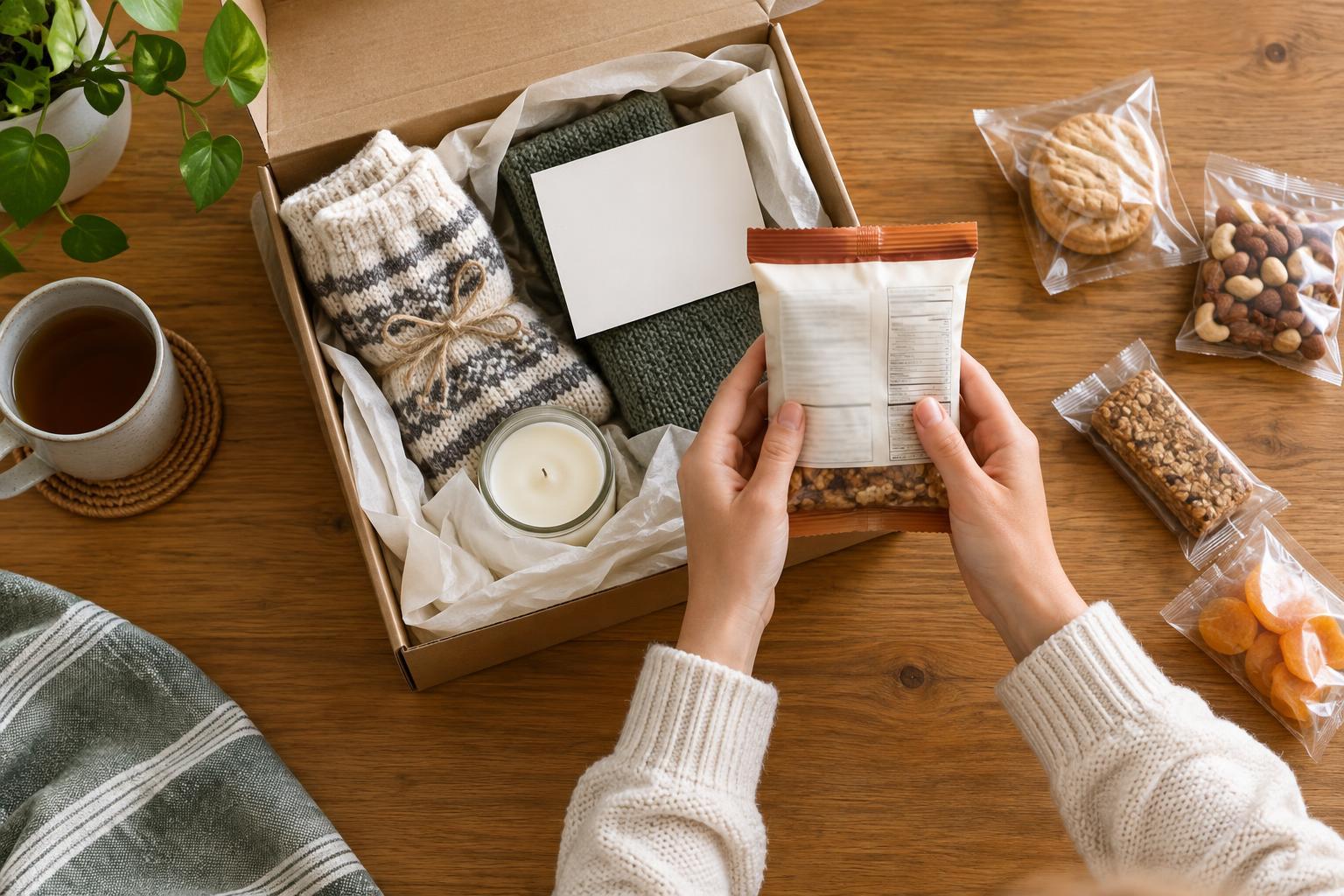
Once you have an option in mind, read the label on the exact package you plan to include. Look at the ingredient list and any allergen or precautionary statements, following the recipient’s stated needs. A familiar flavor or brand name is not enough: ingredients and packaging can vary between products or versions. Keep the food in its original, unopened packaging so the recipient can check the information for themselves.
Be especially cautious with loose bakery items, bulk-bin sweets, repackaged snacks and homemade food. Even when the main ingredients seem suitable, you may not be able to verify how an item was handled or what it contacted. Homemade baking can be lovely when you know it is welcome and safe for that person, but it should not be treated as an allergy-friendly surprise. When the label is unclear or the recipient’s requirements are uncertain, choose something else.
Think about the journey and the presentation
Suitability is not only about ingredients. Consider whether the food can remain in good condition during the time and conditions of the package’s journey. Avoid items that need refrigeration unless you have a reliable way to meet their storage needs. Also consider fragile, meltable or easily crushed foods, especially if the recipient may not open the package immediately.
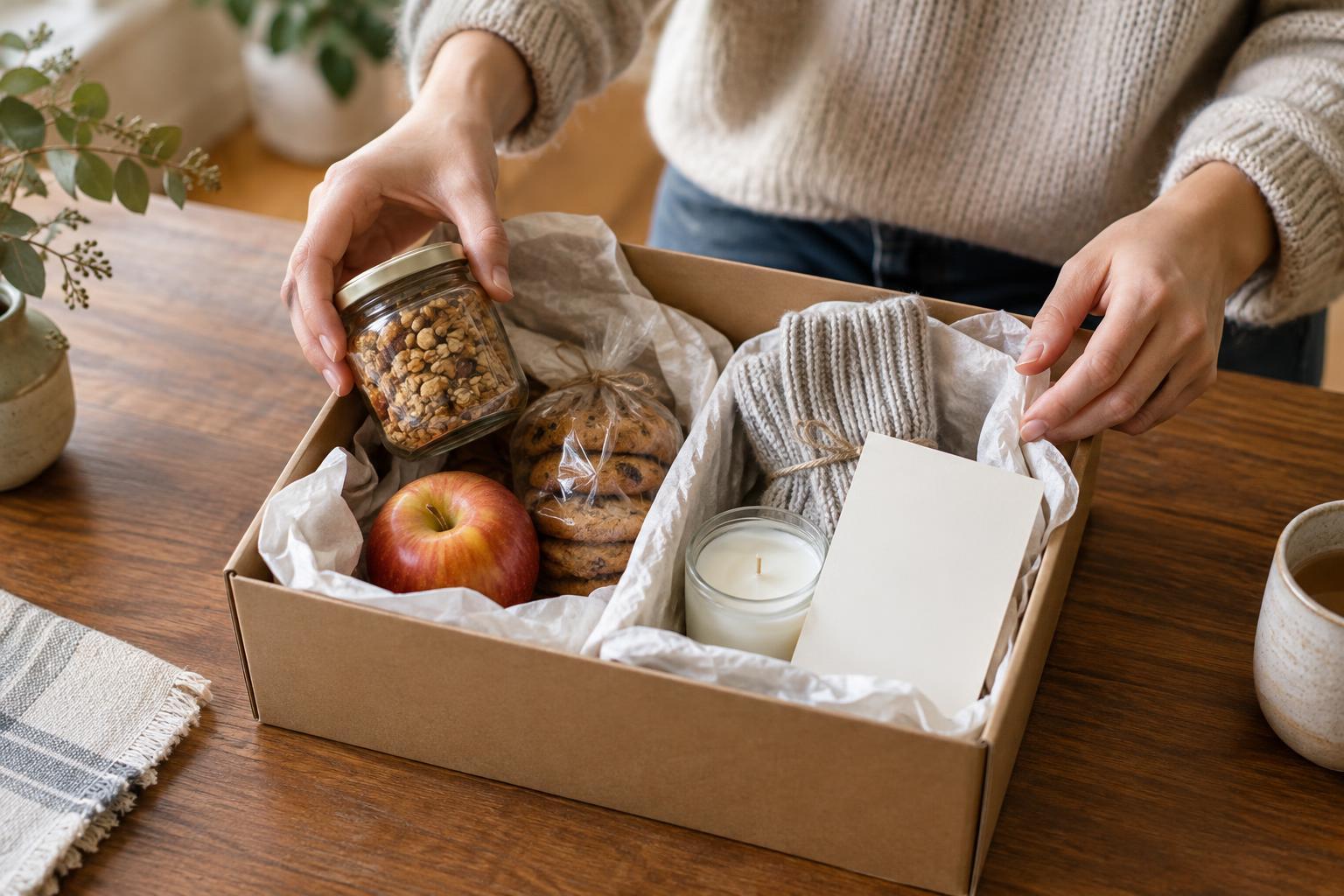
Keep edible items separate from scented products, liquids and materials that could leak or shed onto them. Do not cover ingredient information with decorative paper or remove a product from its wrapper for a prettier arrangement. You can still make the package feel personal: tuck a note beside a sealed treat explaining why it reminded you of the recipient, or include a handwritten suggestion for enjoying it.
Make a food-free package feel complete
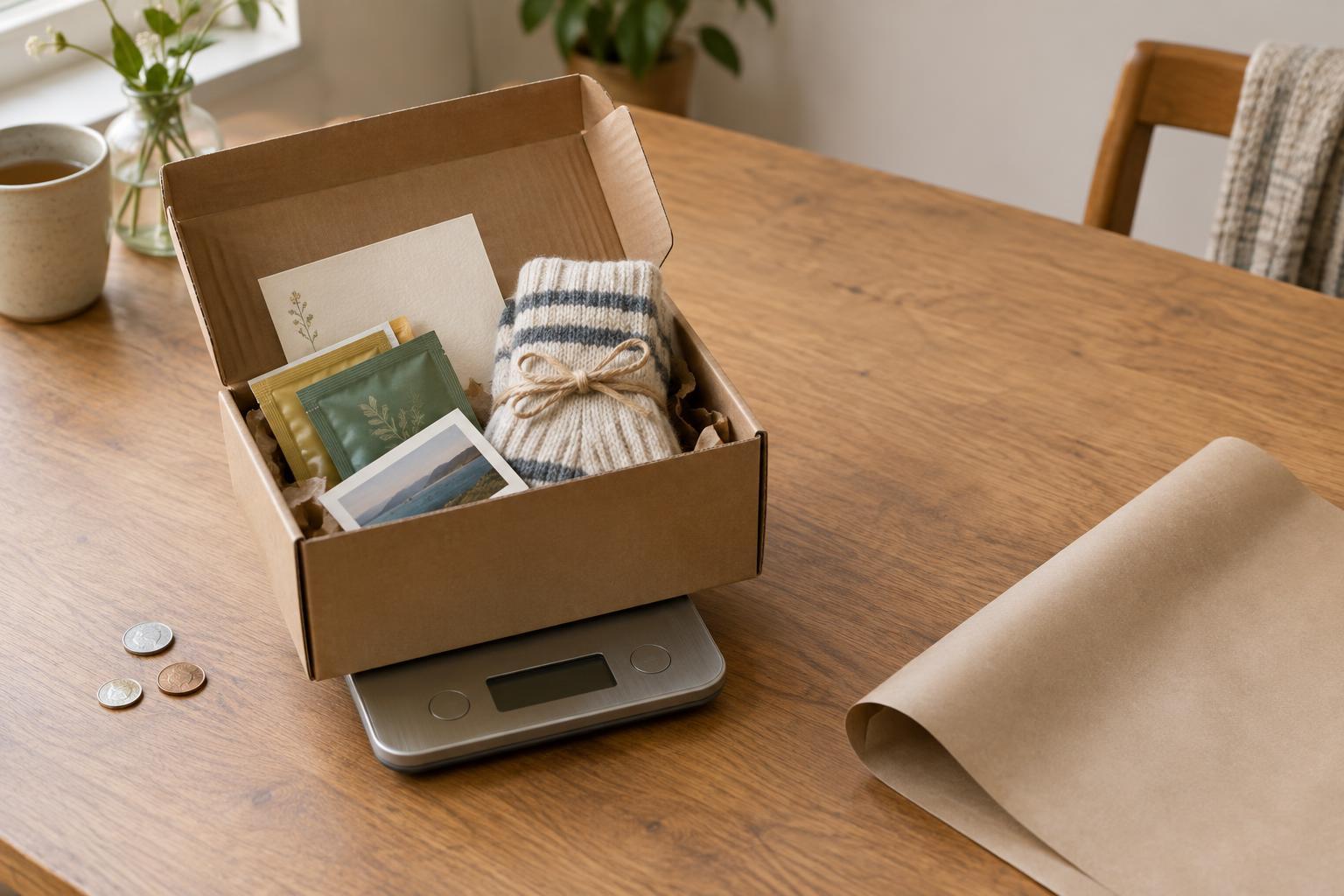
If you cannot confirm what is suitable, leaving food out is a considerate decision, not a missed opportunity. Build the package around things the recipient can enjoy without an ingredient check: a letter, printed photos, stationery, a small puzzle, a bookmark or a playlist written out on a card. Choose items that reflect what they like rather than treating non-food additions as substitutes for an expected snack.
The best care packages show that you paid attention. Asking first, respecting the answer and being willing to change your plan all help the recipient feel considered. Whether the finished box contains a clearly labeled treat or no food at all, the care is in making it easy for them to enjoy.