Start with the amount you can comfortably spend
Before choosing treats or stationery, decide what you can comfortably spend on the entire care package. Include the contents, packaging and postage in that number. It is easy to think of shipping as a final errand, but it is part of the gift’s cost from the beginning. A modest package that fits your budget is more enjoyable to make than one that creates an unpleasant surprise at the counter.
Give postage its own allowance before you shop for contents. You do not need a perfect estimate yet: the goal is to avoid spending your full budget on items and leaving nothing to send them. If you have a box or mailer in mind, measure it and check its likely packed weight against the options offered by your postal service or carrier. Rates can depend on destination, dimensions, weight and service, so use a current quote when you are ready to send.
Let the package size guide your shopping list
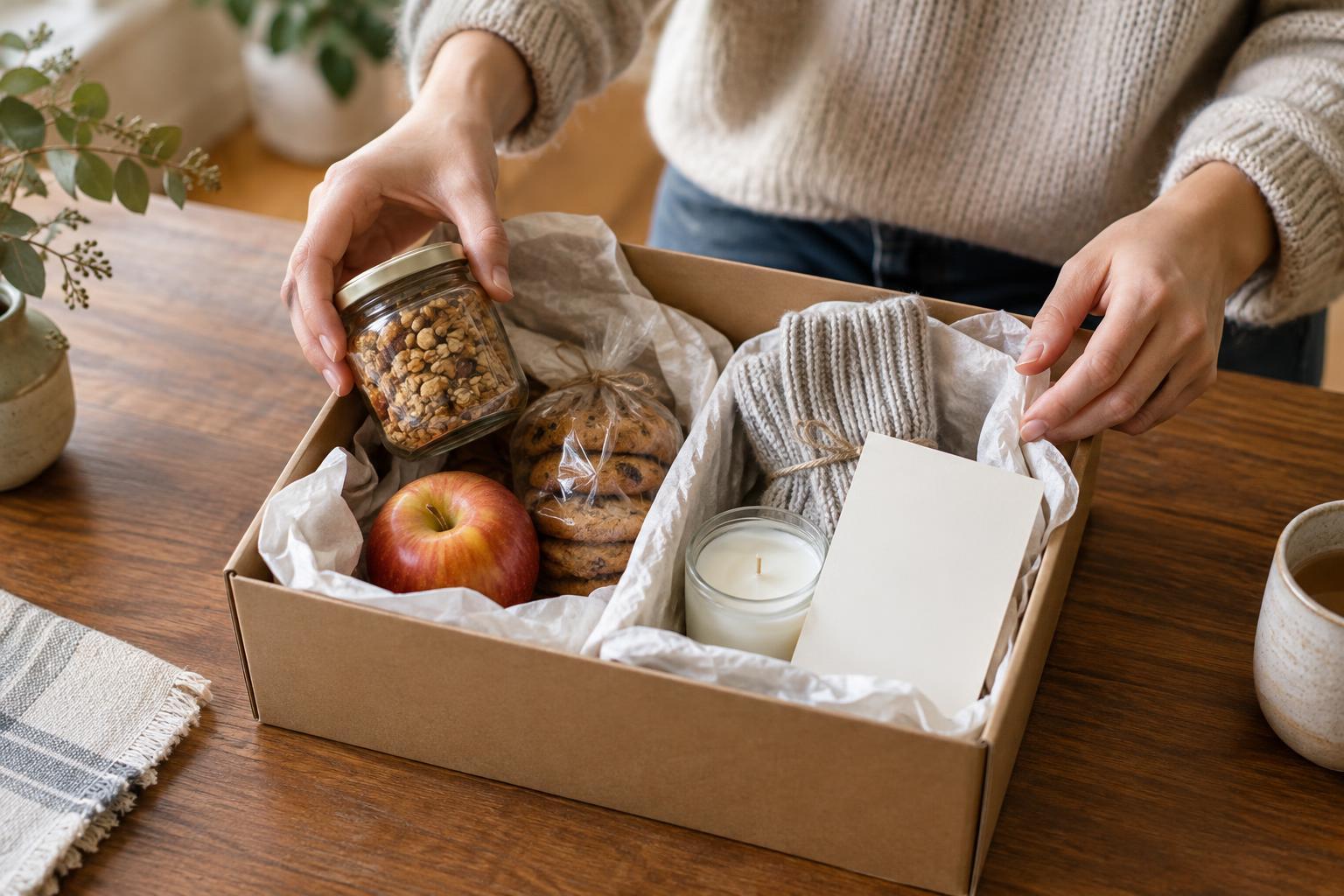
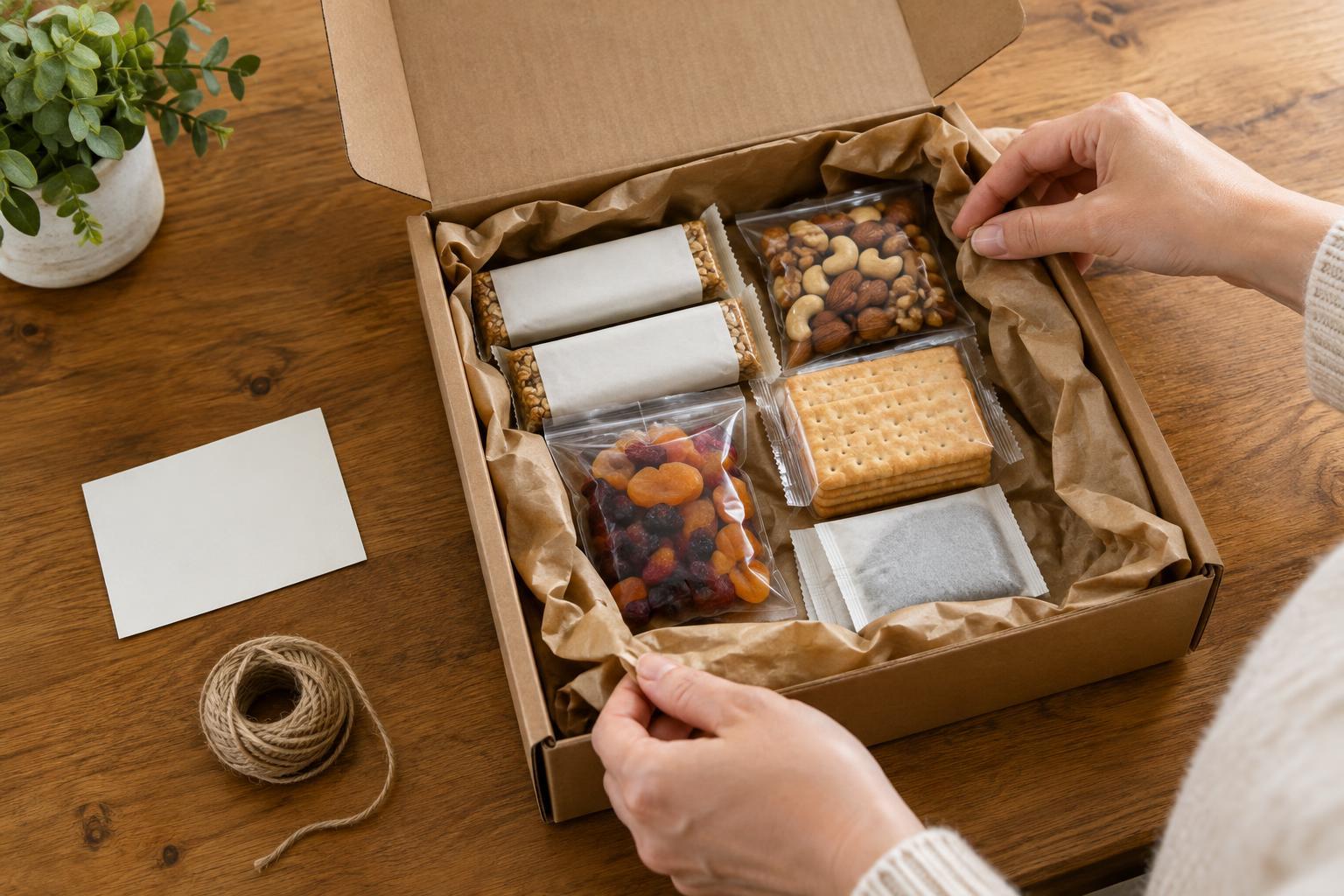
A care package often grows one appealing item at a time. To keep it manageable, choose the container first and make a short list of what will fit. A slim mailer may suit a letter, photographs, a small notebook and a few flat surprises. A box allows more variety, but it also creates space that can be tempting to fill. You do not have to use every inch.
Think about packed weight, not just the weight of the gifts. Tissue, protective padding and the container add to the total. Heavy or bulky items may cost more to send than you expect, especially if they call for a larger box or extra cushioning. When two ideas express the same sentiment, the lighter one may leave more room in your budget for a personal detail.
Choose meaning over volume
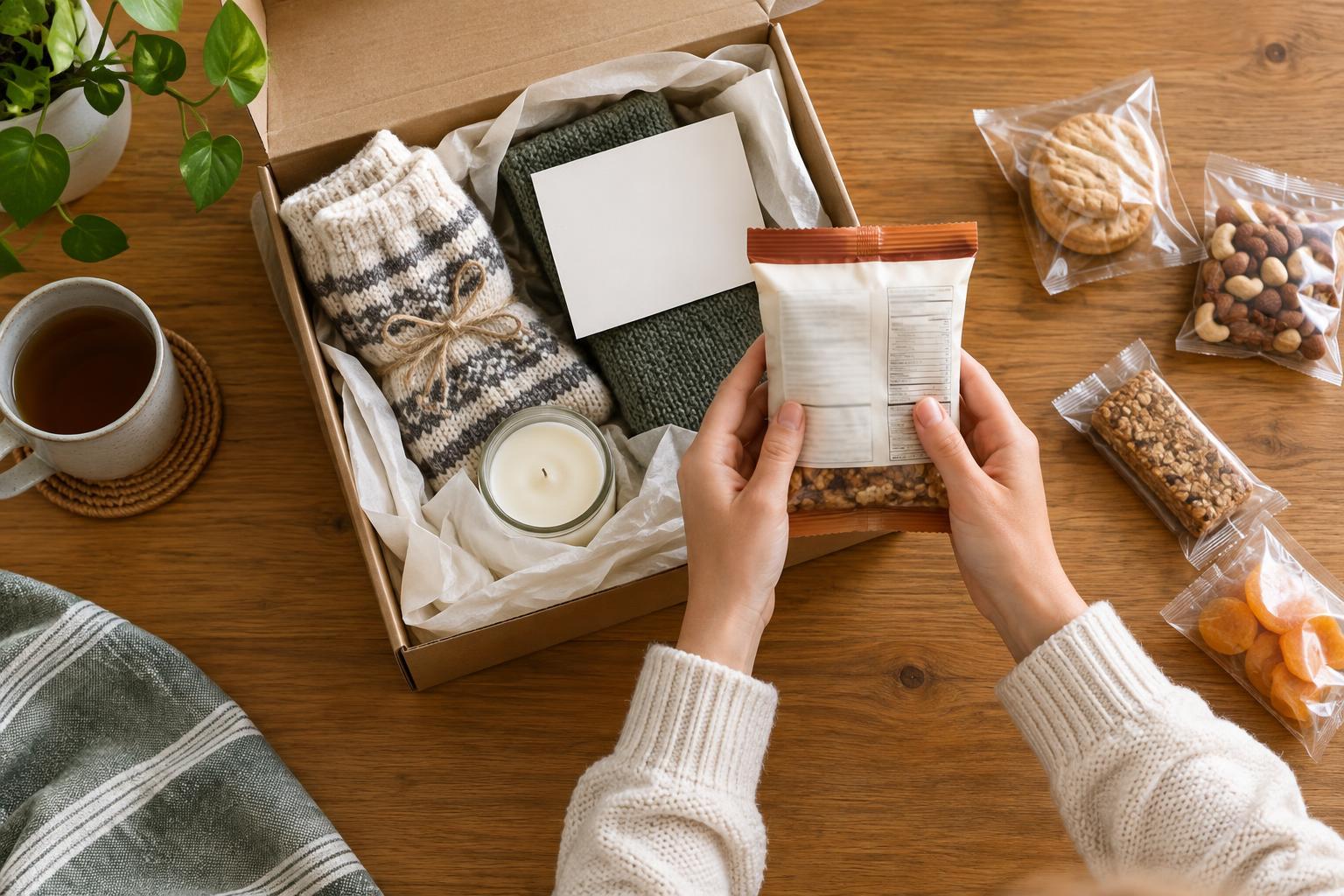
Pick a simple theme based on what the recipient might appreciate: a quiet evening, encouragement during a busy week or a reminder of a shared memory. Then choose two or three items that serve that idea. A favorite photograph with a story written on the back can be more personal than several unrelated purchases. A note explaining why you chose each item makes a small package feel considered.
Handmade touches can help you spend less on contents without making the package feel sparse. You might include a short playlist written on a card, a recipe you have made together, or prompts for your next phone conversation. These additions are light and specific to your relationship. If you are unsure what the person can use, avoid filling the box simply to make it look generous.
Compare sending options before you seal it
Once you have a likely contents list, compare suitable mailing options using the packed size and weight. A flat-rate option may be convenient, but it is not automatically the least expensive choice for every package. Likewise, a smaller container only helps if the contents fit safely. Compare the total cost and any features you need, such as tracking, rather than choosing a service by its name alone.
If the destination is far away or outside your country, check the carrier’s rules before buying items for the package. Restrictions, forms and available services can vary. Food, liquids and fragile items may need particular care or may not be suitable to send. Checking first is kinder to your budget than discovering after you have wrapped everything that an item needs to be removed or repacked.
Make a final budget check part of the ritual
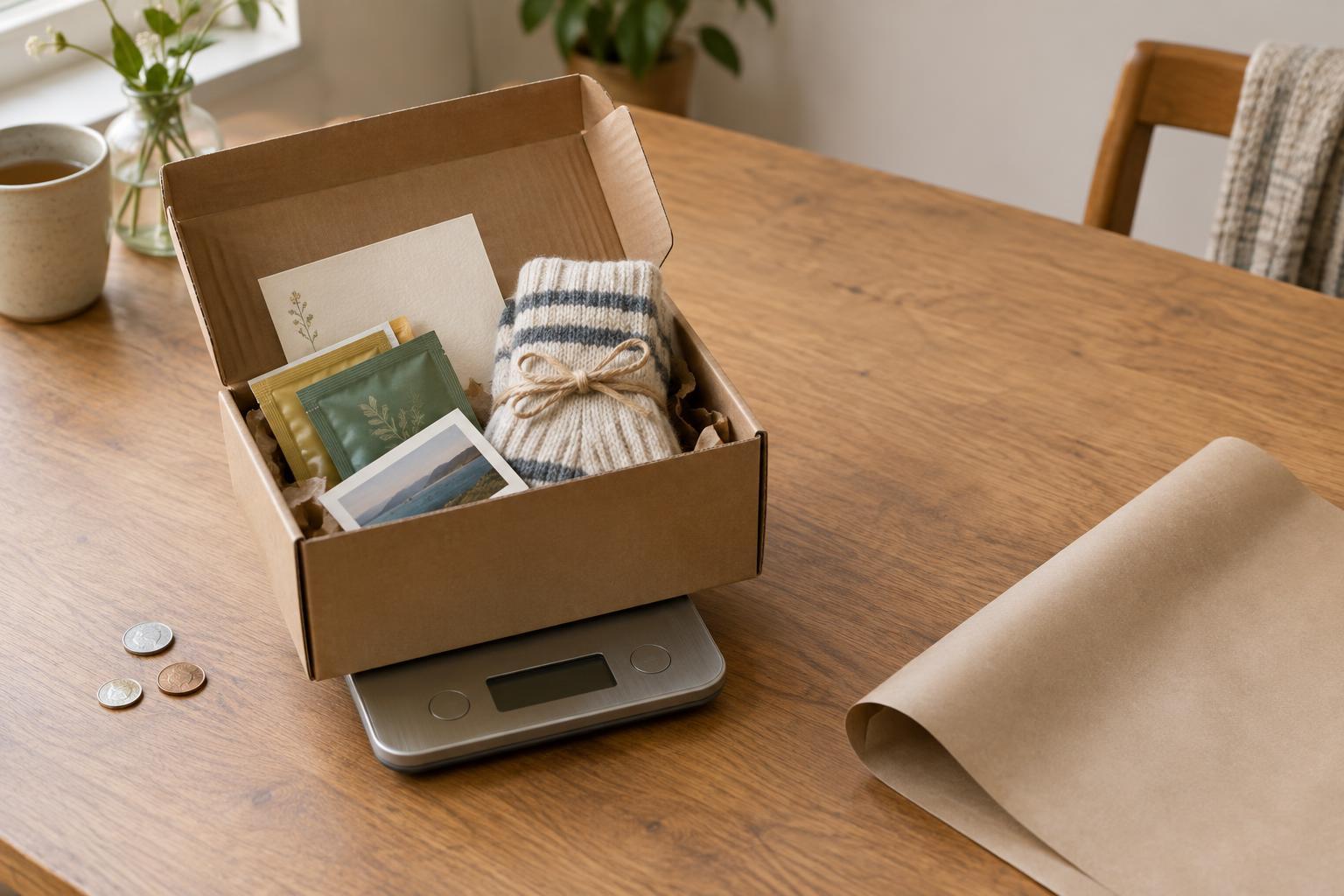
Before sealing the package, place everything inside with the padding you plan to use, then weigh and measure it if you can. Look up a current postage estimate and add it to what you have spent. If the total is higher than planned, remove an item or reconsider the container before you buy a label. Keep the note or letter: it is often the clearest expression of why you are sending the package.
A budget is not a limit on how much you care. It is a way to make sure the gift can reach someone without straining you in the process. A small, securely packed collection of well-chosen things, accompanied by your own words, gives the recipient something to open, read and remember.