Start with the person, not the snack aisle
A good care package feels as though it was assembled for one particular person. Before choosing snacks, think about what they actually enjoy: familiar favorites, savory bites, something sweet, or small portions they can keep at a desk. A mix can be fun, but there is no need to fill every gap in the box. A few well-chosen items leave room for a note and are less likely to become clutter.
If you are unsure about allergies, dietary restrictions or foods they avoid, ask rather than guess. Check ingredient labels each time you buy, even for a familiar product, and keep items in their original packaging so the recipient can read the label too. Preferences matter alongside restrictions: a person who rarely eats sweets may appreciate crackers or roasted chickpeas more than an assortment of candy.
Know what shelf-stable means for the trip
For a care package, look for snacks that can remain unopened at room temperature for the expected journey and for a while after arrival. Packaging should clearly indicate how the food should be stored; if it says to keep refrigerated, leave it out of a box that will travel without cooling. Check the best-before or expiration information and allow a comfortable margin beyond the expected arrival, especially if the recipient may not open the package right away.
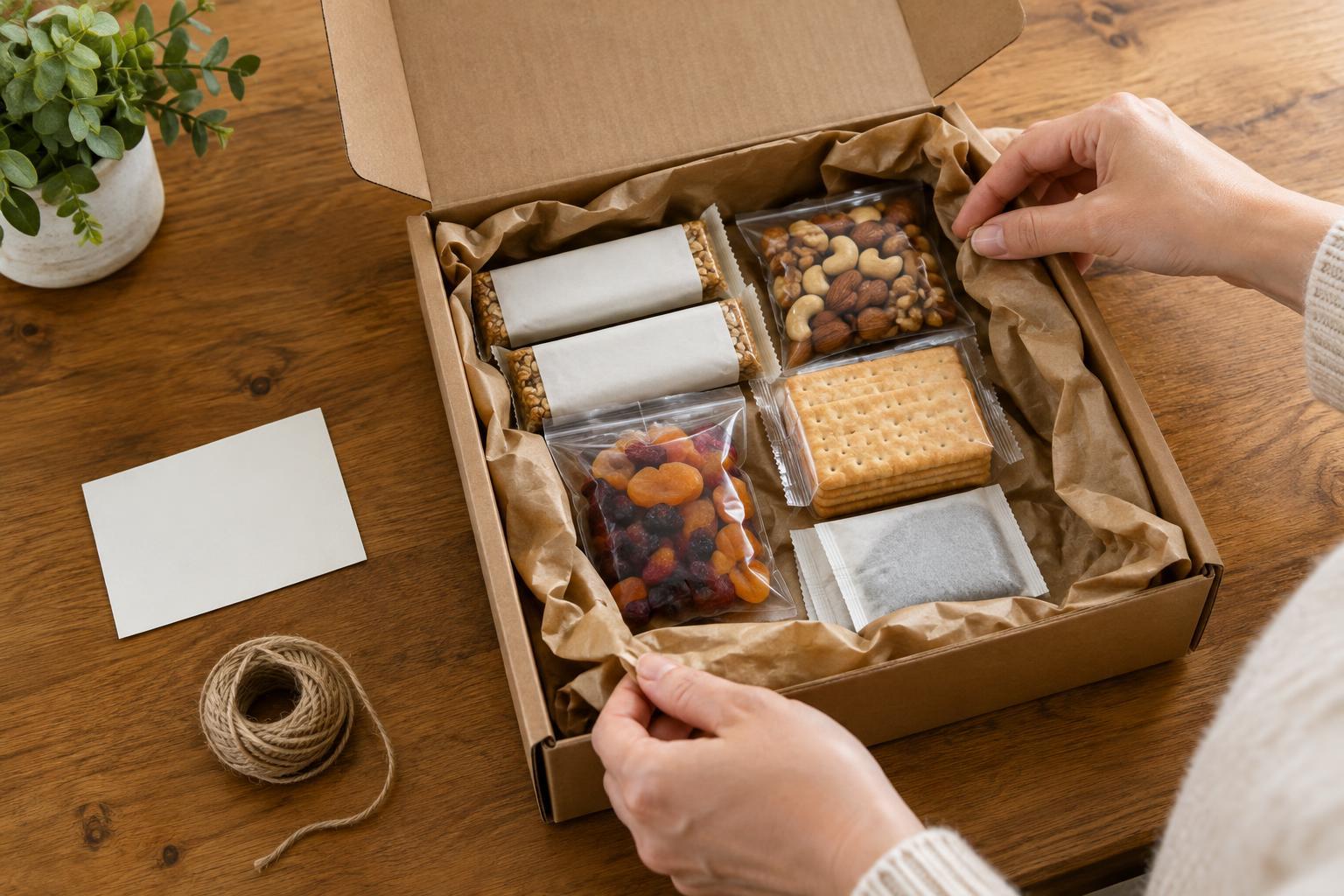
Shelf-stable does not mean indestructible. Heat can soften chocolate or affect other foods, and a flimsy bag of chips may burst under heavier contents. Sealed crackers, dried fruit, granola bars and individually packed cookies are possible choices, depending on their labels and the conditions of the trip. Favor sturdy containers and foods that will still be appealing if the parcel is turned on its side.
Build a small, useful assortment
Variety makes a package inviting, but it works best when there is a reason behind it. Try choosing a few different textures or occasions: something crunchy for an afternoon break, something filling for a busy day, and a treat that feels a little special. Portion size is useful to consider too. Single-serve packs are easy to share or tuck into a bag, while a larger resealable package may suit someone who snacks at home.
Think about how the recipient will use the food. Someone in a shared space might prefer tidy, quiet snacks with minimal crumbs; someone heading out on day trips may value items that do not require utensils. If you include a drink mix, choose a sealed package with clear preparation instructions and consider whether the recipient will have what they need to make it. The aim is to make enjoying the package simple, not to give them another task.
Pack for pressure, spills and delays
Before packing, inspect each item for an intact seal. Put heavier packages at the bottom and protect crushable snacks with cushioning, such as clean packing paper. Keep foods that might leak or shed crumbs in a separate sealed bag as an extra precaution. If the package also contains stationery, a book or a keepsake, give those items their own protective layer so a broken snack does not spoil the rest of the gift.
Consider the route before adding anything particularly delicate or temperature-sensitive. Transit times and handling can be unpredictable, so avoid relying on a package arriving on a precise day to keep its contents suitable. If you are sending food across a border, check the applicable mailing and import rules before buying or packing it; permitted foods can vary by destination. A simpler selection that travels reliably is often the more thoughtful choice.
Make the everyday items feel personal
The snacks need not be unusual to be meaningful. A short handwritten note can explain why you chose them: perhaps the crackers remind you of a shared picnic, or the recipient mentioned needing easy breaks during a busy week. You can group items with a small paper label such as “for a quiet afternoon” or “for the next movie night.” That bit of context turns an assortment into an invitation to pause.
Finally, leave the package easy to open and the food labels easy to find. Decorative wrapping can sit around the snacks rather than cover their ingredient or storage information. Choosing with care, packing with the journey in mind and adding a few words of your own will do more for the recipient than simply filling a box to the top.