Start by believing them
“I don’t want more stuff” is useful information, not a challenge to find an object so charming it becomes an exception. The person may have limited space, be trying to simplify their home, or simply prefer not to manage another possession. A good gift respects that preference while still expressing care.
Before choosing anything, consider what they actually mean. Do they enjoy going out but dislike collecting things? Would they welcome help with a task, or would an offer of help feel awkward? If you’re close enough to ask, try a low-pressure question: “Would you rather spend time together, get a little treat you’ll use up, or skip gifts this year?” Give them room to choose the last option. Listening is more thoughtful than arranging a surprise they have to accommodate.
Give time together without creating an obligation
A shared experience can be a lovely alternative to an object, provided it suits the recipient’s schedule and energy. A walk followed by coffee, a meal you cook together, or an afternoon revisiting a favorite place can make the occasion feel special without leaving behind much clutter. Keep the plan flexible rather than presenting a fixed date they must rearrange their life to attend.
It also helps to make the invitation complete. If you offer to take someone to lunch, suggest a couple of convenient times and make clear that you’ll handle the booking or food. If the outing requires travel, childcare or extra spending on their part, it may not feel like a gift. The goal is pleasant company, not another item on their to-do list.
Offer help that is genuinely helpful
Practical help can be meaningful when you know the person well enough to identify something they would welcome. You might offer to bring dinner during a busy week, help plant a few herbs, or spend an afternoon sorting family photos together. Be specific about what you can do and when: a vague promise of “anything you need” puts the work of planning back on them.
Avoid volunteering to reorganize their home, fix a problem or take over a chore without asking first. Even generous help can feel intrusive when it touches someone’s routines or personal space. An offer that is easy to decline is often the kindest one: “I could drop off dinner on Thursday, but no pressure if another week—or no dinner—would be better.”
Choose things that get used, not stored
If a physical gift feels right, consider something the recipient already uses and enjoys. Their preferred tea, a favorite snack or materials for a hobby can be more welcome than a decorative object. Choose a modest amount so the gift does not become a storage project. Check for dietary needs, scents they avoid and other preferences before buying anything consumable.
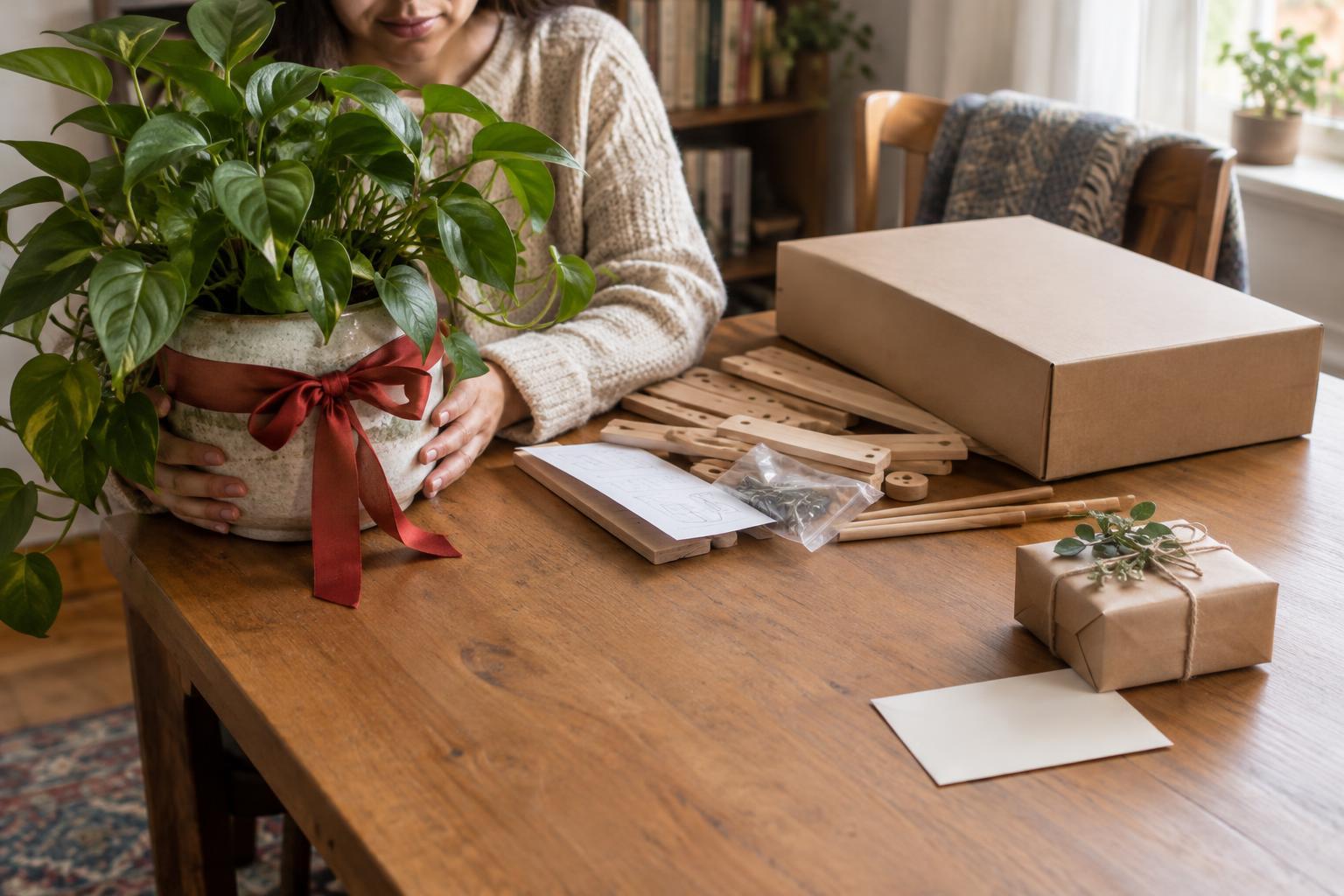
Be cautious with gifts that appear clutter-free but come with hidden work. A plant needs care. A subscription needs managing. A voucher for an unfamiliar activity may require travel or booking. These can be excellent gifts for the right person, but they are not automatically simpler than an object. Ask yourself what the recipient will need to do after opening the gift, and whether they would enjoy doing it.
Let the message carry the meaning
Sometimes the best response is no gift at all. A handwritten letter or card can mark the occasion without asking for display space. Instead of writing only “thinking of you,” include a specific memory, a quality you appreciate, or a small detail that reminded you of them. Keep the tone natural to your relationship; sincerity matters more than polished wording.
You can make the presentation feel considered without making it elaborate. A neatly addressed envelope and an unhurried note are enough. If the person has asked for no gifts, you can say that you heard them and wanted only to share a few words. The most thoughtful choice is not the one that looks most impressive when opened. It is the one that leaves the recipient feeling understood.