Start with the letter, not the paper
Before choosing a sheet, think about what you want to write. A long, everyday update calls for paper that is comfortable to use for several pages and easy to fold into an envelope. A short note of thanks might feel more deliberate on a single, substantial sheet. Neither needs to be expensive or elaborate: paper is doing its job when it helps you write freely and lets the recipient enjoy reading your words.
Consider the person who will open the letter, too. If they prefer clear, uncluttered text, choose a pale sheet with little decoration and enough space between lines. If the letter is part of a celebration, a border or a soft color can add warmth without competing with the message. The best choice supports the tone of your words rather than trying to set it for you.
Pay attention to weight and feel
Paper weight affects how a letter handles. A lighter sheet is easy to fold and helps keep a multi-page letter from becoming bulky. A heavier sheet can feel especially pleasing for a brief note, but several thick pages may be awkward in a small envelope. Hold a sheet up to the light if you can: if writing on one side will distract from the other, you may want thicker or more opaque paper.
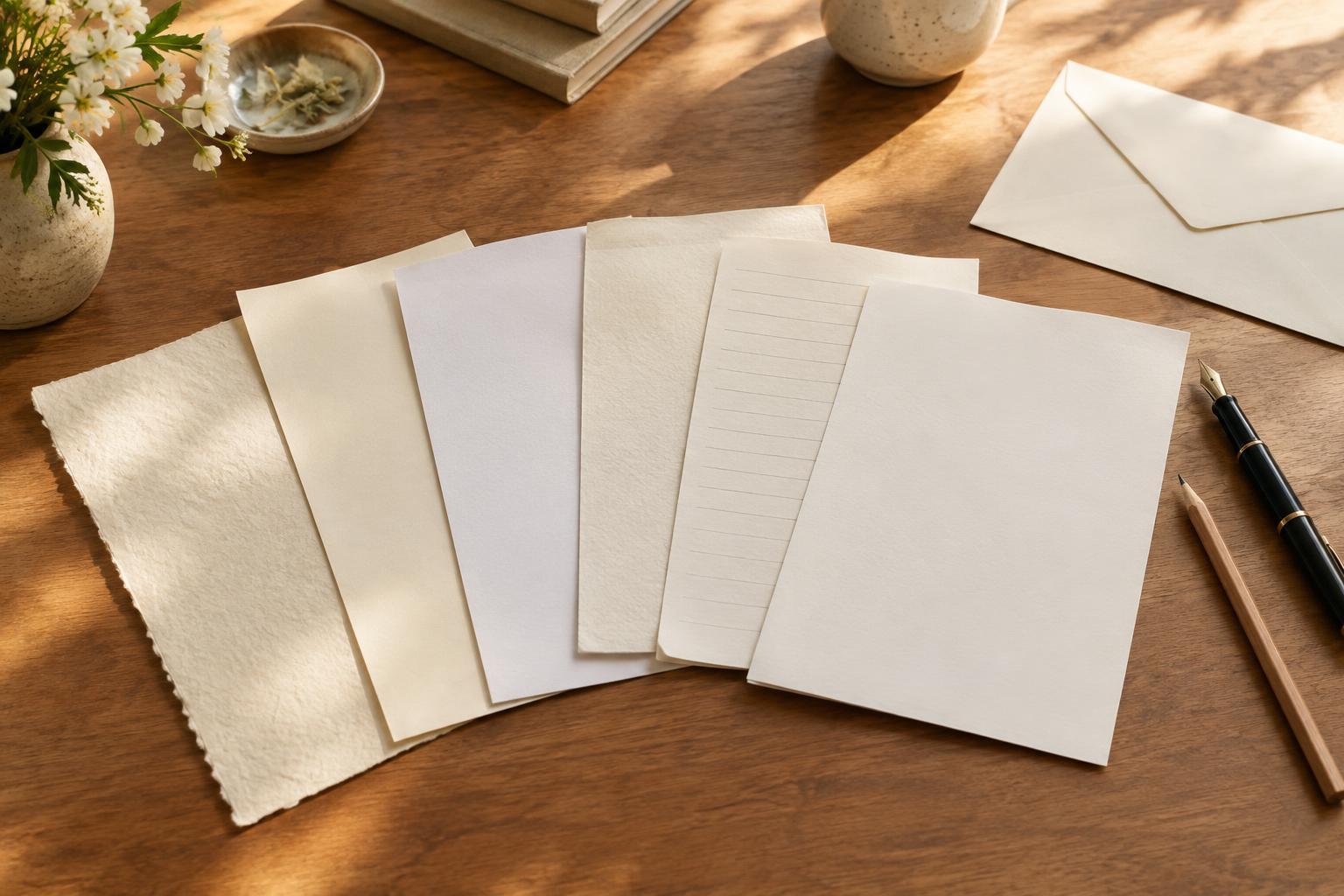
Texture matters just as much. Very smooth paper lets many pens glide across the page, while a slight texture can give writing a pleasant sense of control. Deeply textured paper may catch a fine pen tip or make small handwriting harder to read. If you like the look of a particular paper, try writing a few sentences on it before committing to a full letter.
Match the surface to your pen
The same paper can behave differently with a ballpoint, gel pen, rollerball or fountain pen. Some combinations produce crisp lines; others let ink spread into the fibers, show through the back or take longer to dry. These effects are especially noticeable with wet-writing pens and generous amounts of ink. There is no need to rely on a paper label alone when a quick test can show you what happens with your own pen.
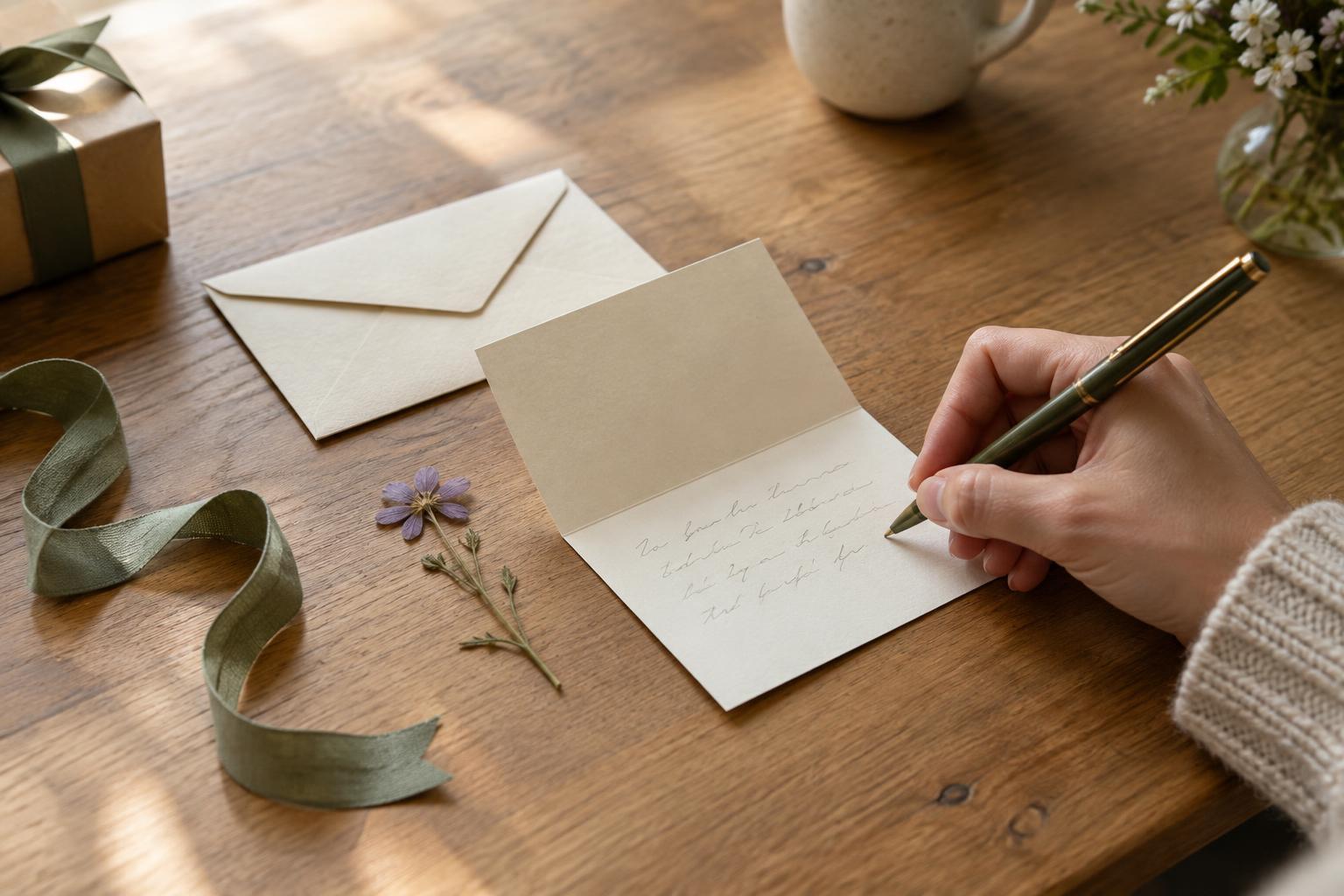
Write a few lines, pause, then run a finger lightly over the page to check for smudging. Turn the sheet over to look for show-through or spots where ink has passed through. If you plan to write on both sides, test both. When ink performance is unpredictable, writing on one side of each sheet is a simple way to keep the letter neat.
Choose color, size and ruling for readability
White and cream paper are versatile because most dark inks remain easy to see against them. Pale colors can work beautifully, but check the contrast before writing a long letter. Dark paper usually calls for a pen that is specifically suited to it. Patterns and illustrations are easiest to use when they leave a generous, quiet area for the text.
Lines can help keep your writing steady, particularly if your letter will run to several pages. If you prefer the look of unlined paper, place a ruled guide sheet underneath a thin, light-colored page and remove it when you finish. Choose a size that gives your handwriting room to breathe and fits its envelope with a simple fold. It is worth checking that fit before you begin, especially if you are using a card or an unusually shaped sheet.
Make a choice you will enjoy using
If the letter is a keepsake, you may prefer paper described as acid-free, which is generally chosen with longer-term storage in mind. Even so, the recipient’s storage conditions and the ink you use can affect how a letter ages. For most notes, comfort, legibility and a clean writing surface are more useful priorities than finding a supposedly perfect sheet.
Keep a few plain sheets you trust, then add a special paper when the occasion calls for it. Fold a test page, tuck it into an envelope and imagine receiving it. If it opens easily, reads clearly and feels like a natural setting for what you want to say, you have found the right paper for that letter.