Decide whose story the timeline will tell
An anniversary timeline is more than a list of dates. It can show how a relationship, friendship, family tradition, or shared project has grown. Before collecting memories, decide what you are celebrating and who should help tell the story. A timeline made by two people for each other may feel intimate; one made with friends and family may be warmer and more varied. Neither needs to be a complete record.
Choose a manageable span and a simple starting point: the day two people met, a first shared home, or the beginning of an annual gathering. If the exact date is uncertain, a year, season, or life stage is enough. Agree on the tone, too. Should the timeline be funny, reflective, or a little of both? That choice will make it easier to select memories later. If the timeline is a surprise, ask someone close to the person being honored which stories are welcome to share publicly.
Gather milestones and everyday moments
Start a rough list without worrying about order or presentation. Include the obvious milestones, then look for the small moments that make the story recognizable: a favorite walk, a meal everyone still talks about, a handwritten note saved in a drawer, or a tradition that began by accident. These details often give an anniversary timeline its personality.
To invite contributions, ask a few specific questions rather than requesting a general tribute. What is a moment you remember clearly? What small habit reminds you of this person or pair? Is there a photo, ticket, recipe, or phrase you associate with that time? Let contributors know how their words or images might be displayed, and check before using anything personal. You can also leave space for different perspectives. Two people may remember the same event differently, and that contrast can be part of the charm.
Shape the story without trying to include everything
Once you have material, choose a limited number of entries that move the story forward. A useful pattern is to alternate turning points with quieter memories. For example, a move to a new city might be followed by the weekly café visit that made the new place feel like home. Short captions work well: name the moment, give its approximate place in time, and add one sentence explaining why it matters.
Look over the sequence for gaps, but resist filling every empty year just for balance. An anniversary timeline is a selection, not an archive. If a period was difficult or private, you can leave it out or acknowledge it gently if everyone involved is comfortable doing so. Before finalizing the text, confirm names, dates, and photo permissions with someone who knows the story. A simple review can prevent an avoidable mistake from becoming the focus of the celebration.
Choose a format guests can explore
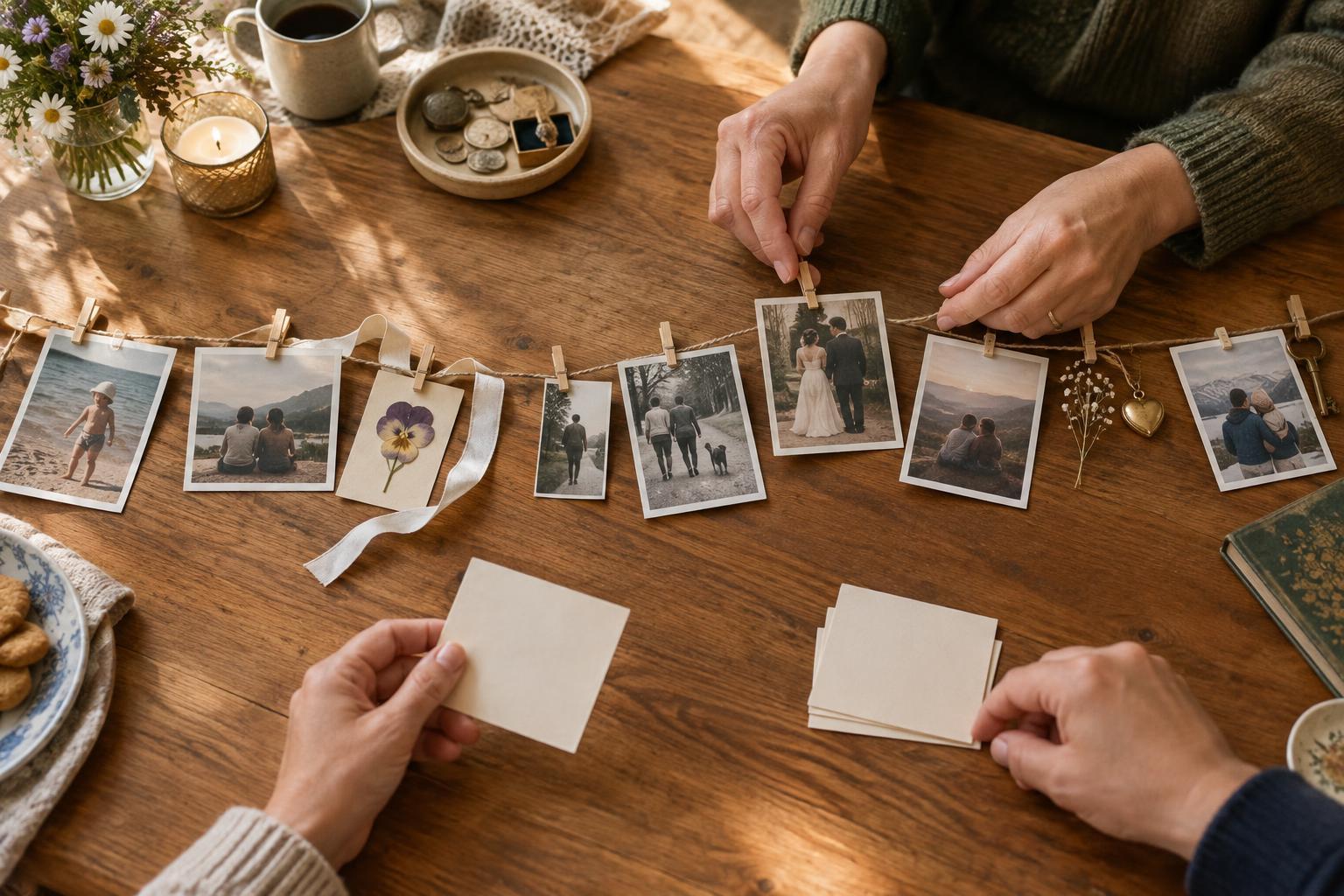
Match the format to the gathering. For an in-person celebration, attach cards to a length of ribbon, arrange them across a table, or place them on a board at a comfortable reading height. Numbered pages in a small booklet suit a quieter dinner and give guests something to browse at their own pace. If guests are joining from different places, a shared document or slide presentation can let them follow along without needing a physical display.
Make each entry easy to read. Use clear lettering, brief captions, and enough space between items so photos and words do not compete. Copies of treasured photographs are safer to display than originals, especially near food or drinks. Consider ending with a blank card or page where guests can add a memory from the celebration itself. This gives the timeline a natural final chapter without pretending the story is finished.
Turn the timeline into a lasting keepsake
During the celebration, the timeline can do more than decorate a room. Invite people to choose an entry and share what they remember about it, while making it easy for anyone to pass. A host might read two or three captions aloud rather than narrating the whole display. That leaves time for conversation and lets guests discover details on their own.
Afterward, collect the cards, guest notes, and any new photographs in a folder or keepsake box. For a display made with temporary materials, photograph it before taking it down, then make a tidy copy of the captions. Leave room for future additions if that appeals to the people involved. The most meaningful result is not a perfect account of every year; it is a record of moments people chose to notice, remember, and share.