Begin with the person, not the perfect opening
Before choosing paper or searching for a memorable first line, picture the person who will read your letter. What do you want them to feel or understand when they finish it? You might want to thank them for a specific kindness, share an update, mark an occasion, or simply remind them they matter to you. A clear purpose gives you somewhere to start without turning the letter into an assignment.
Write that purpose in a private note at the top of your draft: “I want to tell Sam how much our weekly walks have meant to me.” You can remove the note later. Then begin as you might begin a conversation. “I was thinking about our walk by the river” may sound more like you than an elaborate greeting. You do not have to earn your way into a letter with a grand opening.
Draft in the words you would actually use
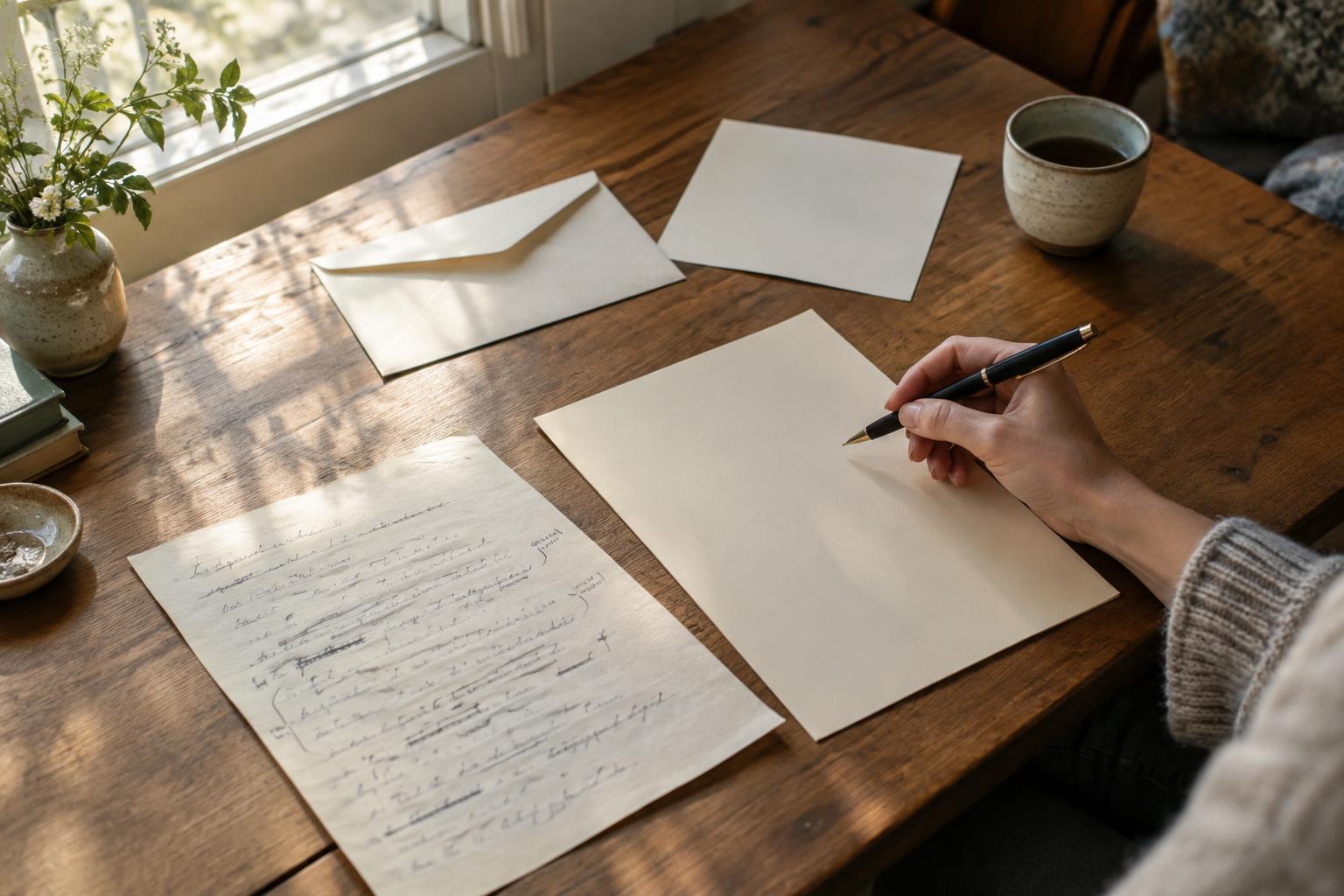
For the first pass, write without stopping to improve every sentence. Follow a simple path if it helps: say why you are writing, include a moment or detail, explain why it matters, and close with a thought for the recipient. This is a guide, not a form to fill in. If your thoughts arrive out of order, get them down first and rearrange them later.
Concrete details often carry more warmth than broad praise. “I still use the recipe you wrote on that yellow card” tells a different story from “You are so thoughtful.” Neither sentence needs to be clever. The aim is to give the reader something they can recognize as part of your shared experience. If you normally use short sentences, gentle jokes, or familiar phrases, let some of them stay. A personal letter should sound like a person, not a greeting card.
Edit for meaning before polishing sentences
Set the draft aside briefly, then read it once for its overall message. Ask whether the reason for writing is clear and whether each paragraph helps convey it. You may find that the most honest line is buried halfway through. Move it closer to the beginning, or give it room on its own. Remove repeated explanations, but keep a detail if it adds feeling or context.
Next, read the letter aloud at a comfortable pace. Notice where you run out of breath, stumble over a phrase, or hear a word you would never say in conversation. Those are useful places to revise. You need not erase every repetition or informal turn of phrase: some are part of your rhythm. The goal is to make the letter easier to receive, not to make it sound as though someone else wrote it.
Be warm without making the letter do too much
Letters can hold meaningful things, but one note need not settle every feeling or cover every event since you last spoke. If the subject is difficult, consider what the recipient needs to know now and what might be better saved for a conversation. You can be direct and kind at the same time: name the feeling or concern plainly, without trying to predict how the other person will respond.
As you edit, check for sentences that place an unintended obligation on the reader. “I hope you’ll write when you have time” leaves more room than a closing that asks for an immediate reply. This matters especially when you are writing to someone who is busy, grieving, or going through a change. A thoughtful letter offers connection; it does not have to demand a particular answer.
Give the final draft one gentle check
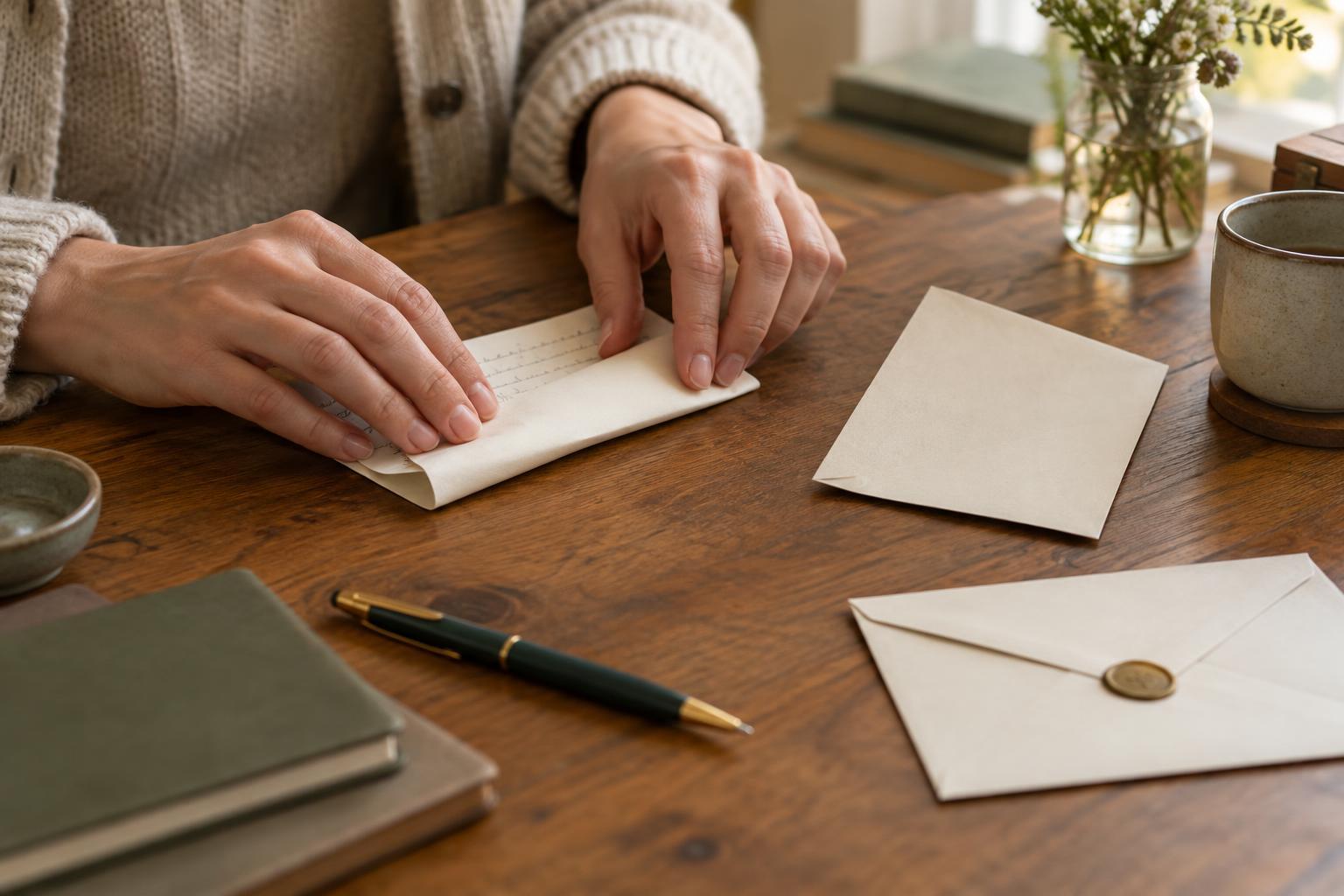
Before copying your letter onto stationery or sealing the envelope, read it once for names, missing words, and any detail that might be misunderstood. Check that the tone of the ending fits the rest of the note. A short closing can feel sincere when it echoes your purpose: “I’m glad we have these memories,” “I’m cheering you on,” or simply “With love,” if that is how you speak to this person.
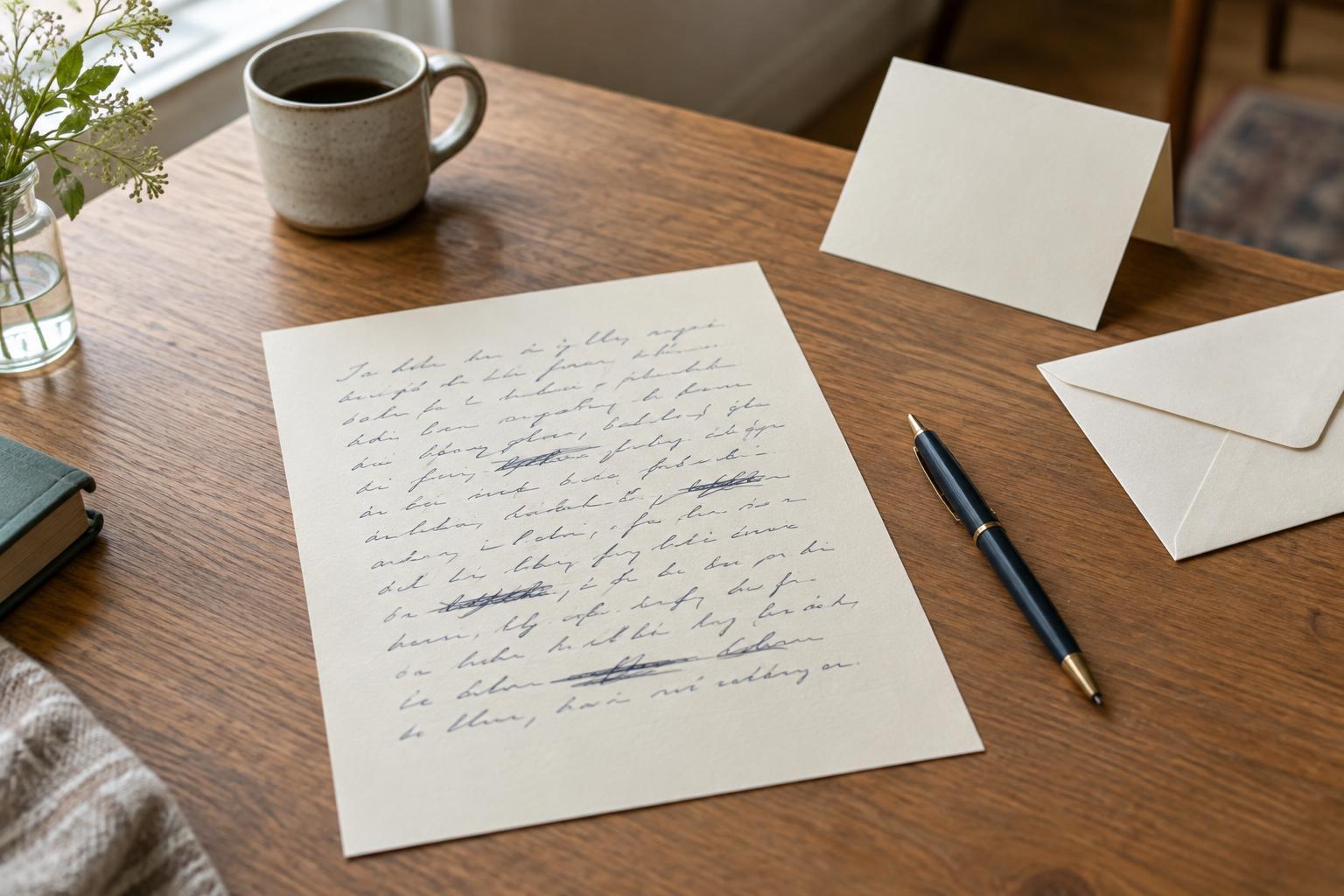
Then let the letter be finished. A crossed-out word or slightly uneven line in a handwritten note does not cancel the care behind it. If you are tempted to rewrite the whole thing to make it flawless, ask whether the change will help your reader understand you better. If not, keep the version that sounds like you. The most lasting part of a personal letter is often the feeling of hearing your voice on the page.