Start with paper and a pen you can control
Legibility begins before the first sentence. Choose paper that gives your writing enough room and makes the ink easy to see. Plain white or light-colored paper is a reliable choice; a busy pattern or dark background can compete with the words. If you like decorative stationery, consider writing on a clear area of the page or choosing a design that stays near the edges.
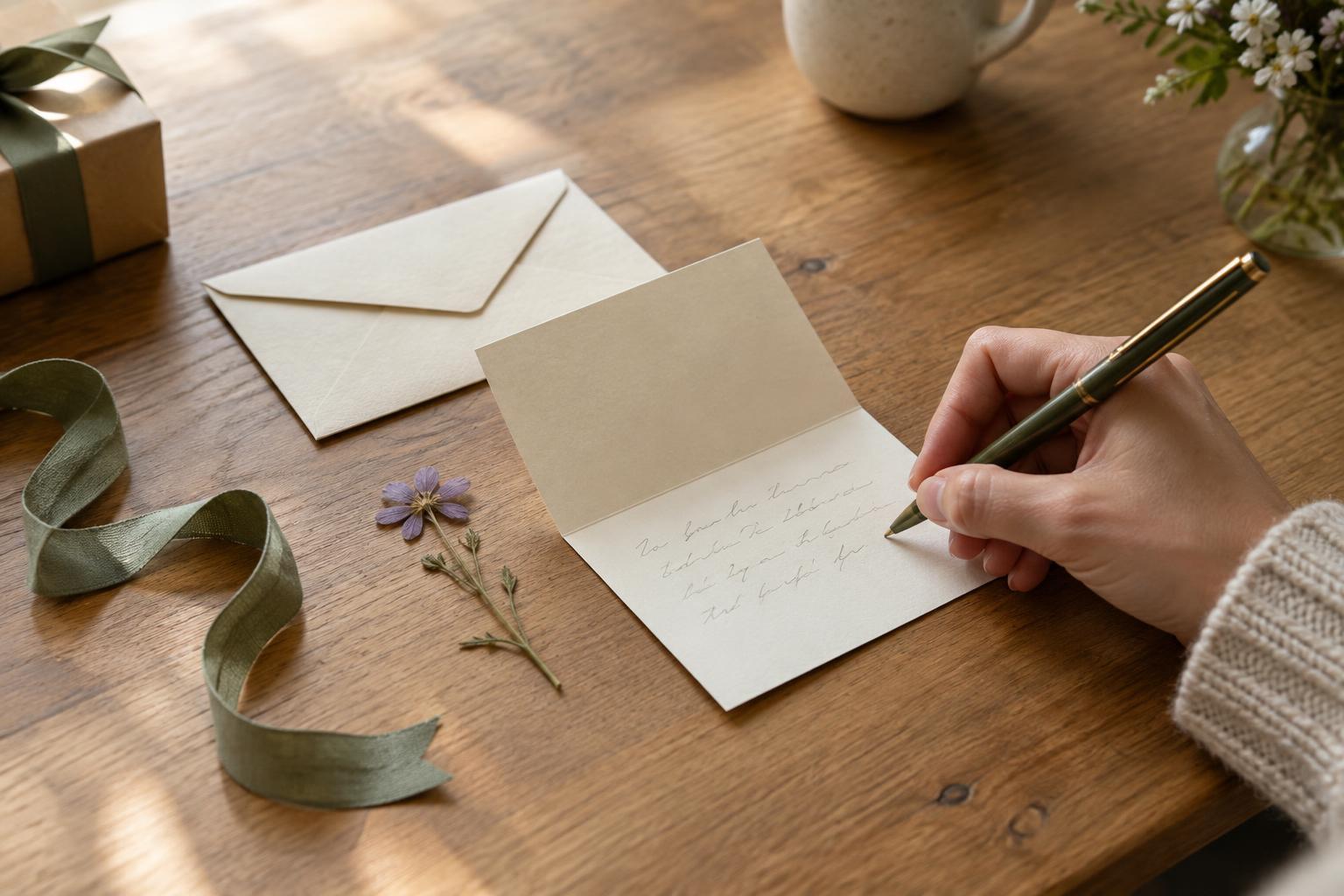
Use a pen that moves comfortably at a pace you can maintain. Very fine lines may look faint, while a pen that releases too much ink can blur letter shapes. Try a few lines on a spare sheet before writing the letter, especially if the paper is smooth or textured. Check that the ink does not smear easily or show through so strongly that writing on the back becomes distracting. You do not need special supplies: a familiar pen and simple paper are often enough.
Give letters, words and lines room to breathe
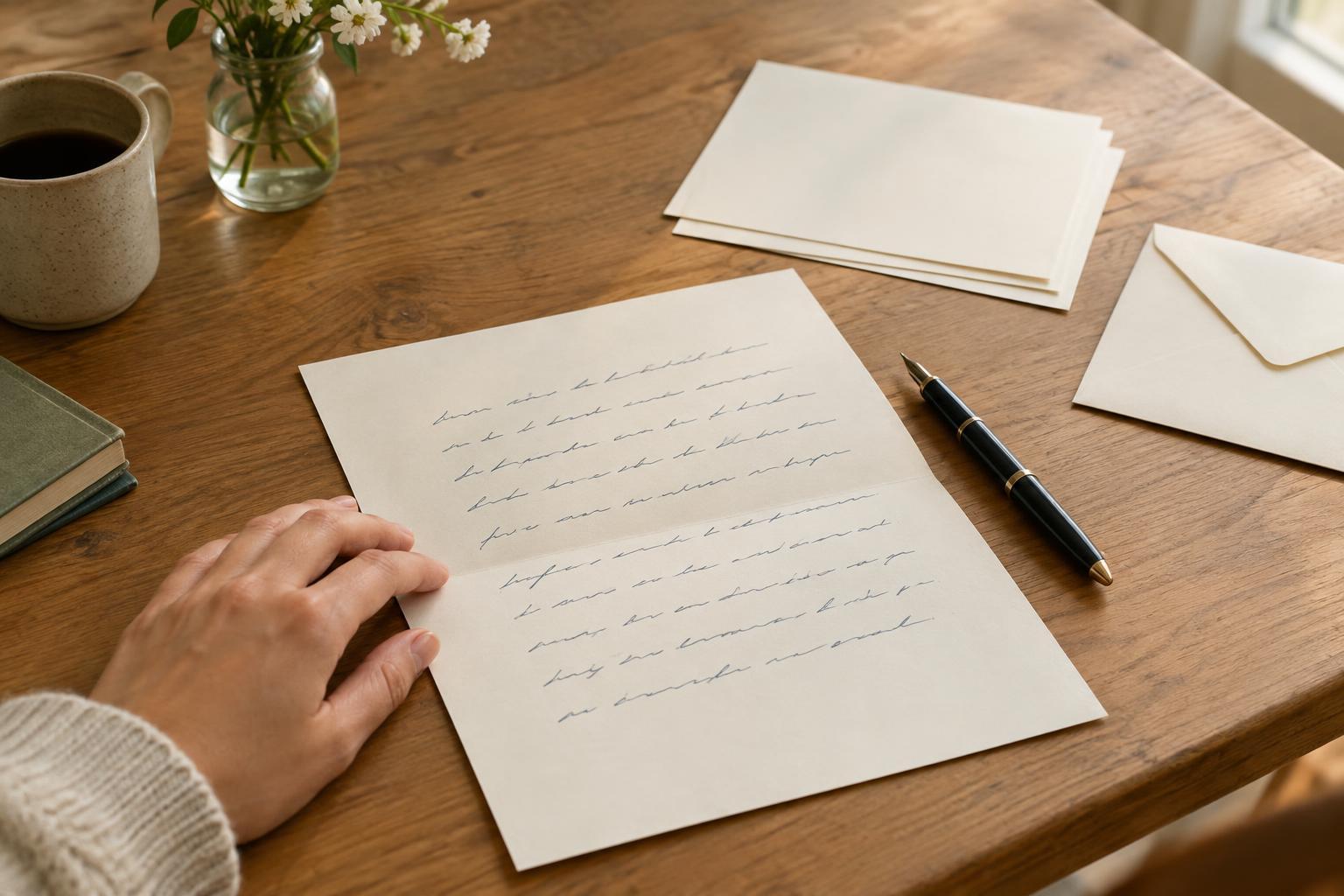
When writing gets crowded, even familiar words can take a second look to decipher. Aim for a size that lets you distinguish letters such as a, o and e, and leave a visible gap between words. You can keep your natural handwriting style while slowing down slightly where letters tend to run together. Clearer writing is usually more useful than perfectly formed writing.
Leave enough space between lines that the lower strokes of one line do not meet the upper strokes of the next. If you have trouble keeping lines straight, place a lined sheet underneath unlined paper as a guide, provided the lines show through. For thicker paper, a light pencil guideline that you erase afterward can help. If your handwriting becomes smaller as you approach the edge, begin a new line instead of squeezing in one more word.
Make the page easy to follow
A letter is easier to read when the page offers small pauses. Begin with a greeting, then divide longer messages into short paragraphs. You might use one paragraph to share your news, another to respond to something your recipient told you and a final one to ask a question or send a warm wish. There is no required formula, but separating ideas helps the reader find their place.
Leave a margin around the writing and avoid filling every available corner. If you use more than one sheet, number the pages discreetly so their order is clear. Write on both sides only if the ink and paper make that comfortable to read. A brief postscript can be charming; several notes squeezed along the margins may be harder to follow than one extra page.
Help important details stand out
Some parts of a letter need particular clarity: a name, an address, a date for a planned visit or a question you hope the recipient will answer. Write these slowly and plainly. If a word is unfamiliar, consider adding a little context rather than relying on the reader to puzzle it out. For example, you can identify a person by their relationship to you when you mention them for the first time.
If you make a mistake, cross it out neatly and write the correction nearby. Rewriting a whole page is rarely necessary, but a crowded correction can create more confusion than the original error. When a detail truly matters, put it on a fresh line. This gives it space without needing elaborate lettering or decoration.
Do one gentle read-through
Before folding the letter, look at it as your recipient will. Can you read each line without guessing? Are any words hidden by a smudge, a fold or an illustration? Check that your signature is recognizable and that all the pages are there. Reading aloud can also reveal a sentence that needs punctuation or a thought that ended halfway through.
The goal is not to make your letter look typeset. Slightly uneven lines and personal flourishes are part of what makes handwriting yours. A few deliberate choices let that character remain while giving someone else an easier, more enjoyable path through your words.