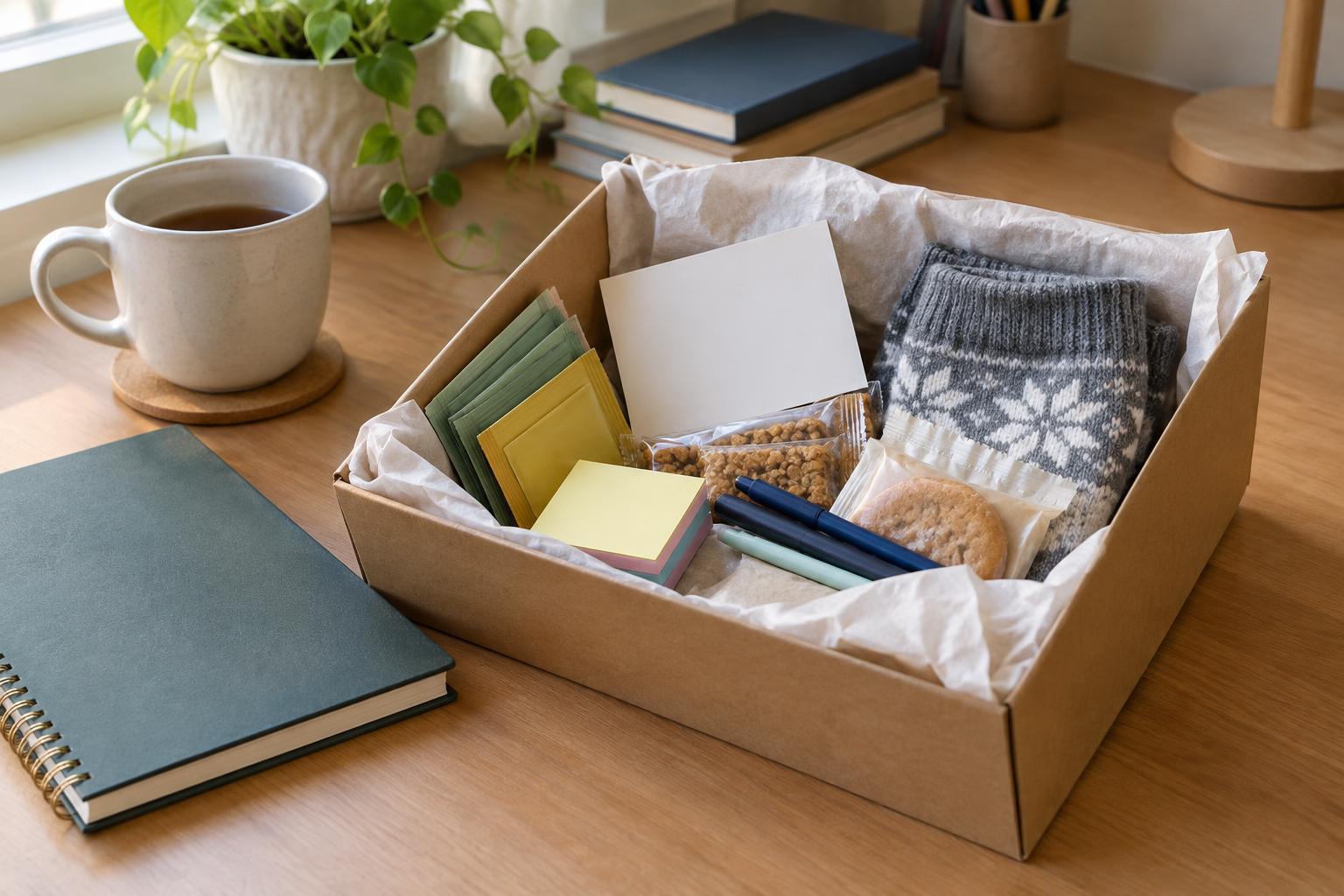
Start with the contents, then choose the box
A small candle, ceramic mug, framed photo, or glass jar can make a care package feel especially personal. Before arranging everything, set out the full collection and identify what could break, leak, scratch, or be damaged by pressure. Pack those items according to their needs rather than treating the whole box as one bundle. If an object is unusually delicate or difficult to replace, consider whether a less fragile version would carry the same sentiment.
Choose a clean, sturdy shipping box that leaves room for cushioning on every side of the fragile items. A box that is too tight gives impacts little room to be absorbed; one that is too large allows the contents to travel unless you fill it thoroughly. Avoid using a decorative gift box as the only outer container. It can sit inside the shipping box, where its appearance is less likely to be spoiled during handling.
Wrap each breakable piece separately
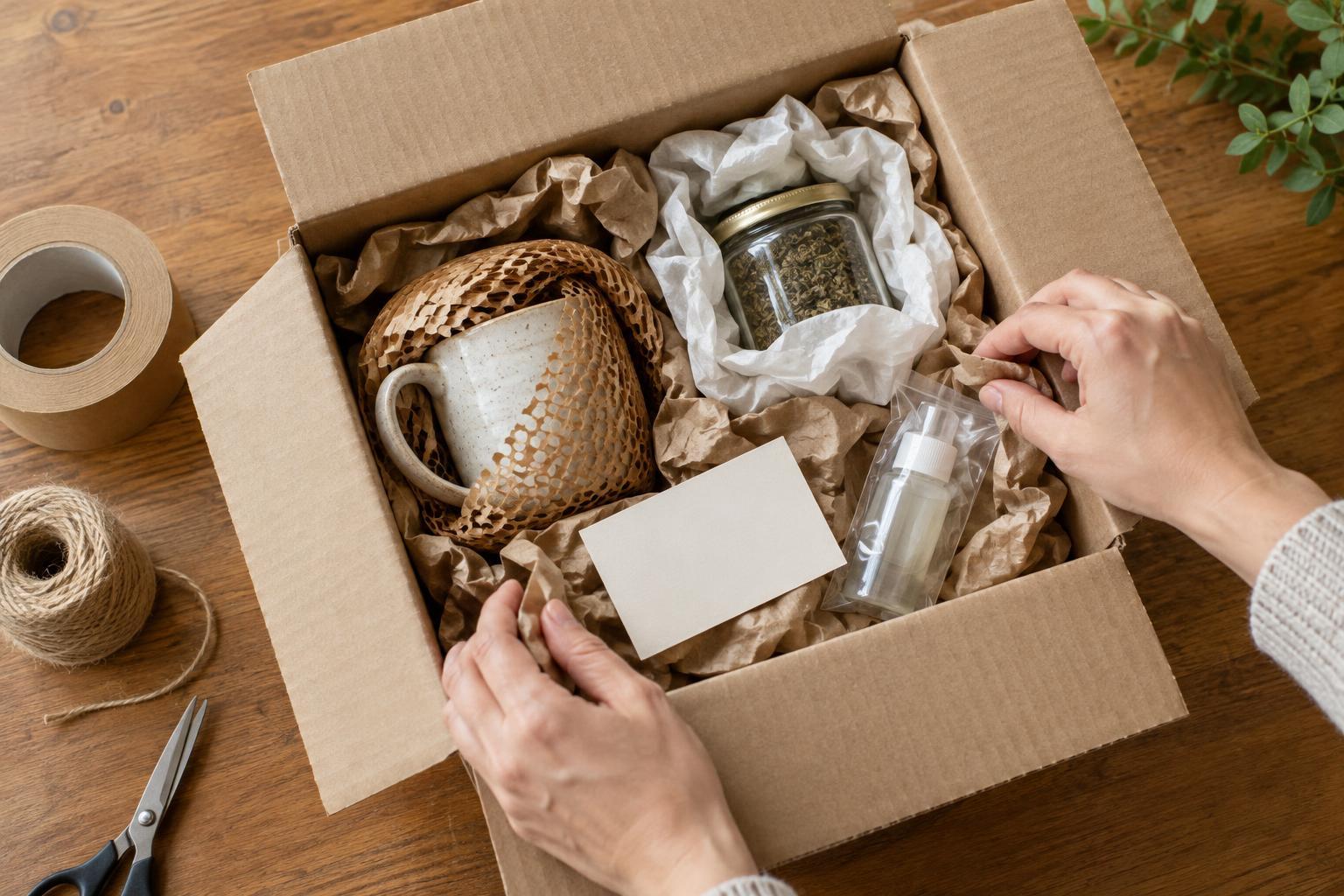
Give every fragile item its own protective layer. Wrap a mug so its handle is supported, cover the corners and edges of a picture frame, and keep glass objects from touching one another. Bubble wrap or other cushioning can protect hard surfaces, while a soft paper layer underneath can help prevent scuffs on a keepsake. Secure the wrapping so it stays in place, but avoid taping directly to a finished or sentimental surface.
Hollow items need attention inside as well as outside. Lightly fill the body of a mug or vase with clean paper before wrapping it; do not force packing material into a narrow opening. For an especially delicate object, place the wrapped piece in a small inner box with cushioning around it, then pack that box inside the larger one. This adds a barrier between the item and the other gifts.
Build a box that resists shifting
Put a generous layer of cushioning on the bottom of the shipping box before adding anything. Place heavier, well-wrapped items low in the box, away from fragile pieces that could be crushed. Keep breakables apart from each other and from the box walls. Lightweight items such as folded socks or a fabric pouch may help fill space, but they should not be the only protection for glass or ceramics.
Once the contents are arranged, fill every open pocket, including the gaps at the sides and above the items. Crumpled packing paper, suitable padding, or other clean cushioning should hold the contents in position without putting excessive pressure on them. Close the flaps and gently tilt the box in different directions. If you feel or hear movement, reopen it and add more support. The aim is a snug fit that does not require you to force the box shut.
Keep spills and scratches contained
A leak can damage more than the item that leaked. If you include a permitted liquid or anything that might release moisture, check that its lid is secure, place it in a sealed bag, and separate it from paper gifts. Not all liquids, foods, candles, or other goods are accepted by every mailing service or destination, so check the relevant rules before packing them. Avoid sending anything perishable unless you can meet the applicable packing and delivery requirements.
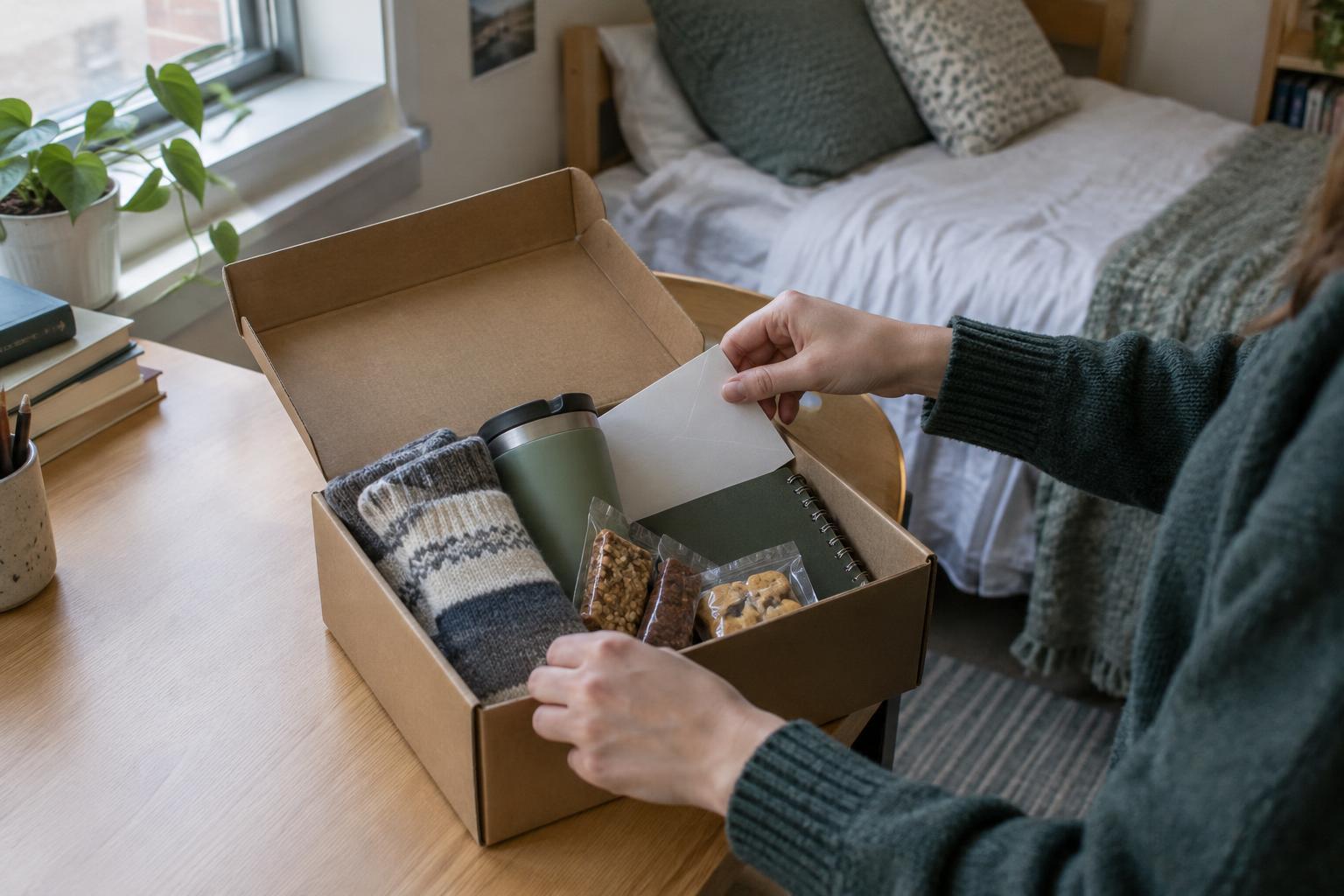
Separate items with different surfaces and shapes. A key ring can scratch a photograph; a jar lid can press into a notebook cover. Slip letters, cards, and prints into a protective sleeve or rigid folder, and place them where they will not bend beneath heavier gifts. If you want the recipient to find the note first, tuck it near the top after the structural packing is complete.
Seal it well and make the opening enjoyable
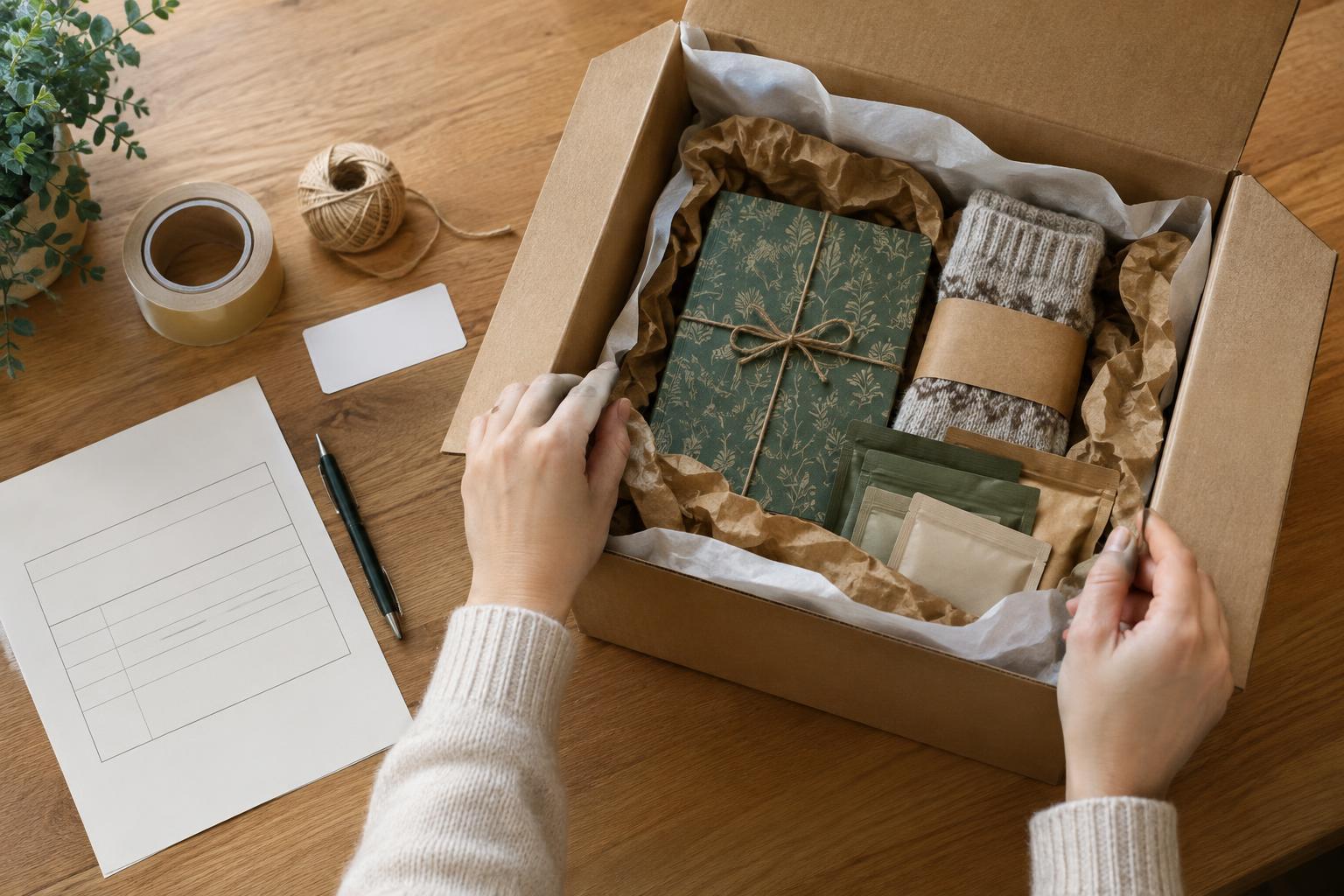
Before sealing, check that cushioning covers the top layer and that the box flaps meet without bulging. Use packing tape to secure the main seam and edges; string, washi tape, and gift ribbon are better saved for the items inside than relied on to hold a shipping box closed. Address the parcel clearly and follow your chosen mailing service’s guidance for labels and any required declarations. A fragile marking can be useful information, but it is not a substitute for protective packing.
The practical layers can be part of the care behind the gift. A short handwritten note can explain why you chose an object, invite the recipient to open a particular small parcel first, or simply say you were thinking of them. Tissue paper and a few neatly wrapped bundles can make the inside feel celebratory without leaving empty space around breakables. With the protective work done first, the personal touches have a better chance of arriving as intended.