Start with the person, not the contents
It is easy to begin a care package by collecting things that look appealing together. A better starting point is the person who will open it. What is their week like? Are they settling into a new place, facing a busy stretch, or simply someone you have not seen in a while? The answer gives the package a purpose and helps you choose items they can actually use.
Think about what you know rather than what a care package is supposed to contain. A friend who likes quiet evenings might appreciate a puzzle and a familiar snack. Someone with little storage space may prefer a few small, useful things over a large box. If you are unsure about food preferences, allergies or household rules, ask a discreet question or choose non-food items. The aim is not to guess perfectly; it is to show that you paid attention.
Choose one purpose and a manageable size
Give your first package a simple theme tied to the recipient’s circumstances, such as “a break after work” or “a little company from afar.” This is a guide, not a rule that every item must match. It makes decisions easier: a note, a comforting activity and a favorite treat may be enough. You do not need to fill every corner of a box for the gesture to feel complete.
Set a budget and decide whether the package will be handed over or sent before you gather anything. If it will travel, consider weight, breakability and how long it may be in transit. Check any applicable mailing rules before including liquids, perishables or other restricted items. A compact package of well-chosen contents is often easier to pack safely and easier for the recipient to accommodate.
Build around a useful, enjoyable or familiar item
Choose an anchor item that reflects something specific about the person. It might be a notebook for someone who enjoys making lists, a small craft project for a hands-on friend, or a packet of their preferred tea if you know they drink it. Then add one or two complementary items rather than a collection of unrelated extras. For example, the notebook could go with a pen and a short list of memories you share.
Balance novelty with familiarity. A surprise can be fun, but an item you know they like can make the package feel especially personal. Consider what they can use where they are: a scented item may not suit a shared room, and a mug may be awkward for someone who already has too many. If the recipient is having a difficult time, keep the gesture gentle. Offer comfort without assuming what will fix their situation.
Let a note explain the thought behind it
A handwritten message can turn a collection of objects into a conversation. Say why you thought of them, mention a specific memory, or share a small piece of ordinary news. A few sincere sentences are enough. You need not write an elaborate letter, and you do not need to ask for a reply unless that would feel welcome.
If you include several items, you could tuck a brief note beside one or two of them: “This reminded me of our rainy Saturday walks,” or “For your next quiet afternoon.” Keep the wording natural to your relationship. The most meaningful detail is usually something the recipient will recognize, not a polished message that could have been written to anyone.
Pack for the moment of opening
Before closing the package, check that each item is clean, sealed where appropriate and unlikely to damage its neighbors. Cushion fragile objects, keep anything that could leak in a separate protective bag, and avoid loose materials that will be troublesome to clean up. If you are sending the box, put the address on a secure outer label and follow the carrier’s packaging guidance.
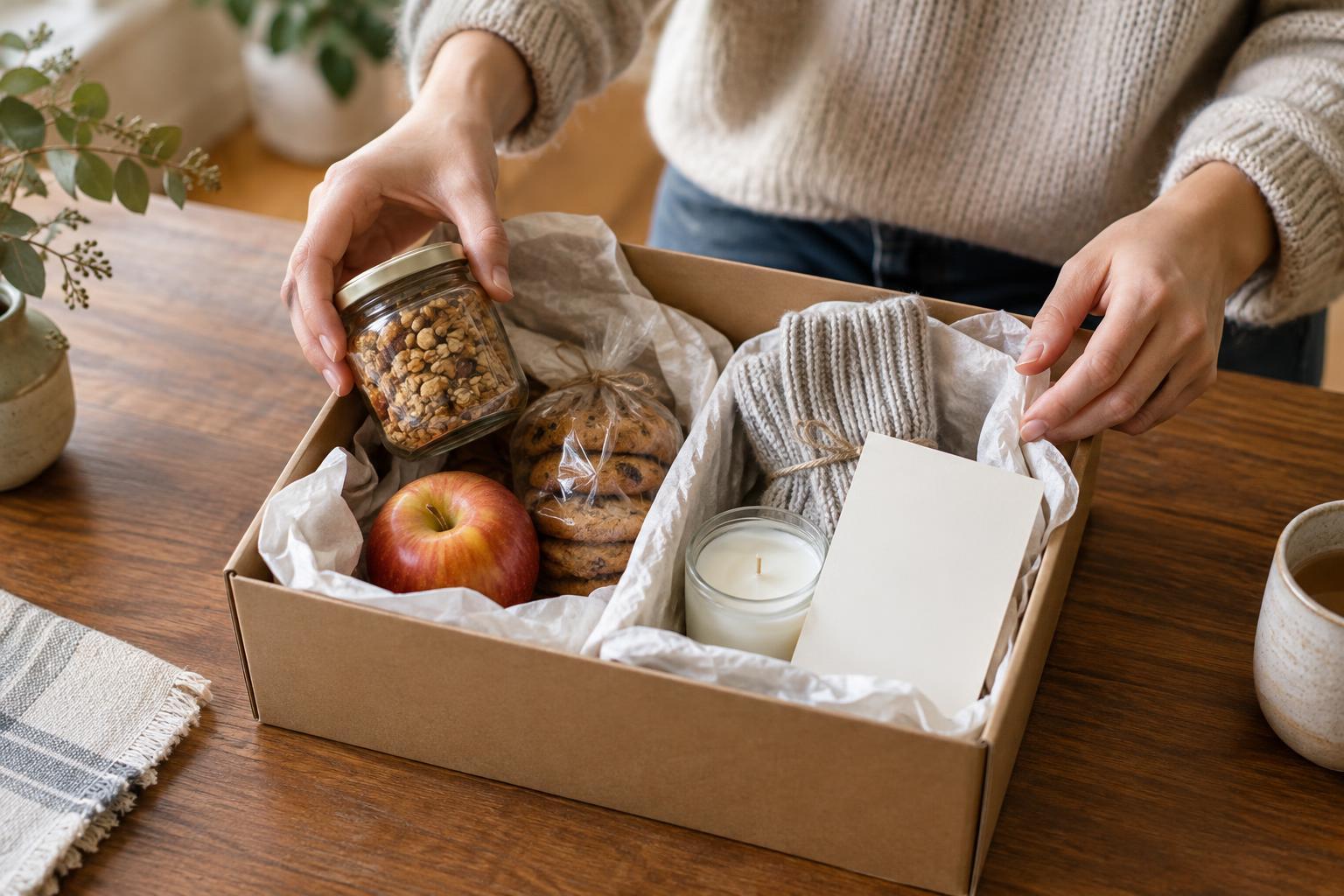
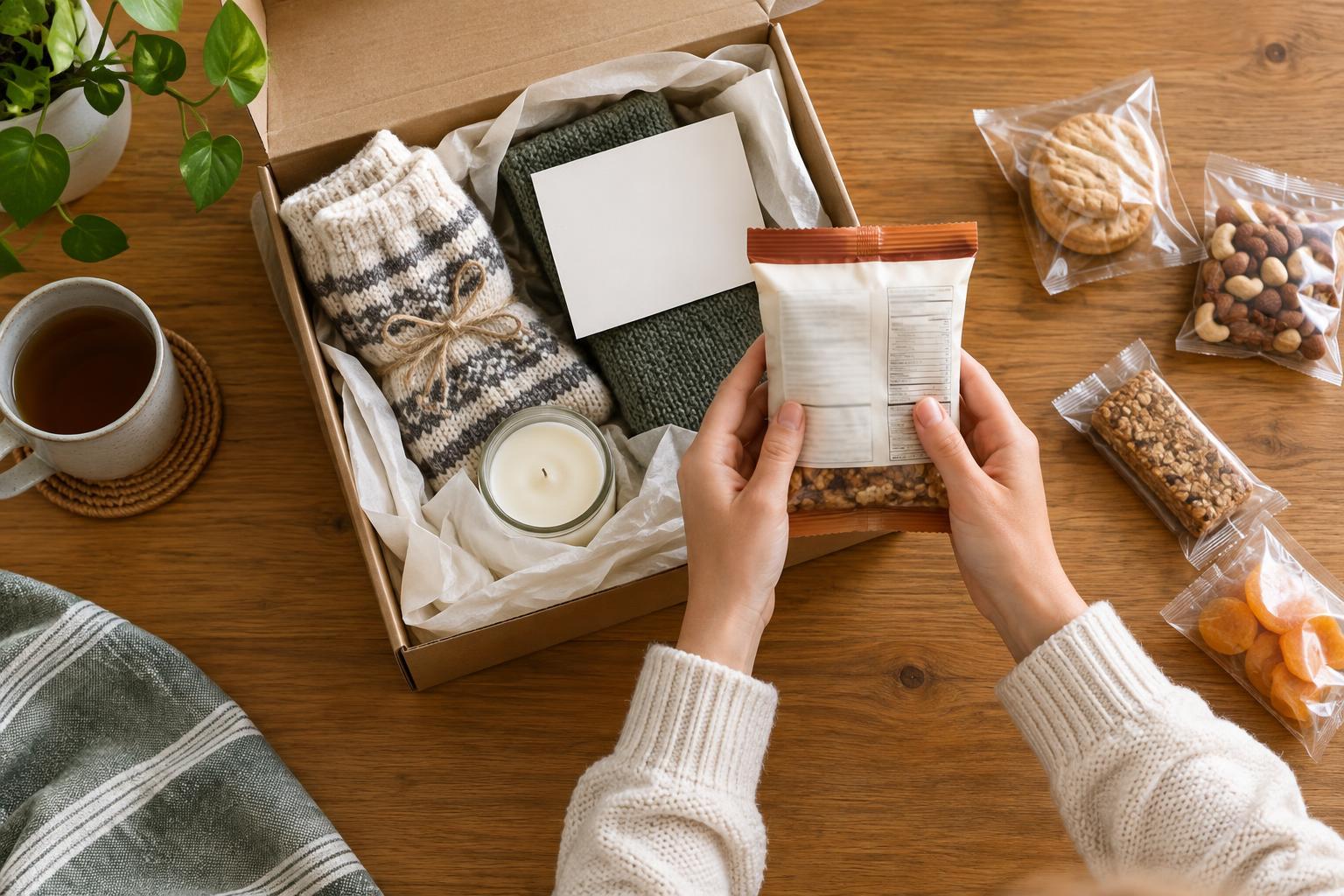
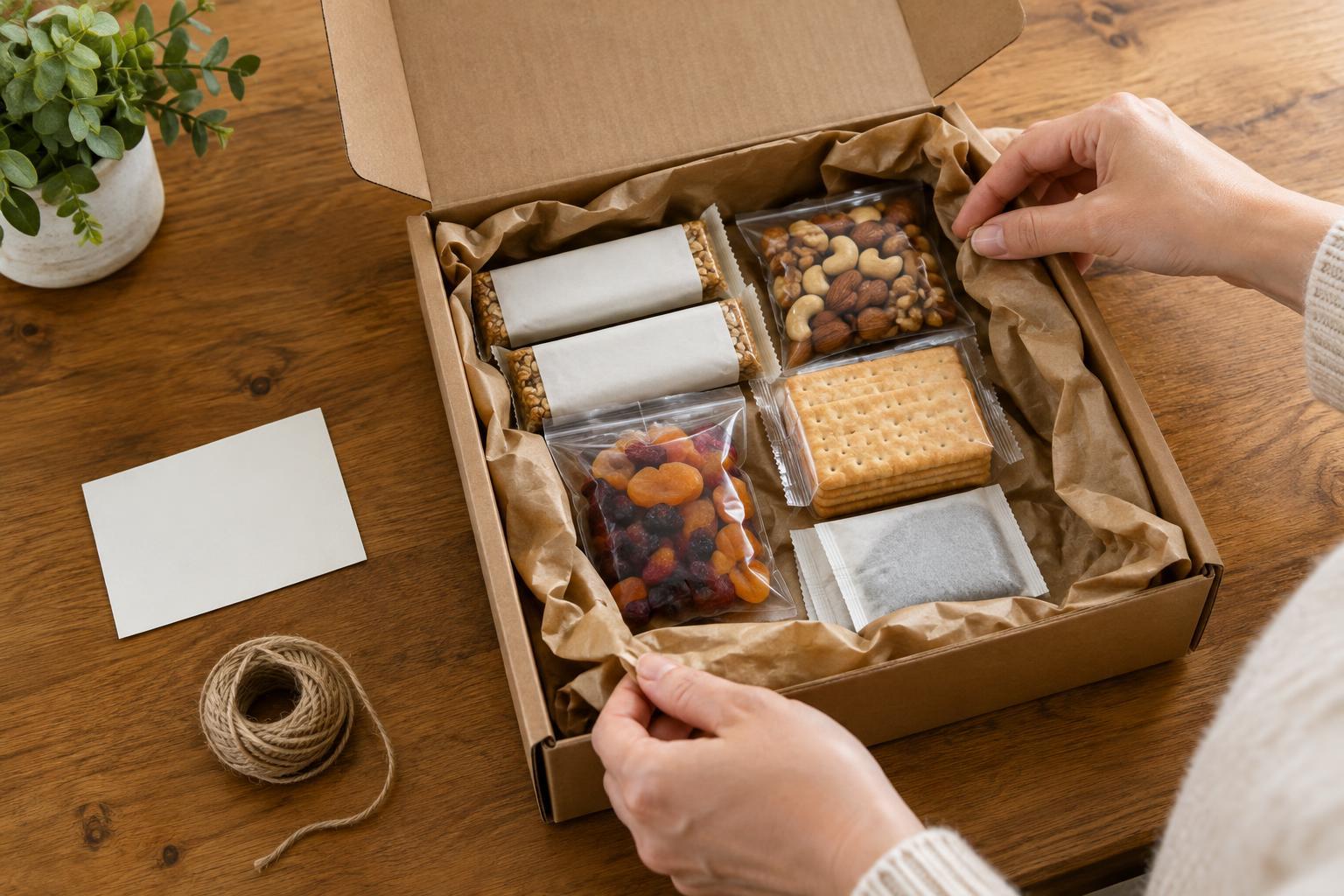
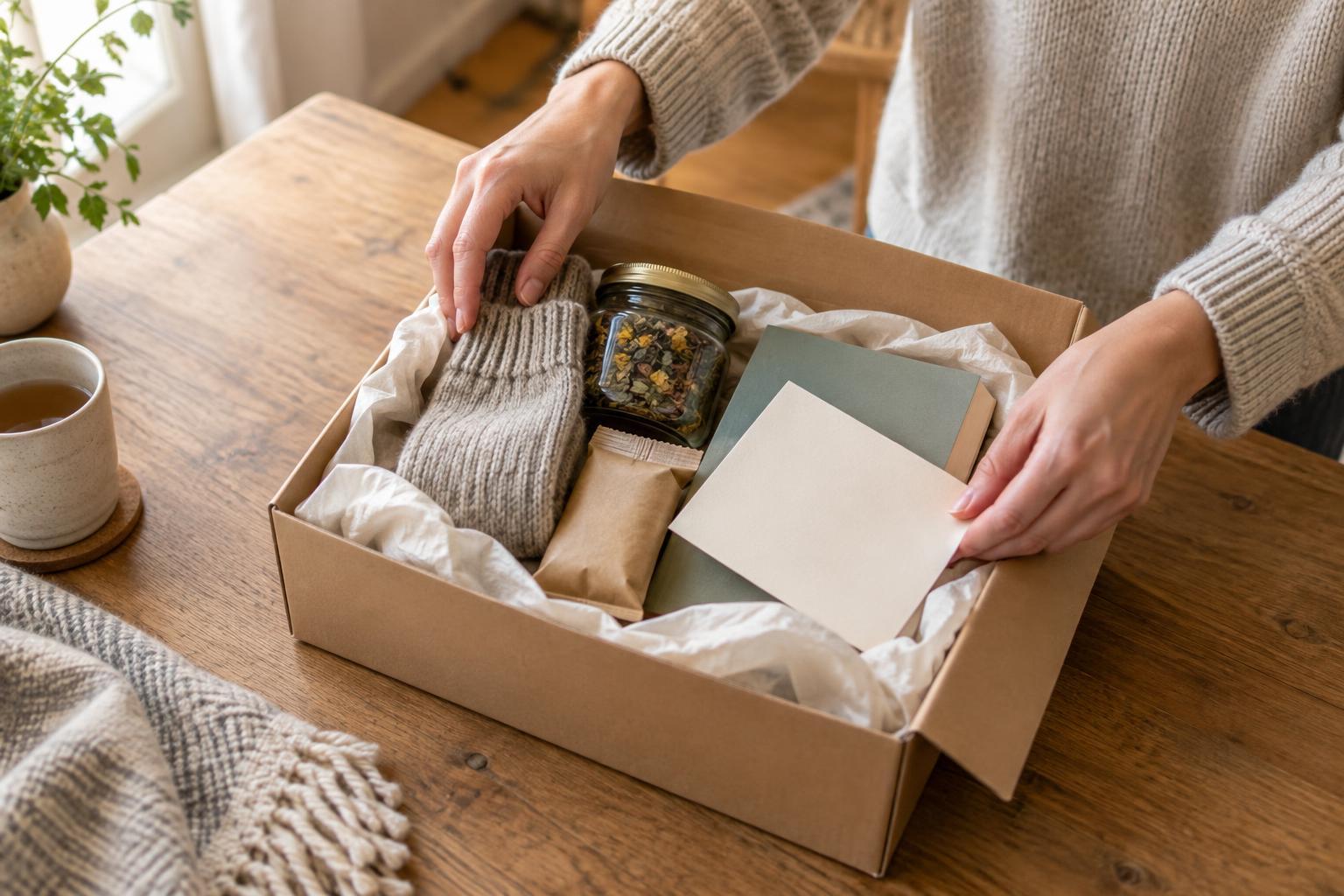
Presentation can be simple: group related items, place the note where it will be seen, and use tissue or reused paper to keep things tidy. You can also leave a little empty space rather than adding filler just for appearance. Finally, imagine the recipient opening it on an ordinary day. Can they understand why you chose these things, and can they enjoy them without extra work? If so, your first care package has done its job.