Start with the notes you want to send
A letter-writing kit does not need to be elaborate. Its job is to remove the small obstacles between thinking of someone and putting a note in the mail. Before gathering supplies, consider what you are most likely to write: short thank-you notes, longer letters to friends, occasional birthday cards, or a mixture. A kit built around your habits is more useful than one assembled around an imagined perfect writing session.
If you mostly send brief notes, a few cards and matching envelopes may be enough. If you enjoy writing several pages, add loose sheets or a notepad. You can keep both without stocking every size and style of stationery. Choose paper that feels comfortable to write on and leaves enough room for your usual message. The aim is to have a ready starting point, not to make every letter look alike.
Gather the essentials in one place
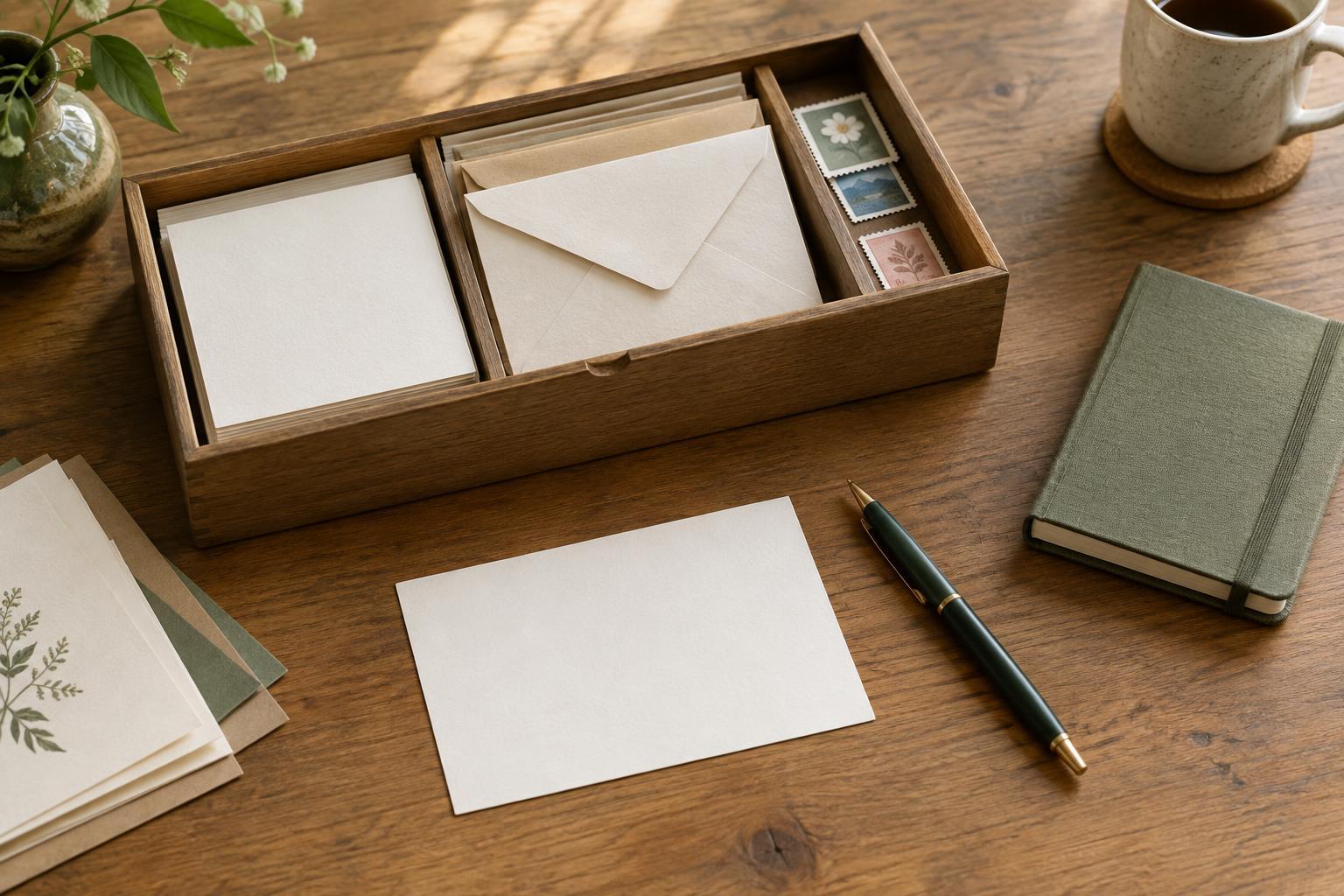
Begin with paper or cards, envelopes that fit them, and a pen you know works well. Keep a spare pen nearby so an empty or unreliable one cannot interrupt you. If you mail letters, add the postage you normally use, or leave yourself a reminder to check what is required before sending. A small sheet of scrap paper can serve as a place to test a pen, jot down an address, or work out a sentence before writing it on the final page.
Addresses deserve their own place in the kit. You might keep a small address book, an index card for frequent correspondents, or a note pointing to where you store addresses securely. Check details with the recipient when you are unsure rather than guessing from an old envelope. If your kit sits in a shared space, put personal addresses somewhere less visible.
Extras are worth adding only if they solve a problem you actually encounter. A ruler can help if you like straight lines; a few paper clips can hold a multi-page letter together while you write. Decorative supplies can be enjoyable, but they need not compete for space with the basics. Leave room to open the kit and start writing without sorting through a collection of things you rarely use.
Choose a home for the kit
A box, drawer, folder, or small pouch can all work. The best choice depends on where you write and whether the kit stays put. A desk drawer makes supplies easy to reach at home. A pouch is handy if you prefer to write at a kitchen table or carry your materials elsewhere. For loose paper, choose a container that keeps the sheets flat enough to write on comfortably.
Arrange the contents so the first things you need are easy to find. Keep envelopes beside the paper they fit, and put pens where they will not mark the sheets. You might reserve one spot for unfinished notes and another for letters that are sealed but not yet mailed. That small distinction can prevent a finished letter from disappearing beneath blank stationery.
If space is limited, make a compact version rather than waiting until you have a dedicated writing area. A few sheets, two envelopes, and a working pen in a folder can be a complete kit. You can refill it as you learn what you reach for most often.
Make it easy to use and replenish
Put the kit where you are likely to notice it, not where it looks most impressive. A visible folder near your usual seat may prompt you to write more often than a beautiful box stored out of reach. When a reason to write comes to mind, you can add the person’s name to a simple reminder list. You do not have to finish a letter immediately; remembering the intention is a useful first step.
After sending a few notes, take a moment to see what ran out or got in the way. Replace used envelopes, remove pens that no longer write, and recycle scraps you will not use. If you consistently avoid one kind of card or paper, you do not need to buy more of it. A kit that changes with your habits is easier to maintain.
The finished kit is not the point; the messages are. Whether you keep your supplies in a tidy stationery box or an ordinary folder, having them together gives you one less task to do before reaching out. Open it when you have something to say, even if that something is simply that you were thinking of someone.