Start with a snug fit
Tape is useful because it holds loose paper in place. Without it, the easiest approach is to reduce that looseness before adding another fastener. A firm box or a book is a good place to start: measure enough paper to go all the way around, with a modest overlap at the seam and enough at each end to make clean folds. Too much extra paper creates bulky corners that are harder to hold shut.
Place the gift face down so the overlapping seam will sit underneath it. Pull the first long edge across, then bring the second edge over it firmly but without creasing the contents. At each short end, fold the top flap down, press the side corners inward, and bring the bottom flap up. Crease each fold with your fingers. These folds give a ribbon or band something flat to hold, rather than asking it to restrain a handful of crumpled paper.
Tie it with ribbon or string
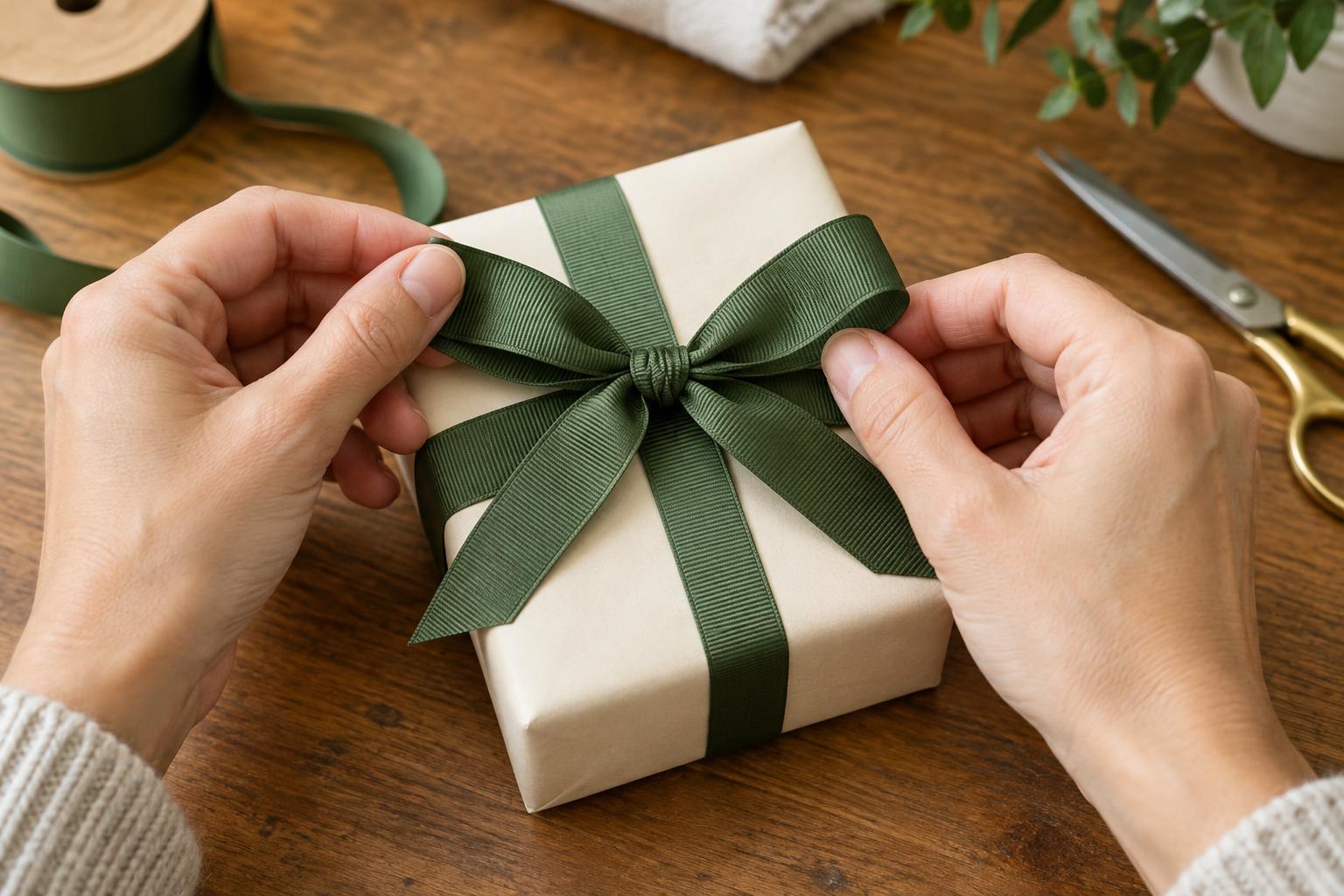
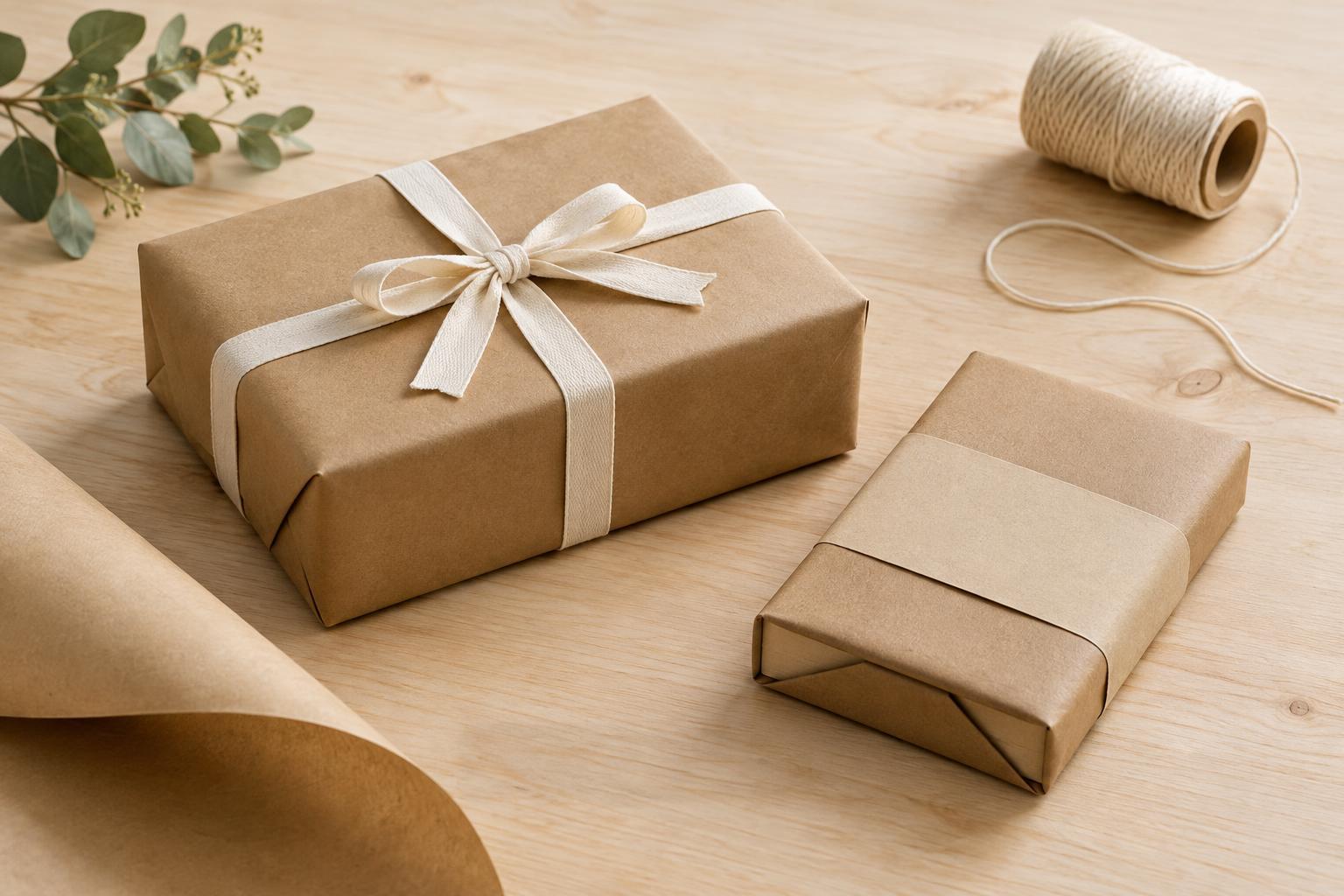
Ribbon, cotton string and twine can hold wrapping paper in place while adding a simple finishing touch. Set the gift seam-side down on the middle of a length of ribbon. Bring the ends up, cross them over the top, then turn the gift over and run the ribbon across its other dimension. Return to the top and tie a firm knot or bow. A crosswise tie helps press the overlapping seam against the gift and supports the folded ends.
If the paper still slips, check the fit before pulling the ribbon tighter. A narrower sheet or sharper end folds may work better than extra tension, which can tear thin paper or dent a soft box. For a broad, flat package, two separate loops of string—one in each direction—can be easier to adjust than a single long piece. Slip a gift tag under a strand or tie it into the bow rather than attaching it to the paper.
Use a paper band or locking fold
A paper band is especially handy for a book, notebook or small rectangular box. Wrap the gift with its seam underneath, then cut a strip of sturdier paper long enough to circle the middle with a generous overlap. Pull the band snug and tuck one end beneath the other to test the fit. To make a more secure closure without adhesive, cut a short slit near one end of the band and a narrow tab at the other; slide the tab into the slit. Keep the cuts away from the gift by making them before you put the band on.
For a small, fairly flat gift, you can also make the wrapping itself part of the closure. Leave one final end flap slightly longer than usual, fold its raw edge inward for a tidy finish, and tuck that flap beneath a neighboring fold. Press along the edges to set the creases. A locking fold is best for a gift that will stay upright or be handed over soon; for a parcel that will be moved around, add a band or string so the tuck cannot work loose.
Choose a different wrap for awkward shapes
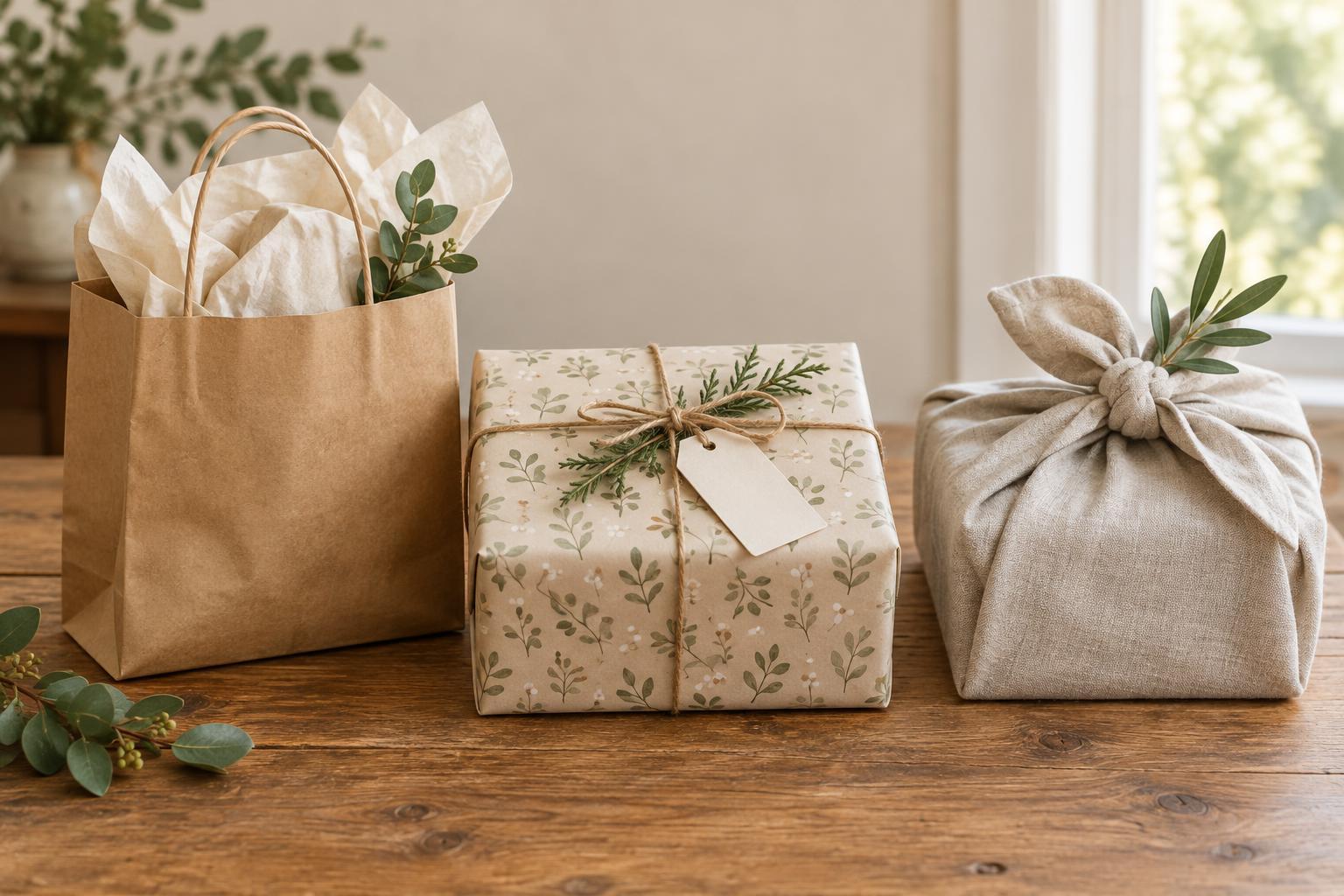
A bottle, jar or uneven object may be difficult to cover securely with ordinary wrapping paper alone. If the shape has a stable base, try a paper bundle: center the item on a large sheet, gather the paper above it, and tie the gathered section with string or ribbon. Leave enough room around the object so the paper does not split when you lift it. For a fragile item, use an appropriate protective container first; decorative paper should not be its only protection.
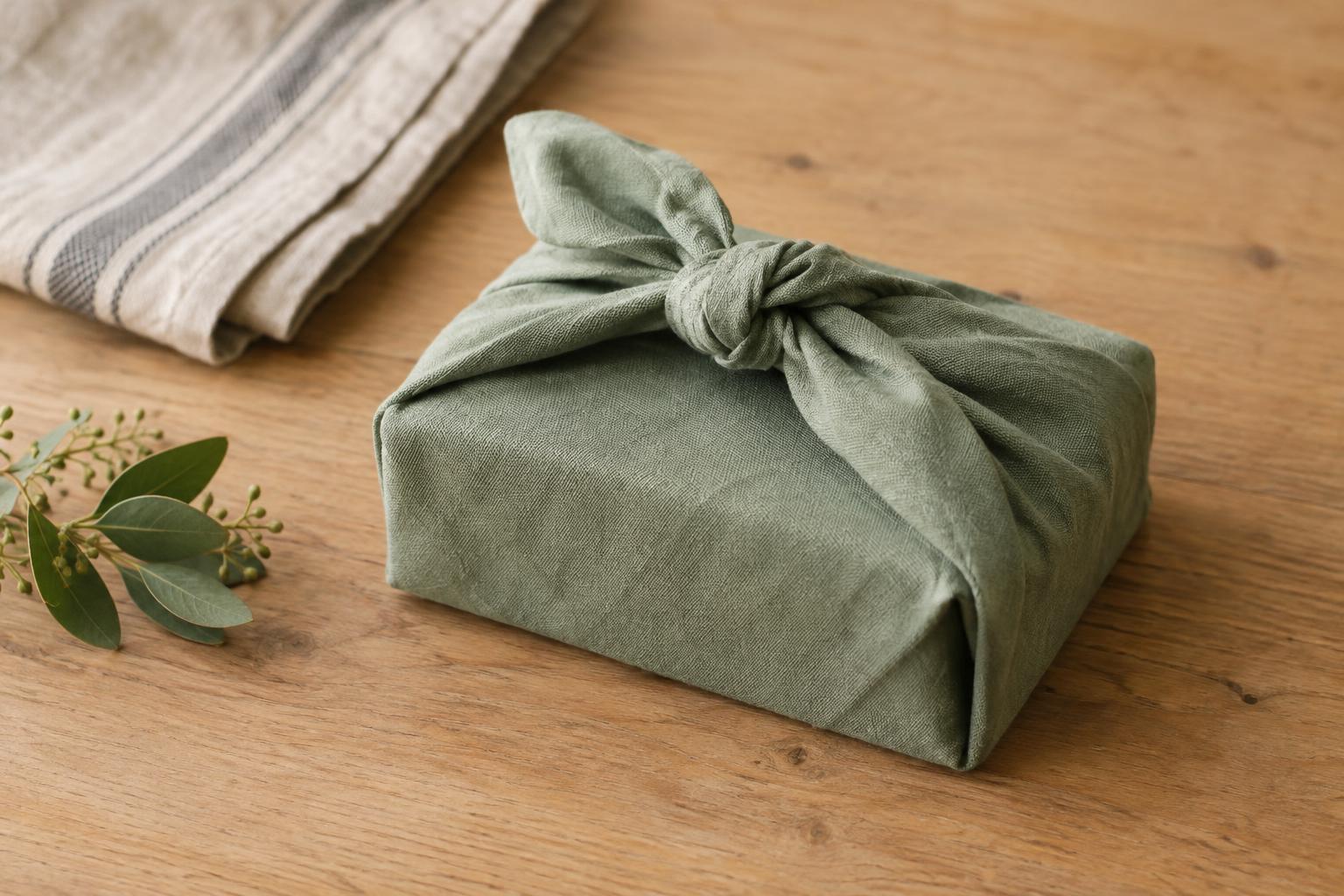
Fabric is another tape-free option. Place the item diagonally on a square cloth, bring opposite corners together, and tie them. Bring up the remaining corners and tie a second knot, adjusting the fabric until the gift sits securely. A tea towel or reusable scarf can become part of the presentation. If you use paper instead, a bag or envelope offers a similar advantage: the gift is contained, so only the opening needs to be folded or tied.
Check the wrap before gifting
Lift the wrapped gift and gently turn it over. If a flap opens, reposition the band or add a second loop of string before decorating. Tuck small decorations beneath the ribbon, but keep heavy ornaments off thin paper. The aim is a package that stays together in someone’s hands, not one that looks perfectly smooth from every angle.
Tape-free wrapping can look deliberately simple: crisp folds, a contrasting paper band and a handwritten tag are often enough. Choosing the method that suits the gift’s shape matters more than making every package the same way.