Start with the feeling, not the activity
When you picture a new holiday tradition, it is easy to jump straight to an activity: matching pajamas, a complicated meal or a perfectly decorated room. Before choosing what to do, ask what you hope people will feel. Do you want a quiet moment together, a chance to laugh, or a way to remember someone who cannot be there? A clear purpose makes it easier to choose a simple activity and easier to adapt it later.
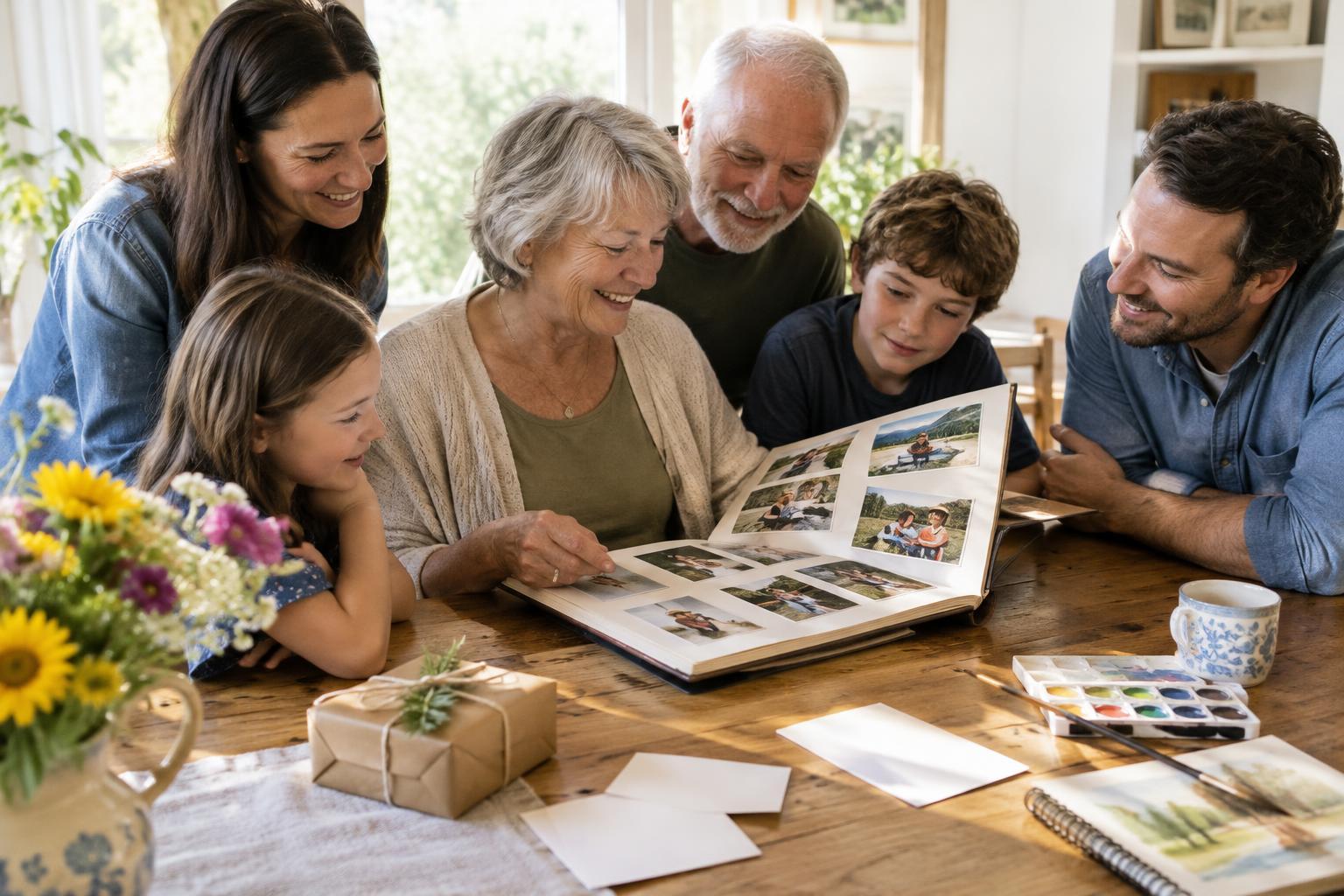
For example, if the goal is to help everyone feel included, you might invite each person to choose a song for a shared playlist or contribute one sentence to a holiday letter. If the goal is to slow down, you might make a familiar drink and spend ten minutes looking through old photos. Neither idea depends on a particular house, menu or number of guests.
Choose a small repeatable moment
A tradition is more likely to last when it fits into a day you already have. Look for a moment you can repeat without special supplies or extensive preparation: the evening before a gathering, the first quiet morning of a holiday break, or the time you normally sit down after a meal. The moment can move when it needs to. What matters is that people recognize it as something you do together.
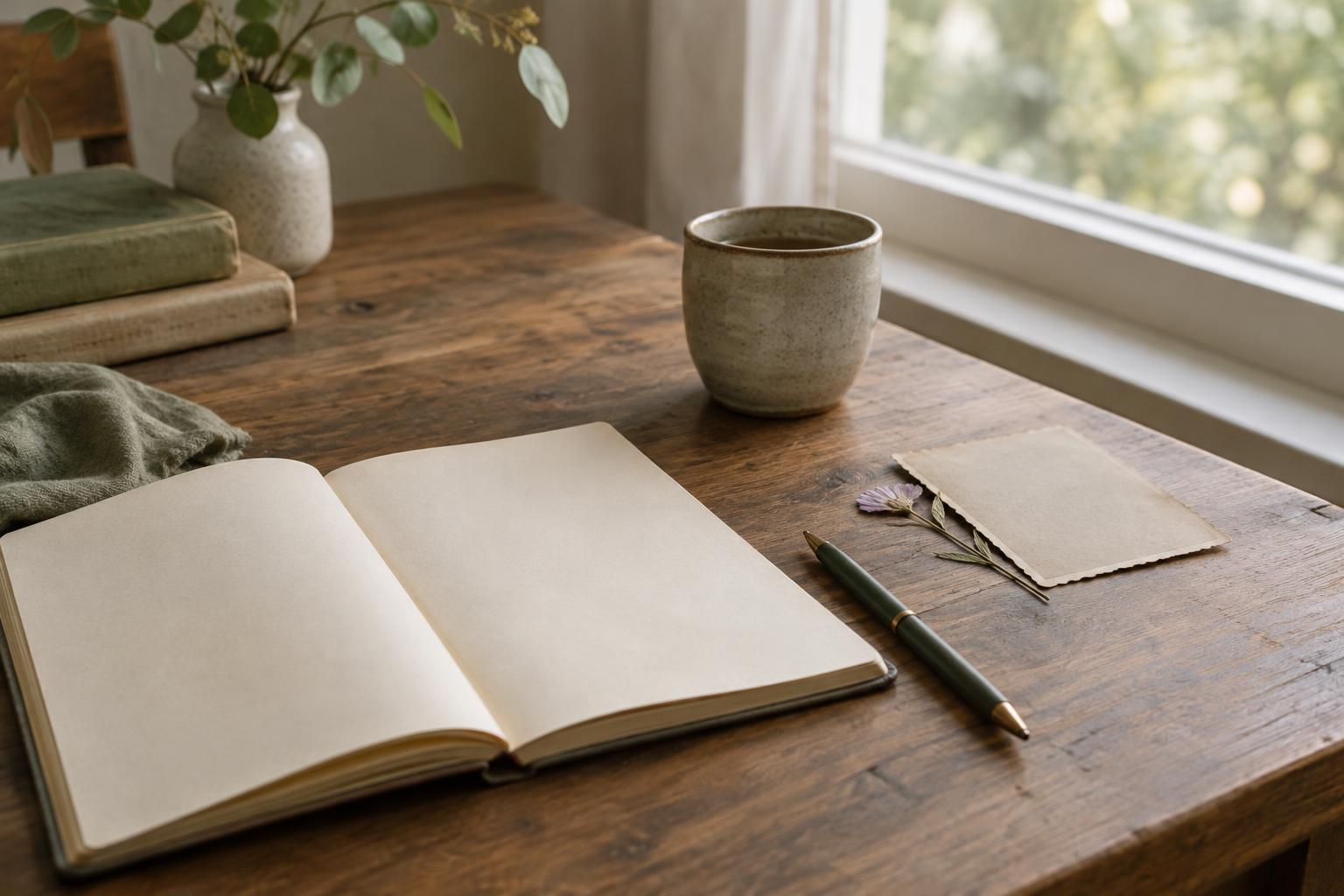
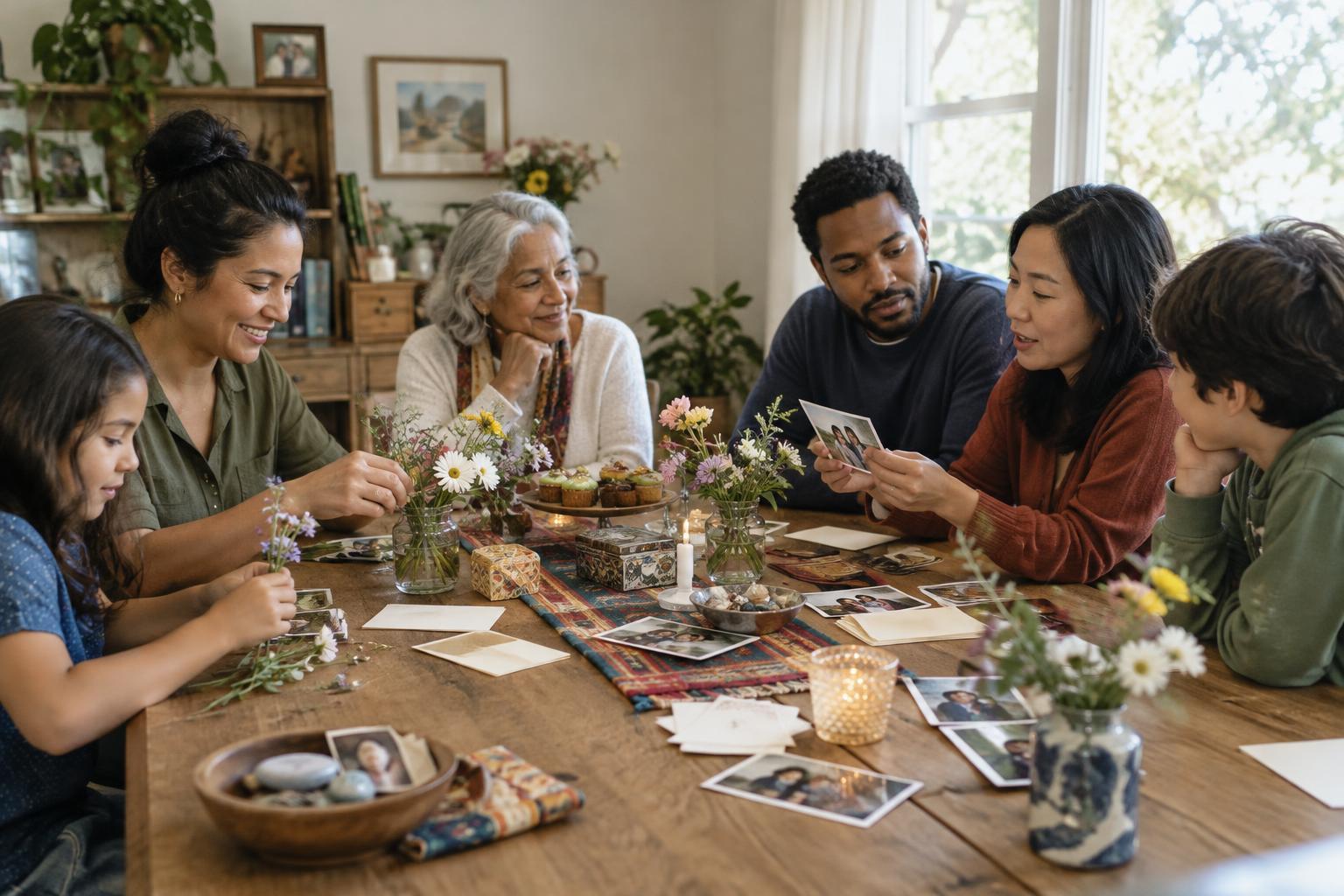
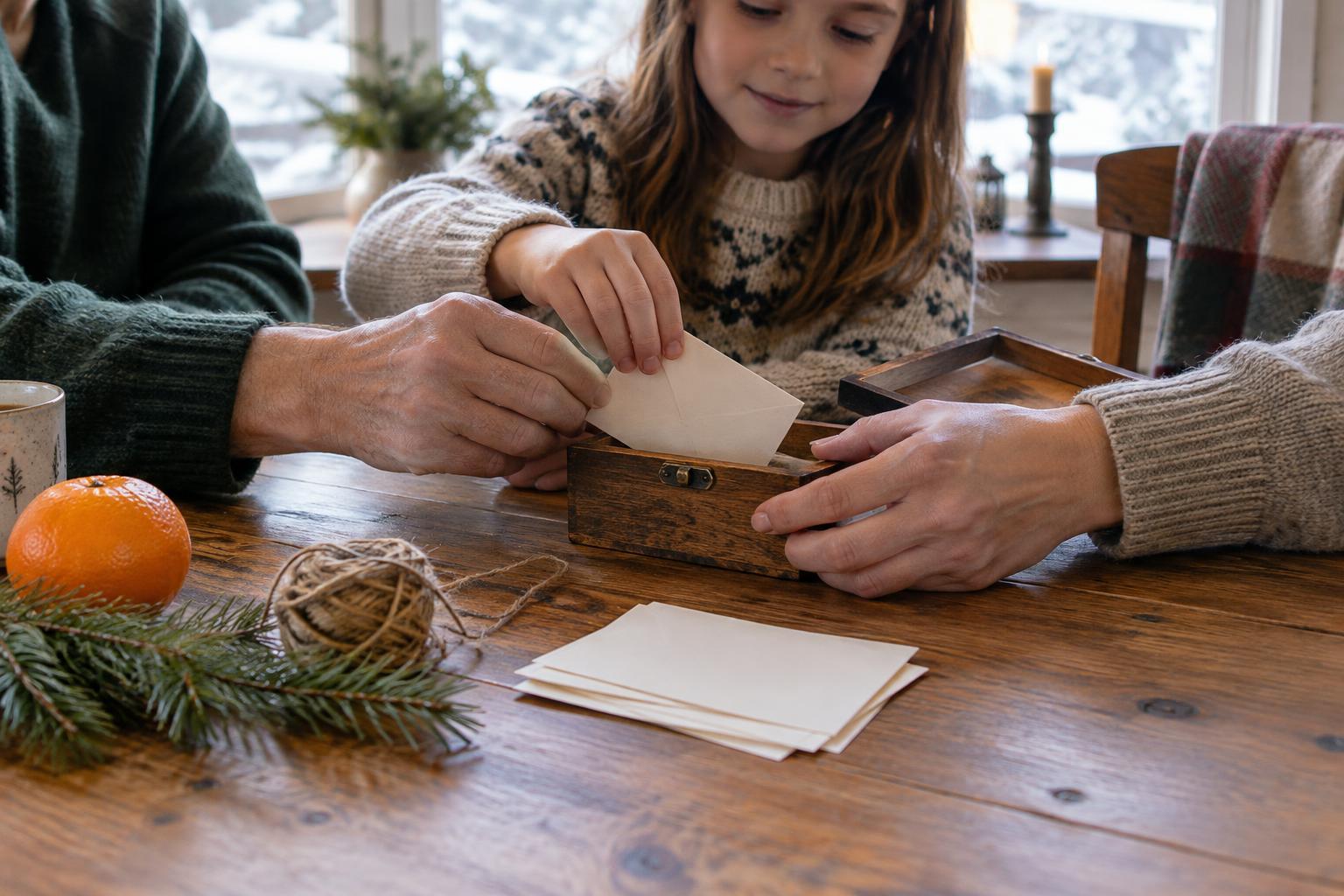
Try giving the moment a light structure. Everyone could answer the same question each year, such as “What made you smile lately?” You could write the answers on slips of paper, add them to an envelope and read a few from previous years. Or each person could choose one small object for a memory box and explain why it matters. These activities create keepsakes without requiring anyone to produce a polished story or buy something new.
Make participation easy in different circumstances
Families change. Children grow older, relatives move, friendships deepen, work schedules shift and gatherings take new shapes. A flexible tradition offers more than one way to take part. Someone who cannot attend could send a note, a voice message or a photo. A young child might draw a picture instead of writing. A guest who is new to the group can answer a present-day question without needing years of shared history.
It also helps to keep the invitation gentle. Some people love being asked to speak in front of a room; others would rather write privately or simply listen. Letting people pass or contribute later can make the tradition more welcoming. If the activity stops feeling comfortable for someone, consider that useful information rather than a failure. The aim is connection, not perfect participation.
Keep the keepsakes manageable
Saving a trace of each celebration can be lovely, but a tradition should not create an overwhelming storage project. Choose one place for what you keep: a folder for letters, an envelope for handwritten answers or a small box for photos and mementos. Label each addition with the year and a few names so its meaning remains clear later. If an item is too large to save, a short written description can preserve the memory instead.
You do not have to document everything. One recipe card marked with a note about who made the dish, or a group photo with a sentence on the back, may say more than a collection you never revisit. Build in a moment to look at older keepsakes, too. Reading last year’s answers before adding new ones gives the tradition a sense of continuity without asking anyone to recreate the past.
Let the tradition change on purpose
After a celebration, ask what felt enjoyable and what felt like work. Perhaps the question you chose led to good conversation, but gathering everyone at the same time was difficult. Next year, you could leave the question on cards for people to answer throughout the day. Perhaps a shared meal has become impractical; you could keep the part everyone loved by exchanging favorite recipes or memories instead.
It is fine to skip a year, change the name of the tradition or retire it altogether. A practice can still be meaningful even if it does not happen exactly the same way forever. Start with one small gesture that suits your family now, and leave room for future versions. Over time, the tradition becomes less about following a set of rules and more about finding a familiar way to say, “We are glad to share this moment.”