Start with a person, not a perfect sentence
A blank page can make a personal letter feel more formal than it needs to be. Before choosing stationery or worrying about handwriting, picture the person who will read it. What do you want them to feel when they finish: appreciated, remembered, encouraged or simply caught up? That answer gives the letter a purpose. You are writing to one person, not producing a polished essay.
Choose a modest reason to write. You might thank someone for a small kindness, share a memory, celebrate a change in their life or say hello after a quiet stretch. A reason does not have to be an occasion. “I was thinking about you when I walked past the old bookshop” is enough to begin. If you are unsure whether the moment is worth a letter, remember that an ordinary detail can be exactly what makes it personal.
Gather a few details before you write
Give yourself two minutes to jot down three things: a shared moment, something you admire about the recipient and a question you would genuinely like to ask. You may use only one of them. This little list is not an outline you must follow; it is a way to move past “I hope you’re well” when you want to say more.
Specific details do the work that grand declarations often cannot. Instead of saying only “I miss you,” you might mention how you still think of their laugh when you make the meal you used to cook together. Instead of “Thanks for everything,” name the afternoon they stayed to help you tidy up. Keep details kind and appropriate for the relationship. You do not need to disclose something private to make a letter sincere.
Use a simple shape for the letter
A friendly letter can follow an easy path: greeting, reason for writing, one or two stories or thoughts, and a closing. Begin with the name you normally use for the person. Then try a plain first line such as “I wanted to tell you how much I appreciated your visit,” or “I saw something today that reminded me of you.” There is no need to apologize for writing out of the blue unless you truly want to.
In the middle, stay with your main thought long enough to make it clear. Describe what happened, why it stayed with you and what you hope the recipient knows. If you want to include an update, choose one or two things rather than trying to account for every month since you last spoke. A question near the end can invite a reply: “Have you been back to the garden this spring?” But a letter can also be a gift with no request attached.
Close in words that sound natural coming from you. “With love,” “Thinking of you,” or “Take care” may fit different relationships. Add your name, even if the recipient knows your handwriting. If the letter is short, let it be short. A few considered sentences are more pleasant to read than a page padded to look substantial.
Make the page comfortable to read
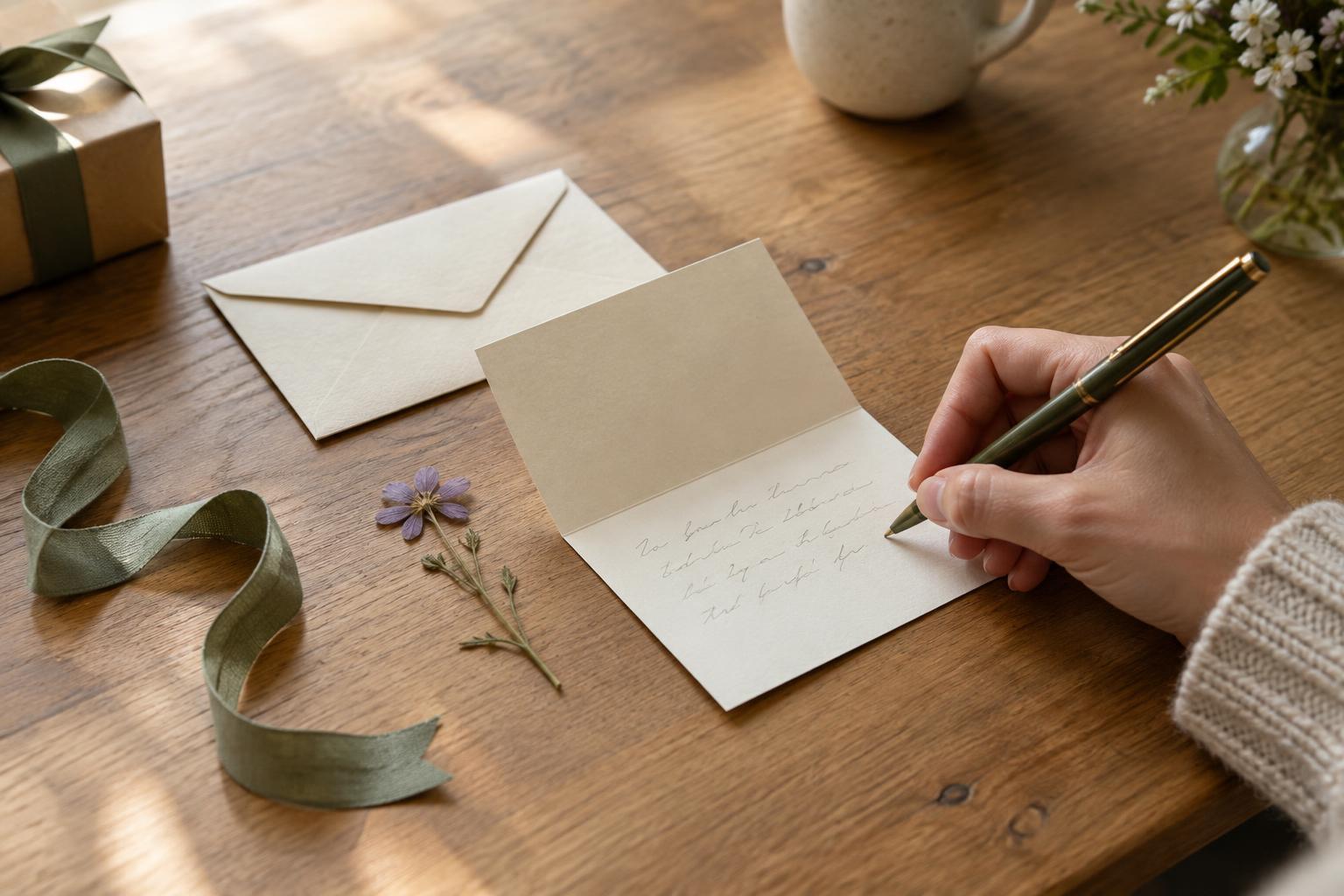
You do not need special supplies. A clean sheet of paper and a pen that writes reliably are enough. If you enjoy stationery, choose paper you will actually use rather than saving it for an imagined perfect letter. A date at the top can help the recipient place the note later, especially if they keep it. Leave a little space between paragraphs so your thoughts are easy to follow.
Write a rough version first if that makes you less self-conscious. Read it once for clarity, then check that the tone matches your intention. Crossed-out words and uneven lines are not failures, though you can recopy the letter if you prefer. If handwriting is difficult or uncomfortable, a typed letter can still be personal; your choice of details and words matters more than the tool.
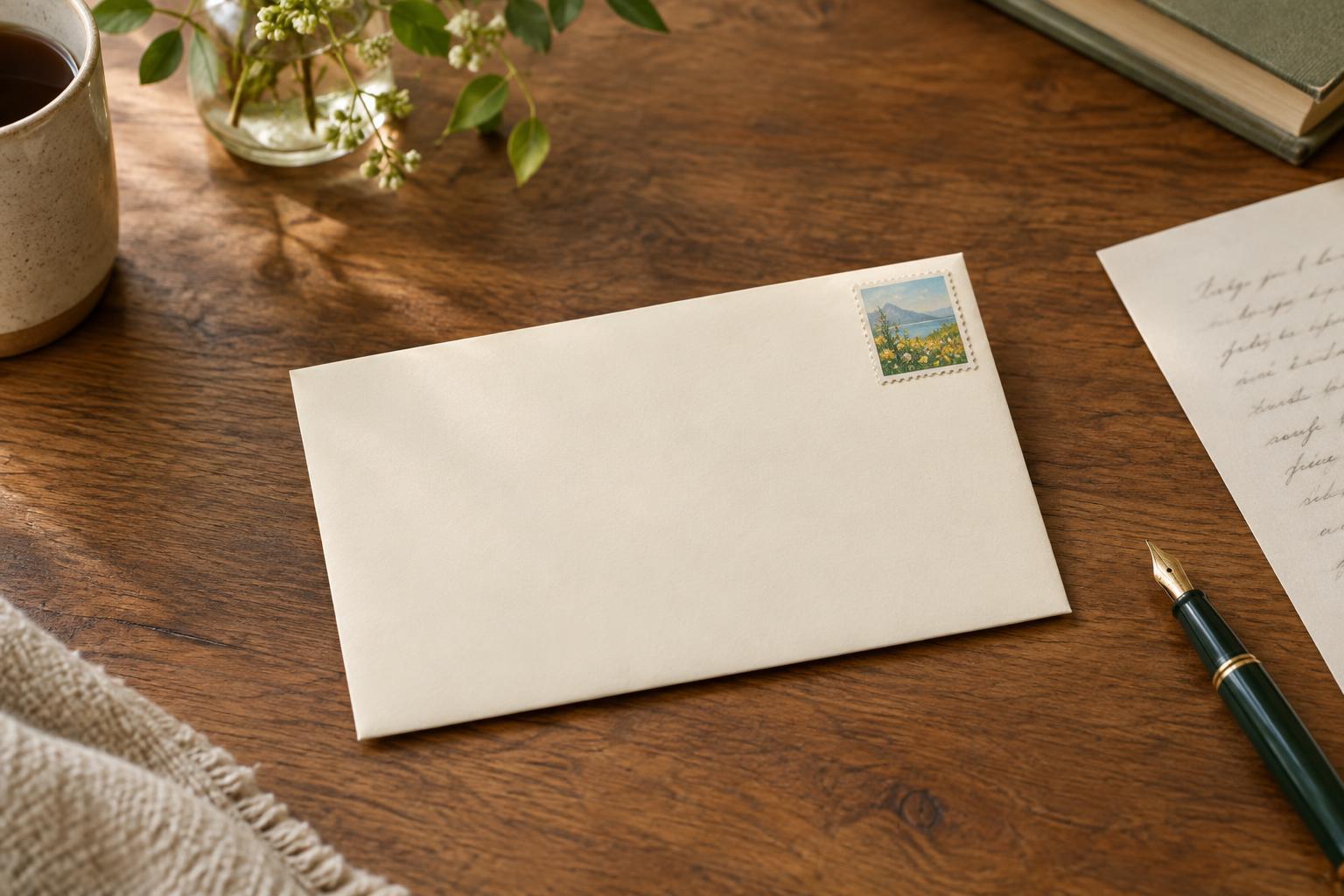
Before sealing an envelope, check the recipient’s name and mailing address and include a return address if you are comfortable doing so. If you are handing over the letter instead, you might simply fold it neatly. Presentation can make the moment feel considered, but it does not need to compete with the message.
Let it sound like you, then let it go
The most useful final question is not “Is this beautiful?” but “Would they recognize me in these words?” Read the letter quietly to yourself. If a phrase sounds stiff, replace it with something you would say aloud. If you have written more than you are ready to share, you can remove a sentence. Honesty does not require telling the recipient everything.
Once the letter says what you meant to say, send it. You cannot control when someone reads it or whether they write back, and that does not diminish the gesture. Your first letter is not a test of literary skill. It is a small, tangible way to give someone your attention—and the next one will likely feel easier to begin.