Start with the message, not the stationery
A beautiful card can be tempting, and a fresh sheet of writing paper can make you want to fill a page. Before choosing either, ask yourself what the recipient most needs to hear. Are you marking an occasion, sending a quick reminder that you care, sharing news, or saying something you have been putting off? The answer matters more than the amount of space available.
A greeting card gives your words a frame. Its design and occasion can help establish a mood before the recipient reads a line. A letter offers a quieter beginning and more freedom to follow a thought wherever it leads. Neither is automatically more thoughtful. A short note can feel deeply attentive, while a long letter can lose its way if it tries to say everything at once.
When a greeting card is enough
Choose a card when you have one clear message: congratulations on a new home, thanks for a kindness, or warm wishes on a birthday. The limited space can be useful. It encourages you to name the occasion, add one specific detail, and end with a sincere wish. That is often more memorable than filling every available corner.
A card also works well when the moment calls for lightness. If someone has had a busy week, a few lines about a shared joke or a small thing that made you think of them may be just right. You do not need to turn every check-in into a life update. To make a printed card your own, add a memory or observation the design could not have supplied: “I still think about the walk we took after dinner,” for example, says more than a second generic greeting.
When a letter gives you room to breathe
Write a letter when the message needs context. Perhaps you want to tell a distant friend how your days have been, explain why their support mattered, or reconnect after a long gap. A letter lets you move between news, memories, questions and feelings without squeezing them into a small panel. It also gives the recipient something they can read at their own pace.
More space does not mean you must write more than you want to. One page is a letter if it carries a complete thought. Begin with the reason you are writing, then offer two or three details that bring your message to life. You might describe an ordinary afternoon that reminded you of the person, share what has changed since you last spoke, or ask a question you would genuinely like them to answer. End when you have said what you came to say.
Use both when the occasion and the story matter
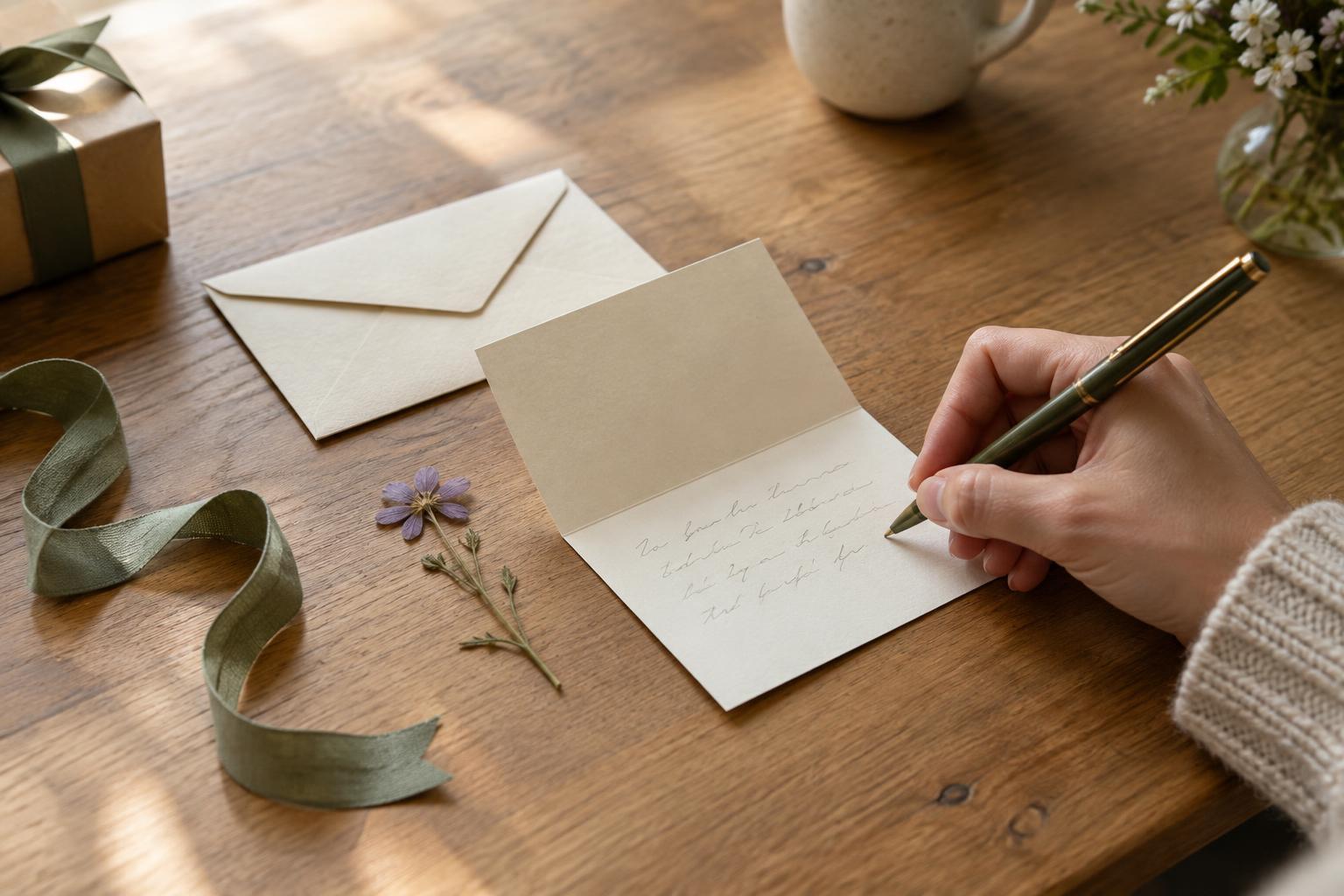
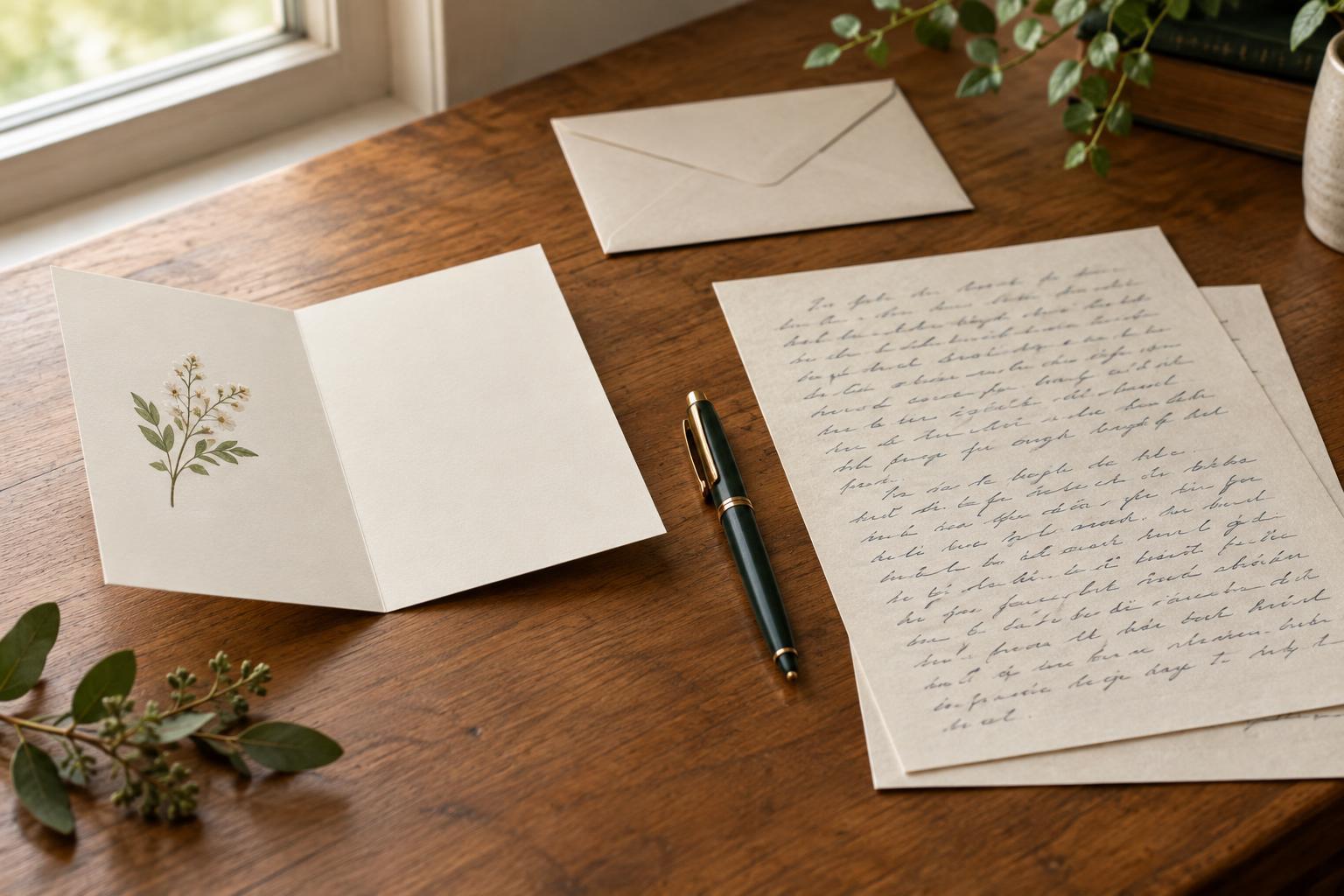
Sometimes a card feels right for the celebration, but its writing space feels too small. Slip a separate letter inside it. The card can hold a simple greeting, while the letter carries the longer story: what you admire about the person, a memory you want to preserve, or news you would rather share in your own words. You can also tuck a short handwritten note into a card when you need only a little extra room.
The reverse can work too. A letter can include a small illustrated card or a photo with a caption, giving the recipient a visual keepsake without making it do the work of the message. Keep any addition purposeful. A small enclosure is most meaningful when you explain why you chose it, even if that explanation is only a sentence.
Give yourself a simple way to begin
If you are unsure which format to choose, draft the first three sentences on scrap paper. Say why you thought of the person, add one specific detail, and say what you hope they know. If that feels complete, a card may be enough. If those sentences open up more that you want to share, reach for a letter. You can decide on the stationery after you find the shape of the message.
Do not worry about making every line polished. Read your words once to check that they sound like you and that the tone fits the recipient. Leave out details they may not want to revisit, and make room for warmth without demanding a reply. Whether your message fills a page or just a few lines, the right amount of space is the amount that lets you speak clearly and kindly.