Start with what you already have
The simplest way to reduce wrapping waste is to look around before buying anything new. A clean paper bag, an old map, a calendar page or a saved piece of gift wrap might be just the right size for a small present. Boxes and tins can be used again, too, especially when the gift fits securely inside. Reusing something already on hand gives it another purpose without requiring a special purchase.
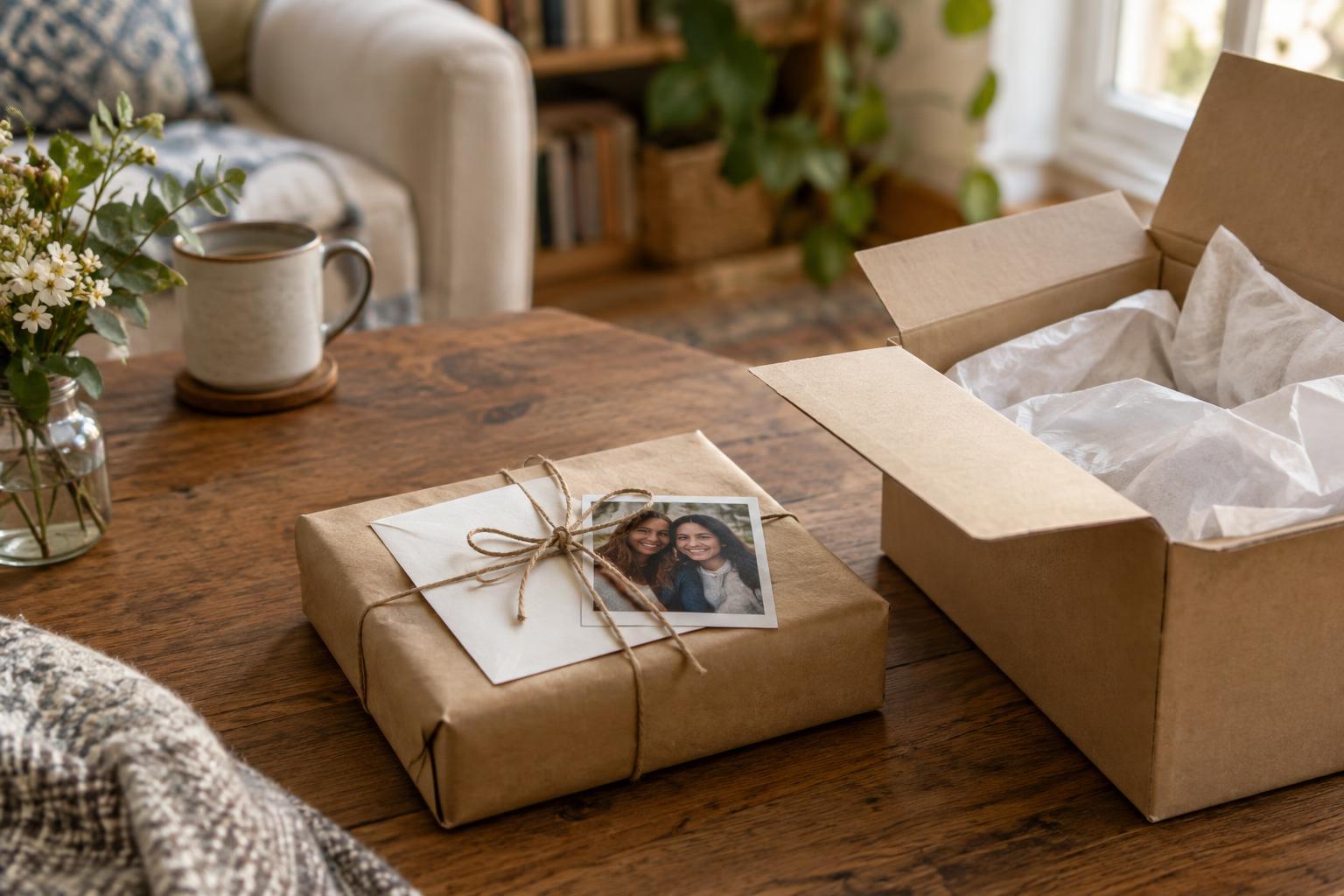
Match the material to the gift rather than trying to make every parcel look the same. A sturdy bag works well for an awkward shape, while a sheet of saved paper suits a book or another flat item. If a reused box has a label or printing you would rather hide, cover only that area with a handwritten tag or a strip of paper. The result can look deliberate without adding many layers.
Choose paper with its next use in mind
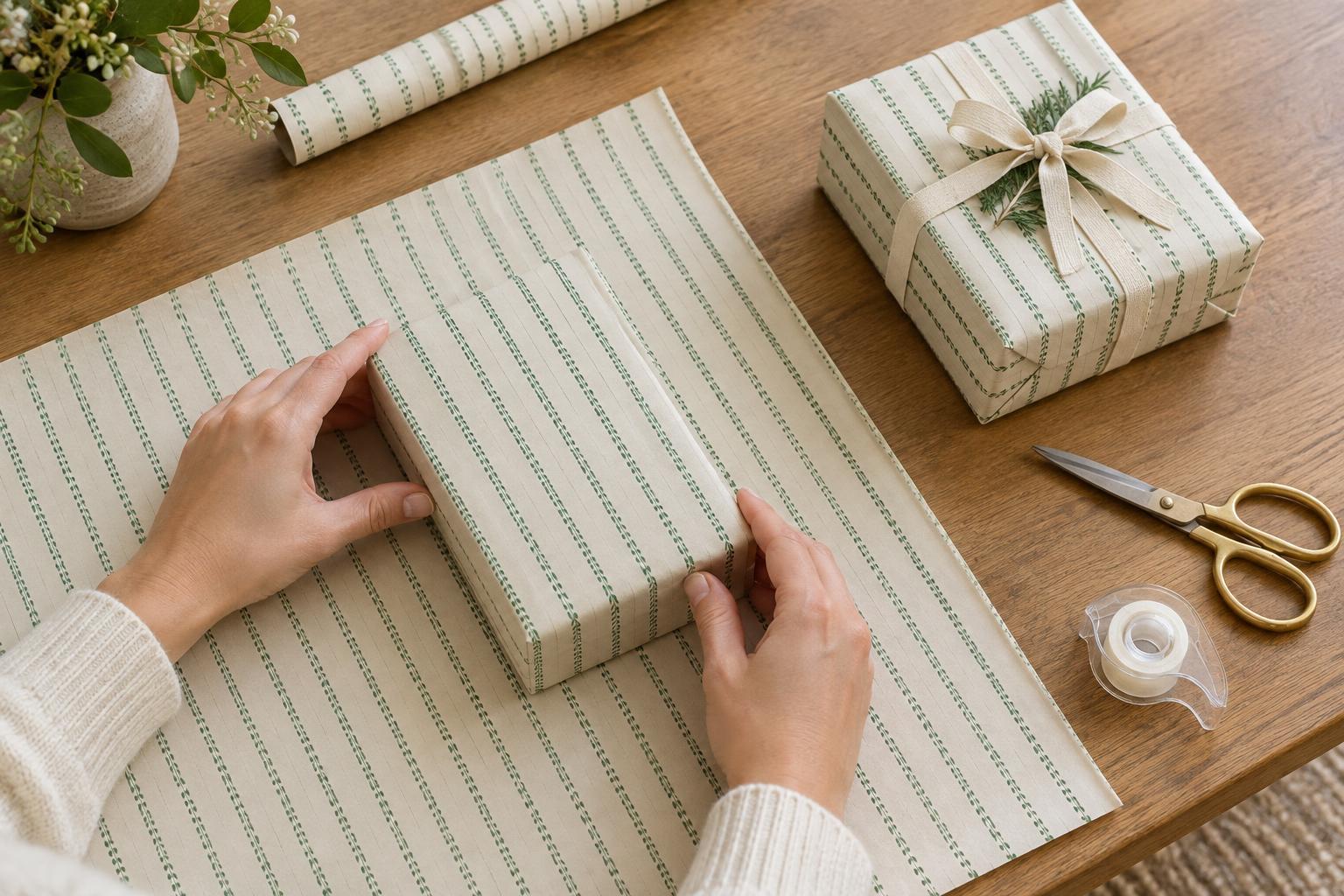
When you do need new paper, consider how easily someone could use or dispose of it afterward. Plain, uncoated paper is often a more straightforward choice than paper with glitter, foil or a plastic-like finish. Those decorative coatings can make recycling difficult, though accepted materials vary by local collection program. Before assuming any wrapping paper belongs in the recycling bin, check the guidance where the recipient lives.
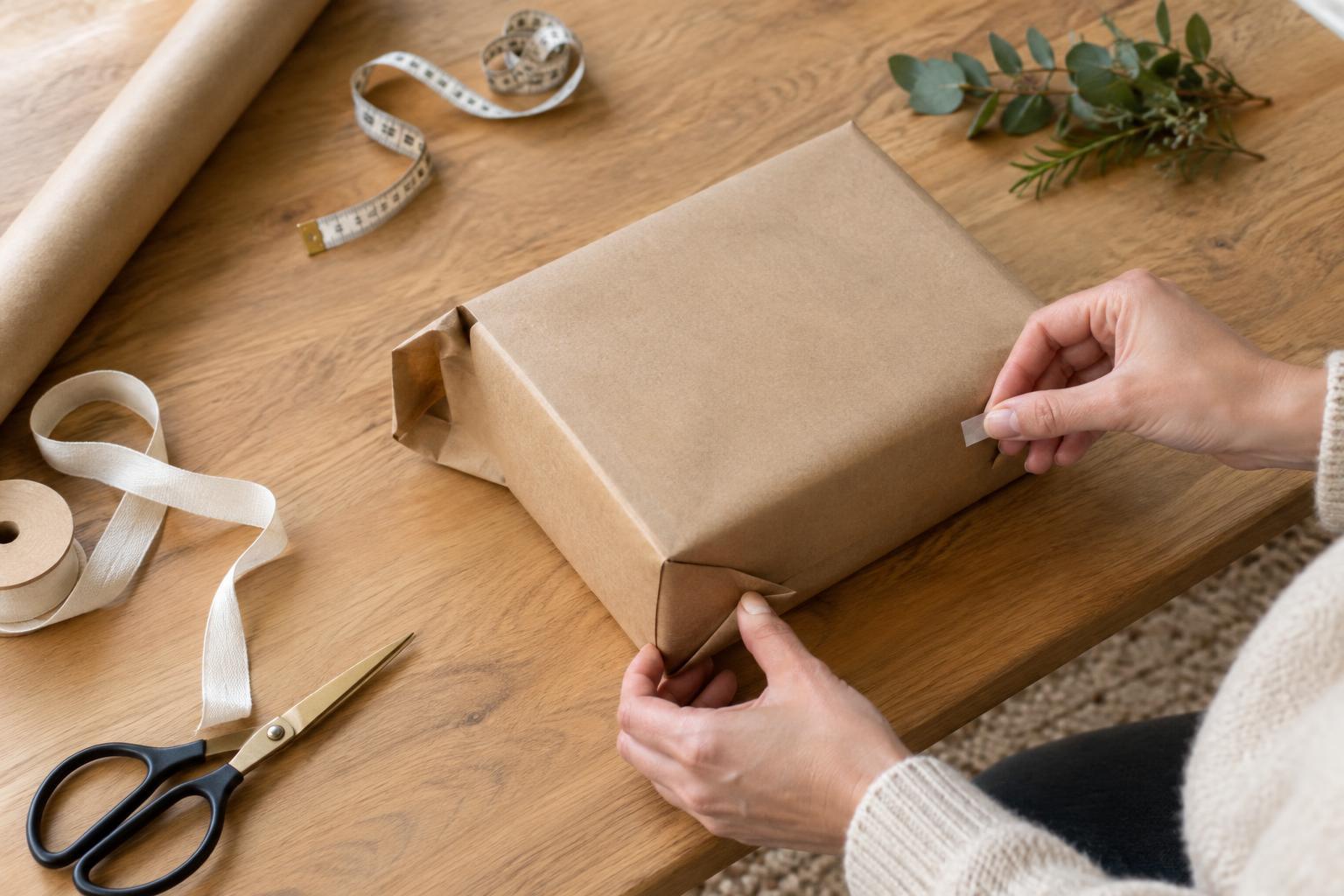
Paper that unfolds without tearing has another life as wrapping. Leave a little extra room around the gift so the recipient can open it gently if they wish. Folded edges and a small amount of removable tape may help preserve the sheet. Save larger offcuts for future small gifts, and turn narrow strips into tags. Even a modest scrap can carry a name and a short message.
Make reusable wrapping part of the gift
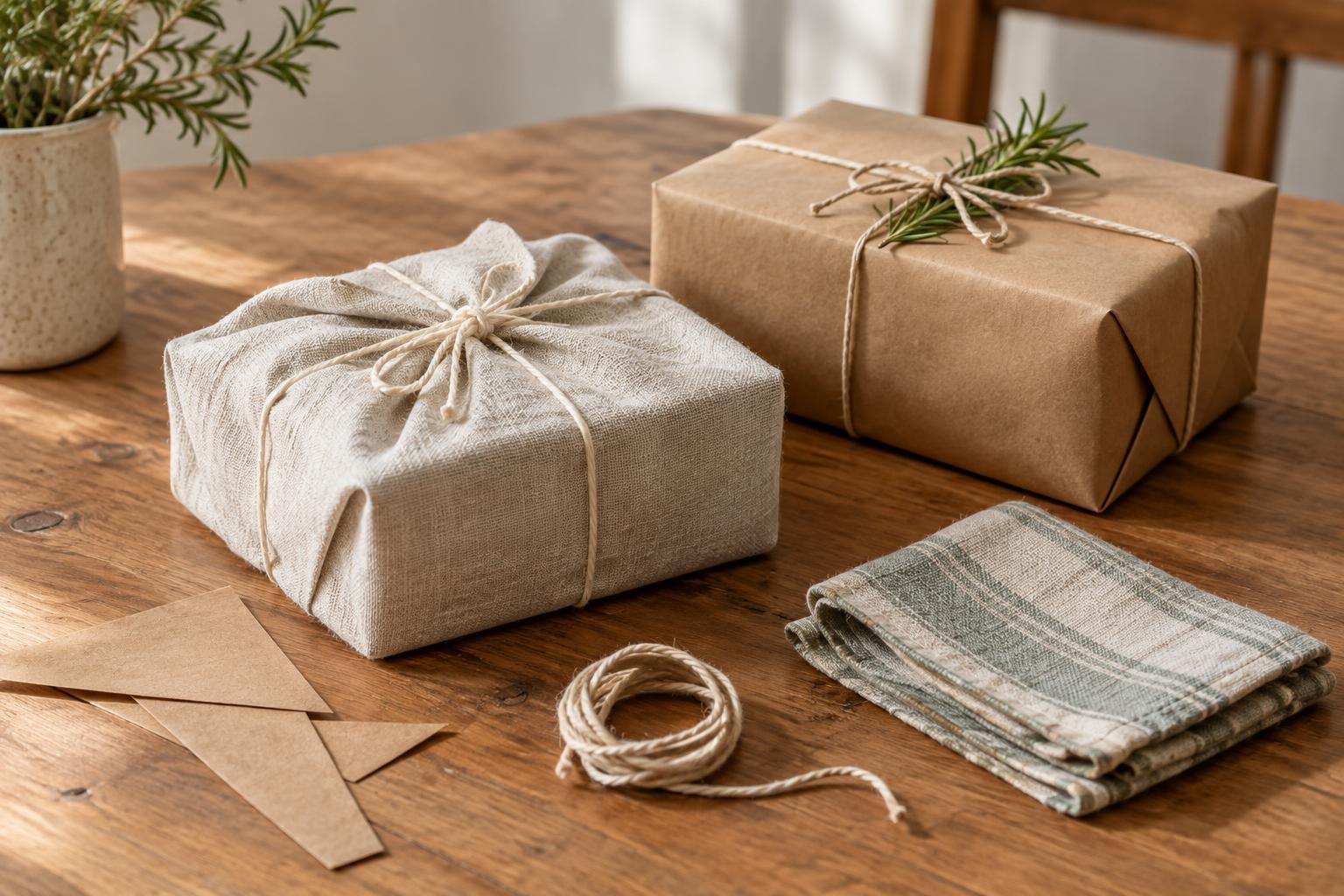
A scarf, tea towel or piece of fabric can hold a present without disposable paper. Tie opposite corners together around a book, jar or small box, then tuck in loose ends. Choose a fabric the recipient might actually use, or let them know they are welcome to pass it along for another gift. A reusable bag or pouch can serve the same purpose if it is the right size.
Fabric is not automatically the lower-waste choice if it is bought for one occasion and never used again. The practical aim is to keep it in circulation. A clean fabric remnant you already own, for example, may be more useful than a new decorative wrap. If you are lending a favorite cloth and would like it back, say so clearly; otherwise, treat the wrapping as part of the gift.
Keep the finishing touches simple
Ribbon, string and tags can make a plain parcel feel celebratory. Saved ribbon is easy to use again if it is untied rather than cut. A length of reusable string can hold folded paper in place and reduce the need for tape. For a gift tag, try a cut-down greeting card, a piece of a paper bag or a small card that doubles as a note.
Think about what will happen when the gift is opened. Plastic tape, foil bows and glittery decorations may need to be removed before paper can be recycled, and some may not be accepted for recycling at all. One well-chosen detail, such as a handwritten message or a sprig tucked beneath string, can be more memorable than several disposable embellishments.
Give the recipient an easy next step
Wrapping is easiest to reuse when it comes apart cleanly. Avoid sealing every edge of a box or covering a bag with tape. If you use a sturdy container, leave it ready to store something later. You might include a brief note on the tag: “The fabric is yours to reuse,” or “Save this box for another gift.” This makes the intention clear without turning the exchange into a lesson.
After the gift is opened, separate materials rather than treating the whole bundle as recyclable. Set aside paper, ribbon and containers that are in good condition. Check local rules for anything that remains; recycling programs differ, particularly for tissue paper, coated paper and mixed-material decorations. Low-waste wrapping does not have to be perfect. Choosing materials with a likely second use, and making them easy to separate, is a thoughtful place to start.