Start with the habit, not the finished keepsake
A keepsake is easy to imagine at its best: a jar full of happy recollections or a scrapbook with beautifully arranged pages. The more useful question is what you will do on an ordinary evening when you have ten minutes and a small reminder of something worth saving. The right format makes that moment feel simple, not like another project to catch up on.
Before choosing, decide what you tend to keep. Is it a sentence someone said, a funny mishap, a ticket, a photograph or a handwritten note? Then think about when you might add it. A memory jar suits quick contributions that can wait to be read later. A scrapbook gives those contributions a place in a larger story, but usually asks you to make more decisions as you go.
Choose a memory jar for quick, separate moments
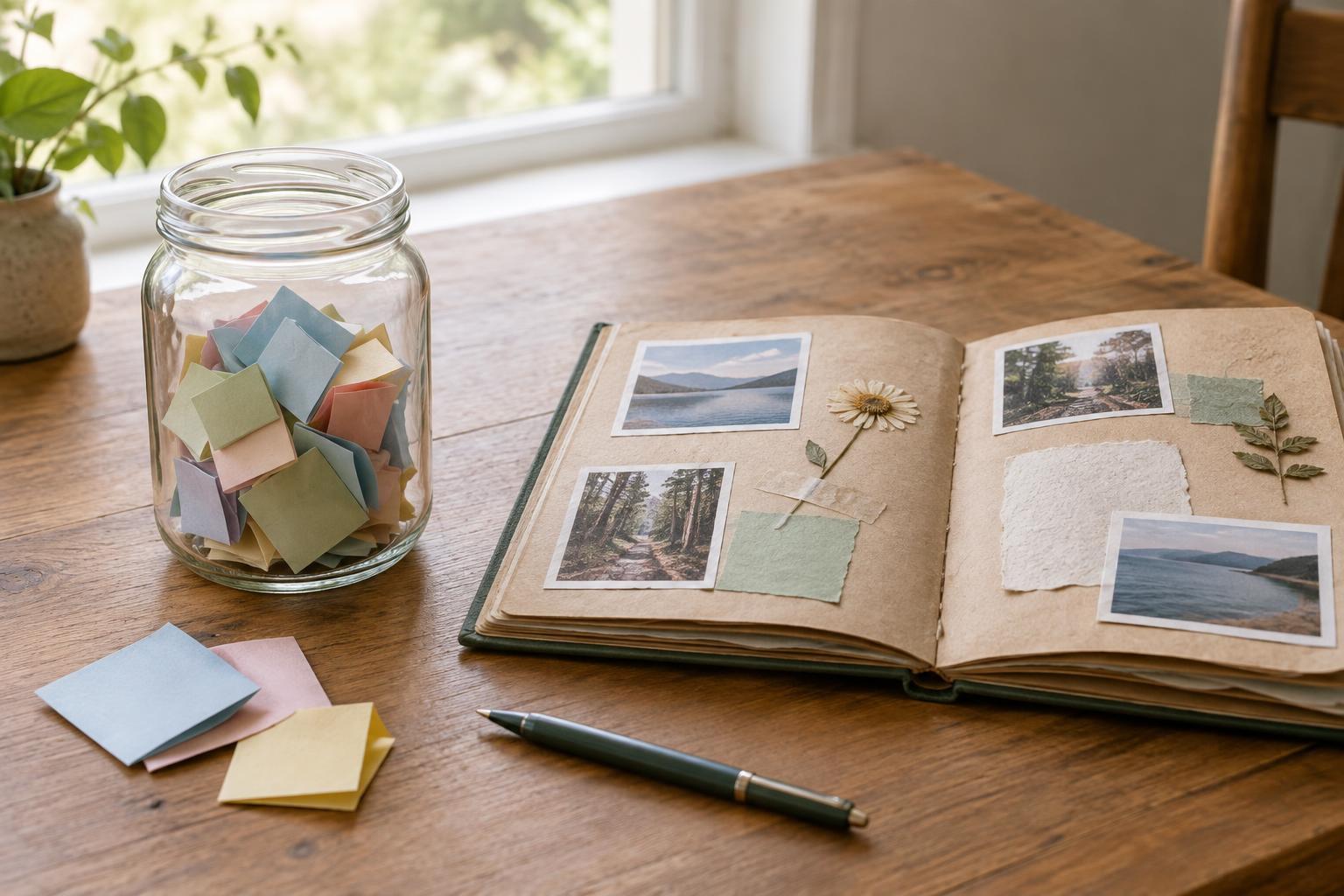
A memory jar works well when the act of collecting matters more than arranging. Keep small pieces of paper and a pen nearby, and write one moment per slip. A date or a few words of context can help your future self remember what happened. There is no need for every entry to be profound; a favorite meal or an unexpectedly kind message may be just as welcome to find again.
This format can also invite other people in. At a birthday dinner, family gathering or shared holiday, guests who want to participate can add a memory or a wish. You can read the slips together, save them for a quieter day or make opening the jar an annual ritual. If several people will write for it, a gentle prompt such as “Something I enjoyed with you” may feel easier than a blank sheet.
A jar has limits. Photographs and larger paper mementos may not fit, and loose slips can be hard to browse when you want to find one particular story. If you care about order, date each note and empty the jar into labeled envelopes occasionally. If that extra step already sounds burdensome, let the jar remain a collection to explore rather than an archive to organize.
Choose a scrapbook when context and layout matter
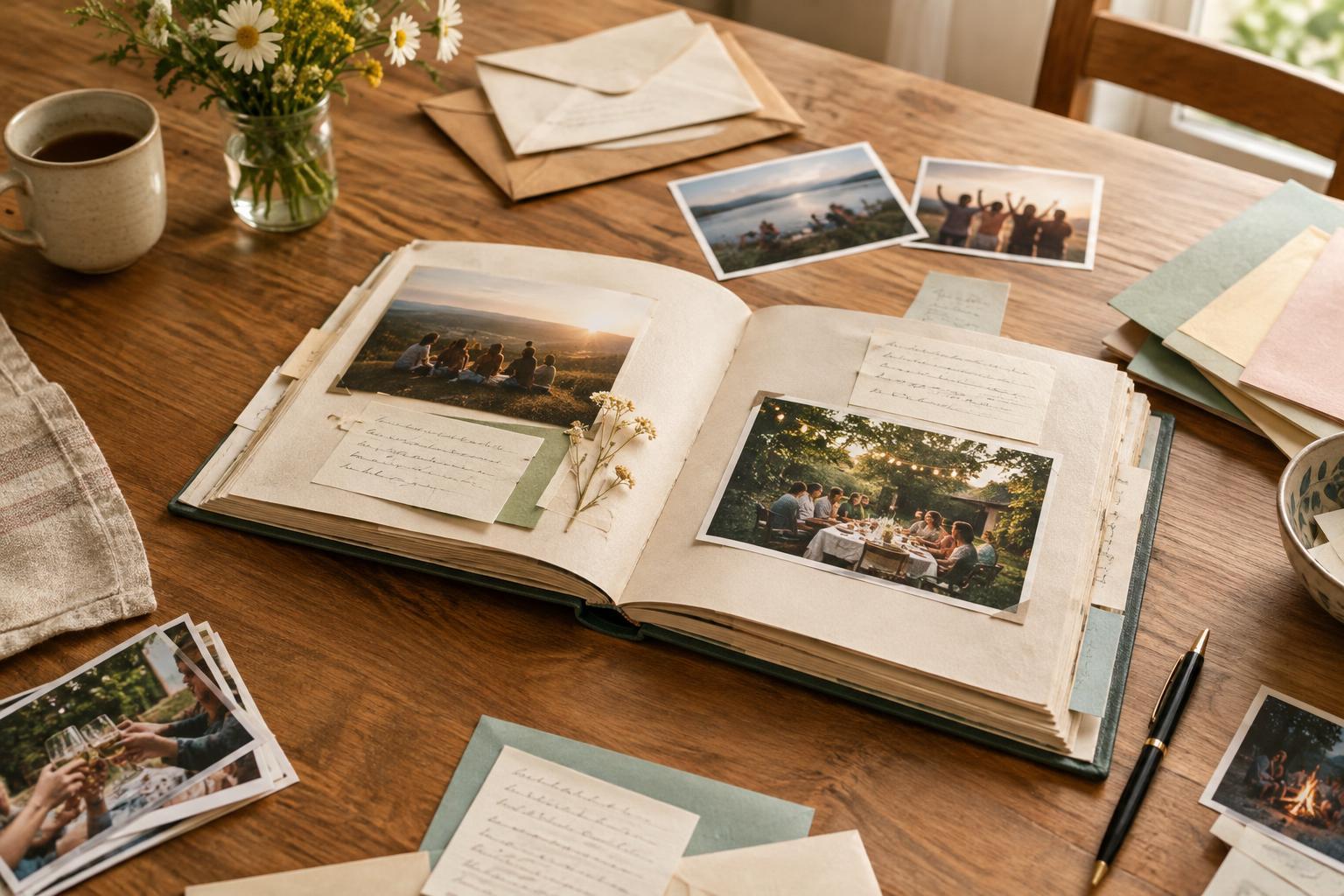
A scrapbook is a better home for the things you want to see together: photographs beside captions, a program next to a written recollection, or several small moments from one celebration on the same page. It lets you show how a story unfolded. You can leave room for a few lines of handwriting, which may become as meaningful as the items themselves.
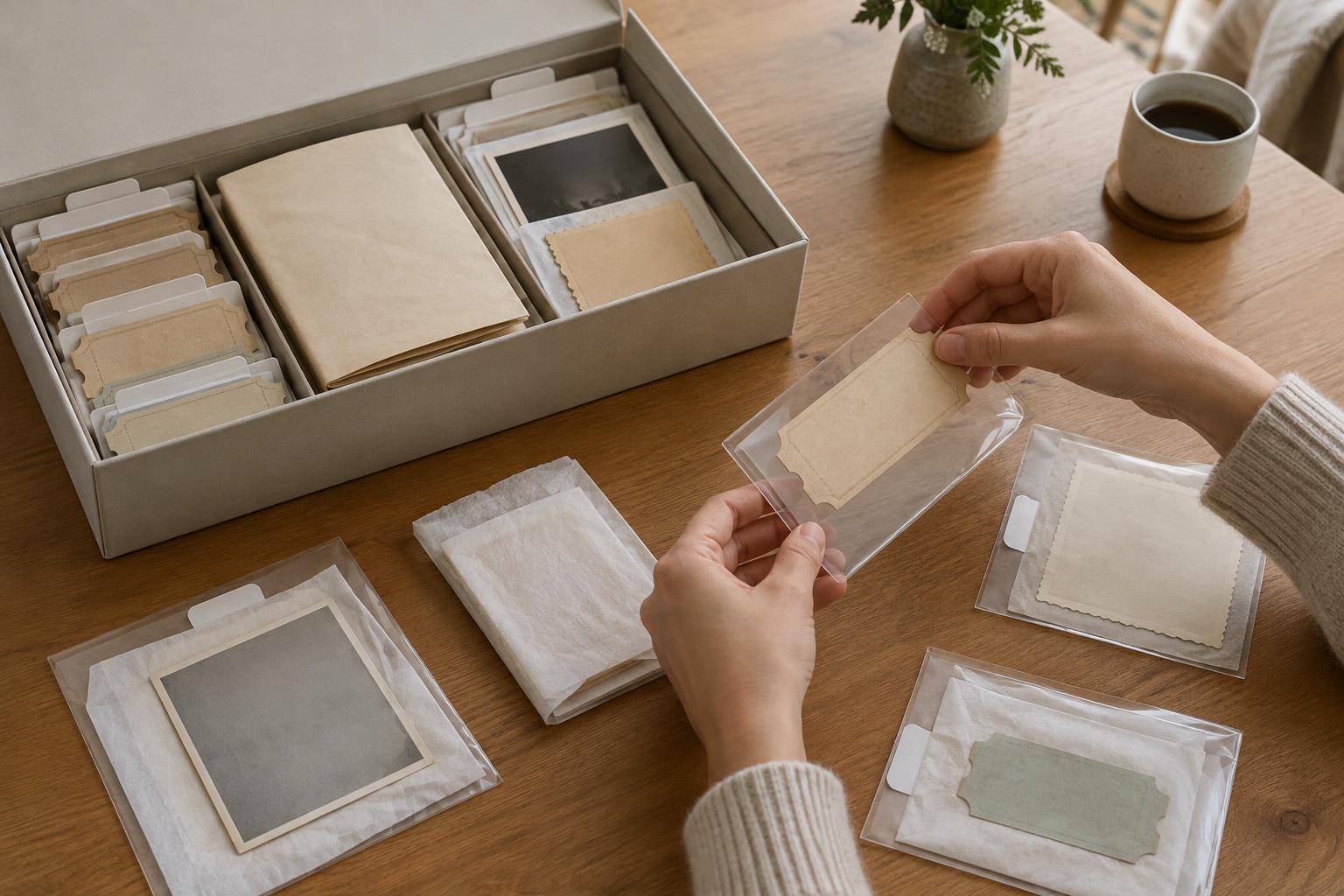
The drawback is that an empty page can make every addition feel like a design assignment. To keep it manageable, choose a repeatable layout: one item, one caption and one date per page, for example. Use ordinary materials you are comfortable handling, and check that any adhesives or storage materials suit items you particularly want to preserve. You do not have to fill gaps, decorate every corner or document events in perfect order.
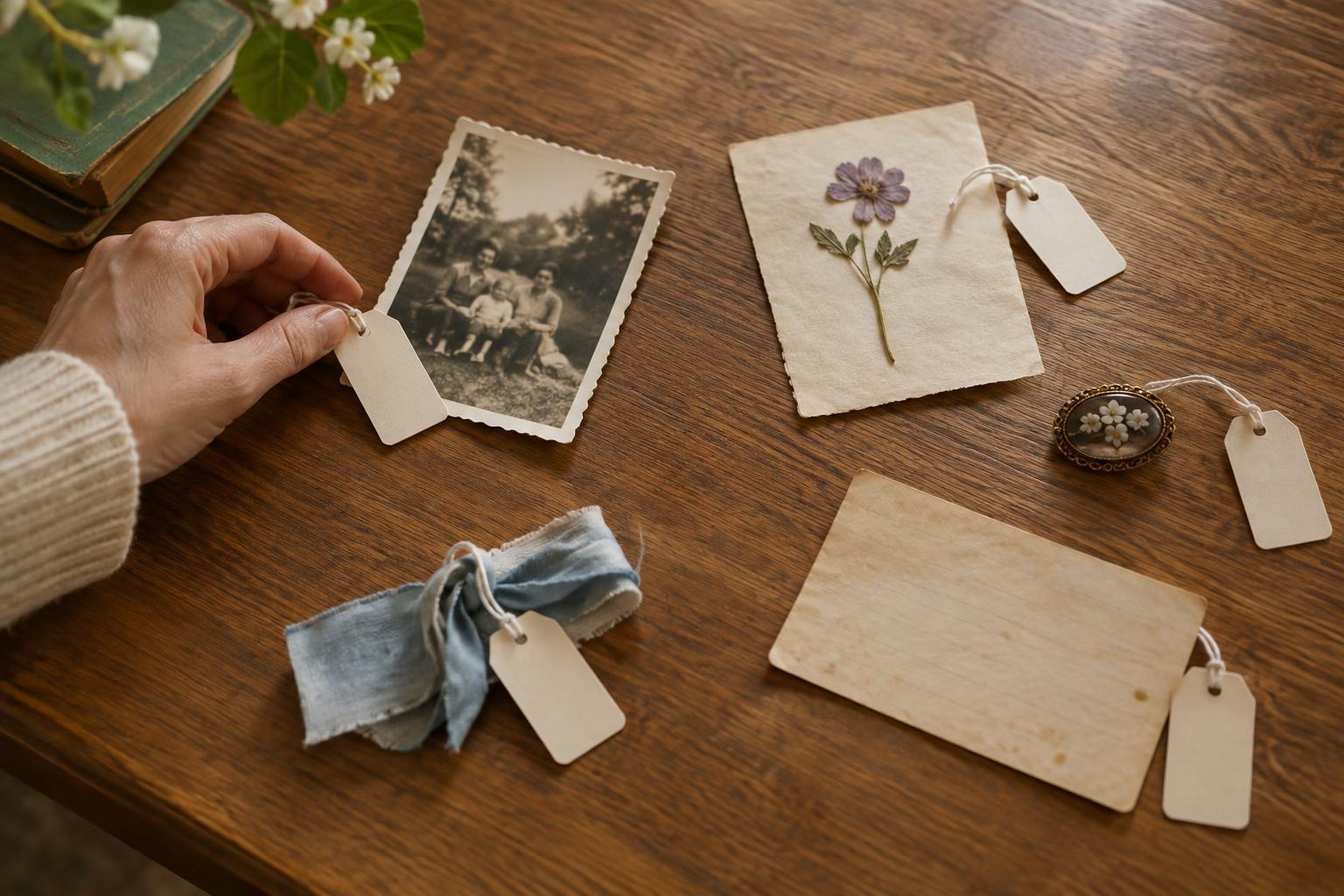
Consider the space you have, too. A scrapbook needs somewhere to live and enough room to work on a page. If you regularly save flat items but rarely sit down to arrange them, begin with a folder for each season or occasion. You can make pages from the contents later without leaving everything loose in a drawer.
Make a small rule you can repeat
Whichever format you choose, set a pace that fits your life rather than an ambitious schedule. You might add one note after each family visit, save one page per trip, or spend fifteen minutes at the end of a month choosing what to include. Keep the supplies together so starting does not require a search. A brief entry made soon after an event is often more useful than an elaborate account you never get around to writing.
Give yourself permission to be selective. A keepsake does not need to contain every photo, card or good day to tell a meaningful story. It may also hold difficult or mixed memories, if you want it to; there is no obligation to make the collection cheerful for an imagined audience. If other people’s words or pictures are involved, think about who will see the finished keepsake before sharing it.
Let the format change with you
You do not have to make a permanent choice. Try a jar for a month and notice whether you enjoy dropping notes into it. Try two simple scrapbook pages and see whether arranging them feels satisfying or slow. If you like collecting slips but also want to keep photographs, use a jar for everyday moments and a folder or small album for larger items.
The most lasting keepsake is not necessarily the most polished one. It is the one you can return to without feeling behind. Start with a container, a place for your pen and a modest rule for what belongs inside. The memories can gather from there.