Start with the facts someone else would need
A photograph, ticket stub or handwritten recipe may feel self-explanatory while its story is fresh. Years later, the details that made it special can be hard to recover. A useful label answers a few basic questions: What is this? Who is connected to it? Where and approximately when did it come from? Why was it kept? You do not need a perfect account. A short, specific note is more helpful than an elaborate caption that never gets written.
For a photograph, name the people from left to right, along with the occasion and location if you know them. For an object, note who made, gave or used it. If a keepsake moved between people, that journey may be part of its story: “Granddad’s picnic basket, later used for family trips to the beach.” Include names as the people involved would recognize them, and add a surname or relationship where it helps distinguish one person from another.
Record the meaning, not just the inventory
Facts identify a keepsake; memories explain why it matters. A label that says “blue mug” tells a future reader little. “Blue mug Mum kept on her desk; we used it to hold birthday candles” gives the object a place in family life. Look for the small detail you would tell a friend if they picked the item up: a tradition, an inside joke, a handmade repair or the reason an ordinary object survived a clear-out.
Use your own voice when you can. “I saved this ribbon because it was tied around the first gift my sister made for me” is clear about whose memory is being recorded. For shared celebrations, you might ask another person what they remember and add their perspective separately. Different recollections do not have to be forced into one definitive version. The aim is to preserve context, including the affection or humor that a list of dates cannot capture.
Be honest about gaps and protect private details
If you are unsure of a name, date or place, say so. “Possibly the summer after we moved” is better than a confident guess that could be repeated as fact. You can distinguish what you know from what someone told you: “Aunt May said this was made for her school play; I have not found the year.” Leave room to update the note if another person recognizes the keepsake.
Think about who might read the label before recording sensitive information. A family story can be meaningful without including a private address, an account number or a detail someone has not agreed to share. If a memory needs a fuller explanation, keep a separate note in a suitable place and use the label to point to it. For keepsakes involving living people, a quick conversation about how they would like to be named or described can prevent an affectionate note from feeling intrusive.
Choose a label that suits the object
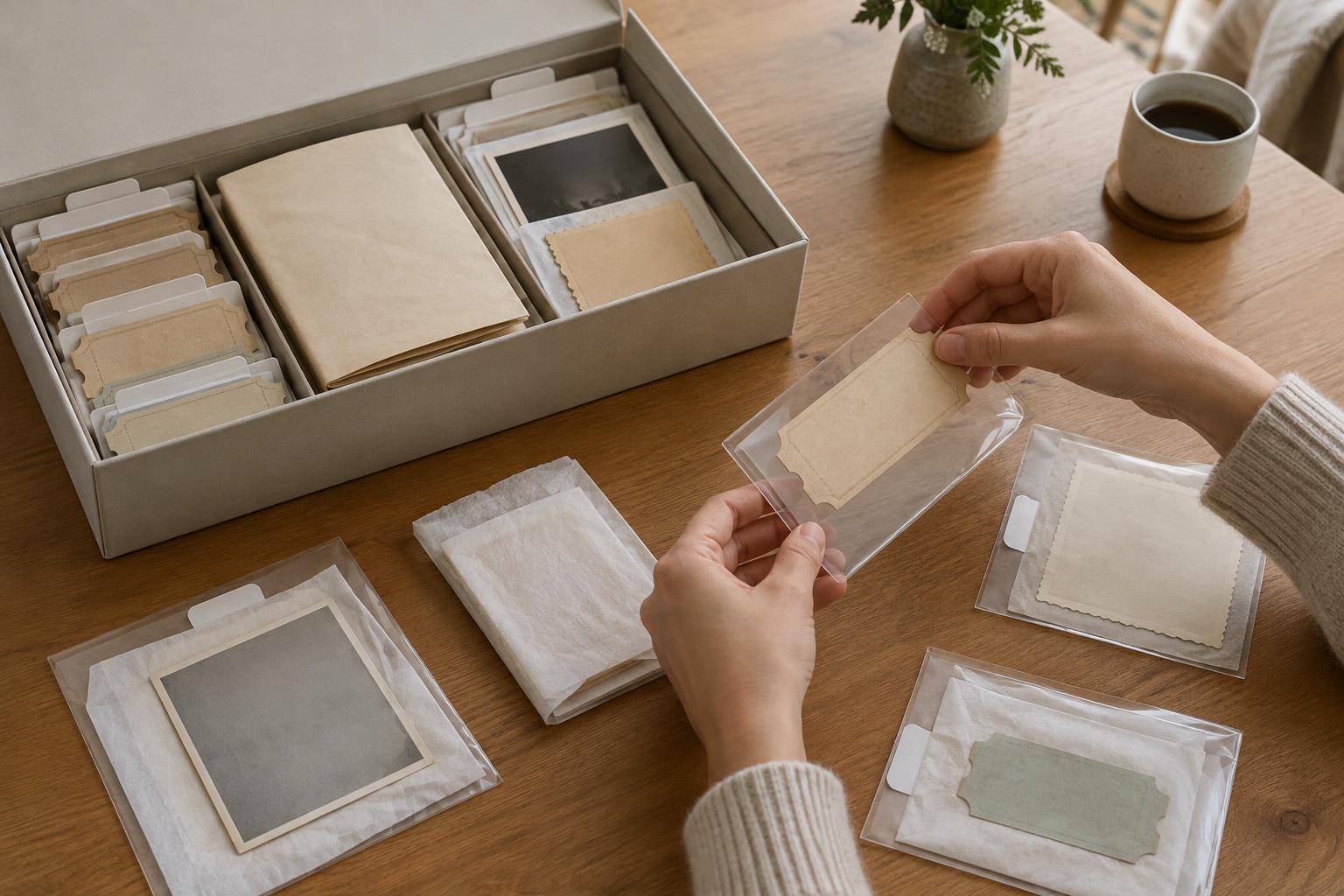
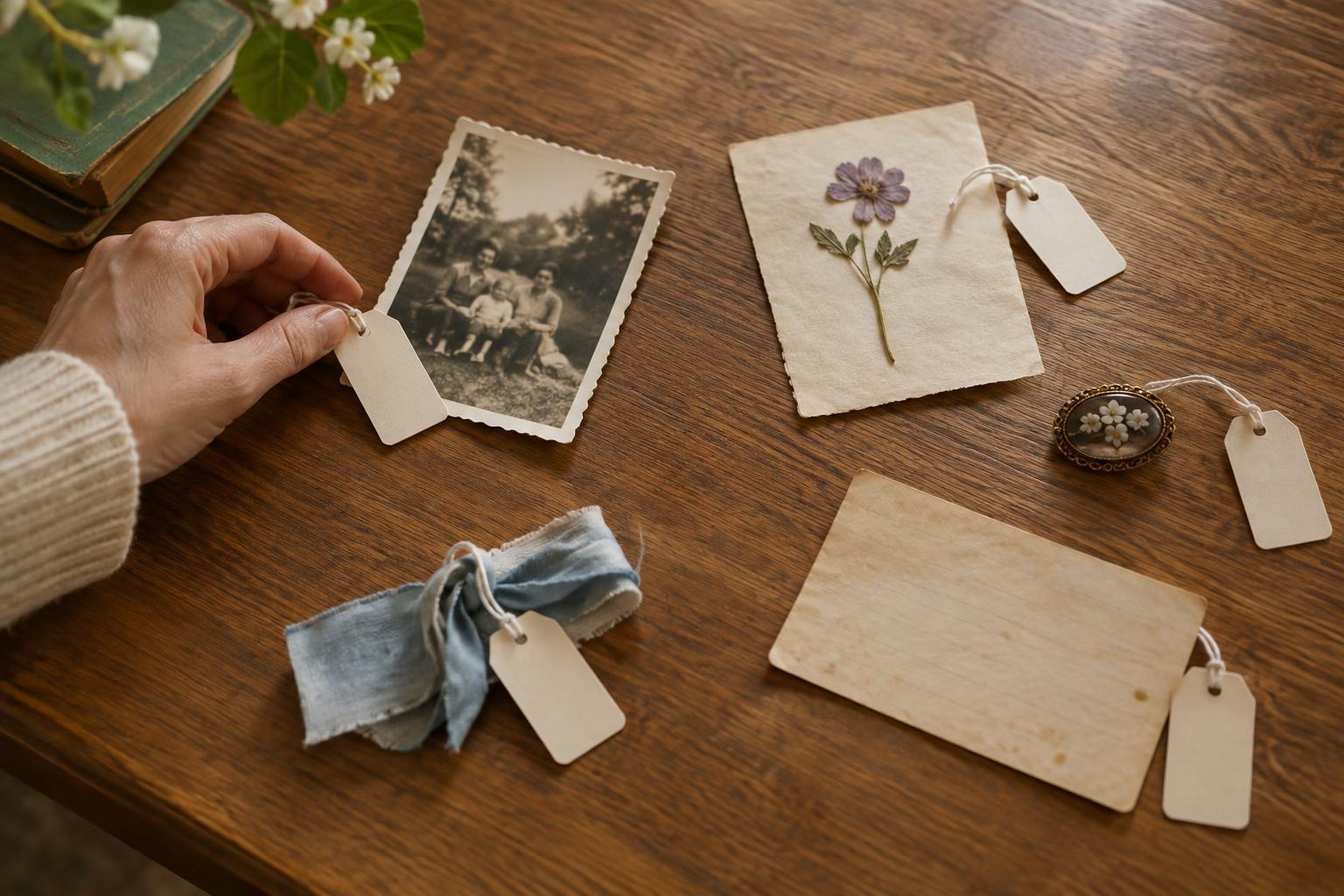
You do not have to write directly on a keepsake. A paper tag tied loosely to a sturdy object, a note tucked beside a photograph or a caption on a storage sleeve may be easier to read and less likely to cause damage. For delicate fabric, older paper or a fragile finish, avoid attaching anything that pulls, sticks or leaves a mark. When in doubt, label the container and make it obvious which note belongs to which item.
Give related pieces a simple shared identifier if they might become separated. For example, write “Birthday box 3, item 2” on a removable tag and repeat it on the corresponding note. For a digital photograph, add a descriptive filename or keep a caption alongside it rather than relying on a folder name such as “miscellaneous.” Whatever method you choose, check that the writing is legible and that the note will still make sense if the object is moved.
Make the stories easy to find and pass on
A labeled keepsake is most useful when someone can find its story. Keep notes near the objects they describe, and consider a simple list for boxes or albums: what each contains, whose belongings they are and where they are stored. For especially meaningful pieces, a photograph of the item beside its note can provide a handy backup. If you write a longer memory, put a short summary with the keepsake so a reader knows the fuller account exists.
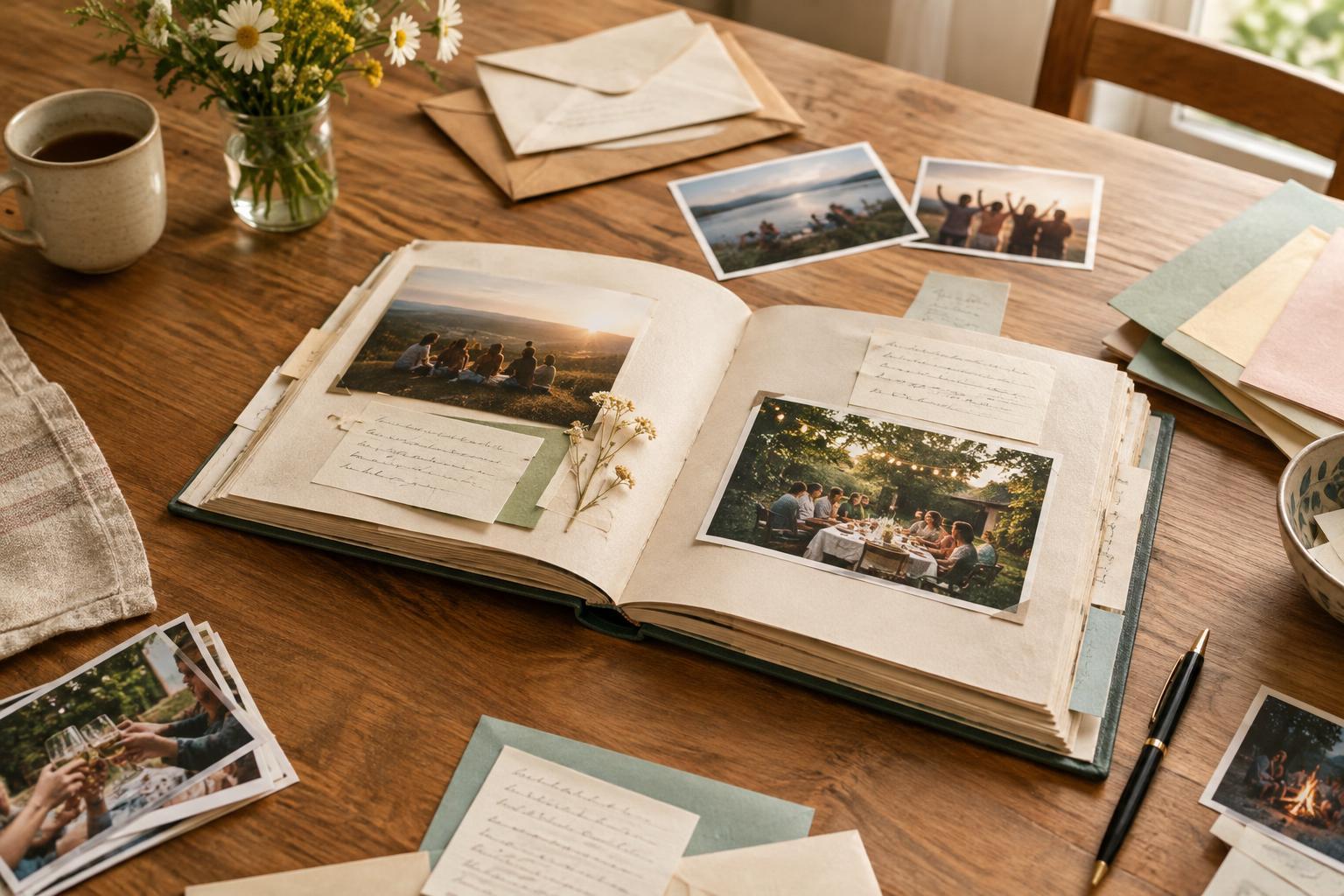
You can turn labeling into a gentle shared activity. Bring a few photographs to a gathering, ask about unfamiliar faces and write down answers while the conversation is still fresh. Invite people to contribute their own memories rather than treating one person as the keeper of every story. Start with just a handful of items if the task feels large. A few clear labels can turn a box of mysterious things into a collection of connections.